
Sourcing from the right burgundy wine bottle manufacturer decides whether your sloped-shoulder bottle reads as authentic on the shelf, how much you pay to ship a pallet, and how quickly you can move from artwork approval to a full container. The Burgundy shape is one of the most recognizable silhouettes in the wine aisle, but it comes in more weight classes, glass colors and neck-finish combinations than most buyers expect going in. This guide breaks down the shape itself, the specs worth confirming before you order, and how it compares to the Bordeaux format.
What Makes a Bottle “Burgundy” Shaped
The Burgundy bottle is defined by a tall, gently tapering body that flows into a sloped shoulder with no sharp transition point, then narrows into a relatively short neck. Originally developed for Pinot Noir and Chardonnay in France’s Burgundy region, the shape is now used across still wines worldwide because the rounded shoulder is forgiving on high-speed filling and labeling lines, and the silhouette reads as classic rather than tied to one varietal.
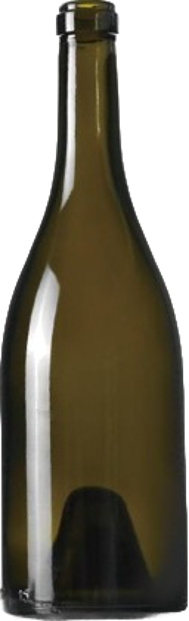
A bottle like the زجاجة بورغوندي خضراء عتيقة سعة 750 مل #890 above shows the profile in its most common antique green finish — the color most buyers associate with still red and white table wines in this shape.
Standard Burgundy Bottle Specifications
Before you brief a burgundy bottle supplier, it helps to know the typical weight classes and capacities already in circulation — most programs start from one of these rather than a blank sheet.
| الطاقة الاستيعابية | Weight Class | Common Colors | Typical Use |
|---|---|---|---|
| 375 mL (half) | Standard (~380–420 g) | Antique green, flint | Splits, by-the-glass restaurant pours |
| 750 mL | Standard (~450–500 g) | Antique green, flint | Everyday varietal still wines |
| 750 mL | Heavy (~550–900 g) | Antique green | Premium and reserve bottlings |
| 1.5 L (Magnum) | Heavy | Antique green | Library releases, gifting |
Weight class is a positioning decision as much as a packaging one: a heavier base and thicker punt signal a premium tier, while a standard-weight bottle keeps freight cost down on high-volume runs.
Burgundy vs Bordeaux: Key Sourcing Differences
Burgundy and Bordeaux are the two shapes most buyers compare when briefing a supplier, and the differences are more than cosmetic. The Burgundy shoulder slopes gradually, which gives a capsule more surface to sit against and tends to look better with a wrap-style foil. The Bordeaux shoulder is higher and more angular, which historically served to catch sediment when pouring aged red wine and gives labels a sharper top edge to register against.
- Shoulder profile: Burgundy is rounded and gradual; Bordeaux is higher and more defined
- Traditional varietals: Burgundy for Pinot Noir and Chardonnay; Bordeaux for Cabernet and Merlot blends
- Labeling: both run well on standard glue-applied and pressure-sensitive label lines, but capsule fit differs slightly by shoulder angle
In practice, most buyers choose based on category convention rather than functional difference — a Chardonnay in a Bordeaux bottle or a Cabernet in a Burgundy bottle will still perform fine on a filling line, but it can read as an odd signal to wine buyers used to the category norm.
Choosing Weight, Color and Closure Compatibility
Glass color on a Burgundy bottle is mostly a choice between antique green, which blocks more UV light and is the default for red and many white table wines, and flint (clear) glass, used when a brand wants the wine’s color visible — common for lighter whites and rosé. Both options are widely available in the Burgundy shape, so color rarely limits which weight class or neck finish you can pair it with.

Neck finish is the detail to lock down early: most Burgundy bottles ship on a standard cork finish compatible with natural or synthetic corks, though versions built for a screw-cap or ROPP closure are common for export markets that prefer them. Confirm the finish spec with both your glass supplier and your closure vendor before committing to a mold, since a mismatch of even a fraction of a millimeter can cause capping or corking line rejects.
Choosing a Burgundy Wine Bottle Manufacturer: Molds, Decoration & MOQs
Most Burgundy programs start on a stock mold — the shape above, in a standard or heavy weight class — and customize everything else: label, capsule, embossing and glass color. Stock molds typically run at the lowest minimum order quantities and shortest lead times, which is why they’re the default starting point for a new label. A semi-custom mold (a modified punt, a debossed logo on the shoulder, a slightly adjusted body height) raises the MOQ but avoids the cost of tooling a shape from scratch. A fully custom Burgundy silhouette, built on new tooling, is usually reserved for established brands with proven volume.
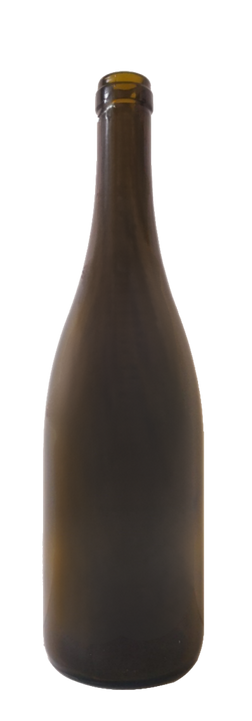
Decoration adds brand identity without necessarily changing the mold: silk screen printing for an opaque logo, acid-etch frosting for a matte, premium feel, or embossing worked directly into the glass during forming so the bottle is recognizable even without its label. Ask your burgundy wine bottle manufacturer whether a given decoration option requires new tooling or can be applied to an existing stock shape — it’s often the latter, which keeps both cost and lead time down.
الأسئلة الشائعة
What is a Burgundy-style wine bottle?
A Burgundy bottle has a tall body with a gently sloping shoulder that tapers into the neck without a sharp transition, a shape originally developed for Pinot Noir and Chardonnay and now used widely for still wines.
How much does a standard 750 mL Burgundy bottle weigh?
A standard-weight 750 mL Burgundy bottle typically weighs around 450 to 500 grams, while heavier premium versions can run from 550 grams up to 900 grams or more.
What’s the difference between antique green and flint Burgundy bottles?
Antique green glass blocks more UV light and is the default for red and many white table wines, while flint (clear) glass shows the wine’s color and is more common for lighter whites and rosé.
What should I ask a burgundy wine bottle manufacturer before placing an order?
Confirm the exact weight class, neck finish compatibility with your chosen closure, available glass colors, and whether your target volume fits a stock mold or requires a semi-custom or full custom program.
What MOQ should I expect from a burgundy bottle supplier?
Stock Burgundy molds generally carry the lowest minimum order quantities, semi-custom modifications raise the minimum, and a fully custom silhouette built on new tooling requires the highest volume commitment.
Are Burgundy bottles compatible with standard corks and ROPP caps?
Yes. Most Burgundy bottles ship on a standard cork-compatible finish, and versions built for screw-cap or ROPP closures are also widely available for export markets that prefer them.
 English
 French
 Spanish
 Portuguese
 German
 Italian
 Japanese
 Korean
 Arabic
 Russian