
A Bordeaux wine bottle manufacturer that can hold color, weight and neck-finish tolerances consistently across every production run is the difference between a label that sits flush on every case and a line that stalls on the packaging floor. This guide breaks down what to compare before you commit to a supplier and a mold.
Why the Bordeaux Shape Still Leads Wine Packaging
The Bordeaux silhouette — straight sides, a pronounced shoulder, and a cylindrical body — is the default reference shape for still red and white wine worldwide. Its high shoulder was originally designed to catch sediment as wine is poured, and today it doubles as a stable, stackable format that palletizes cleanly and fits standard case dimensions. Buyers sourcing from a Bordeaux wine bottle manufacturer usually start here because retailers and distributors already expect this profile on the shelf, which keeps line changeovers and case design simple.
Within the Bordeaux family there is still real variation: straight vs. conical body, standard vs. long neck, and a range of capacities from 187ml splits up to 1.5L magnums. Getting the shape decision right early avoids costly mid-run mold changes later.
What to Look for in a Bordeaux Wine Bottle Manufacturer
Not every glass supplier runs Bordeaux tooling at the tolerances a wine label needs. Before you commit, compare candidates against a short list of criteria that actually affect production and delivered cost.
| Criteria | Stock mold | Private (custom) mold |
|---|---|---|
| Lead time to first shipment | Shorter — mold already exists | Longer — tooling must be built and sampled |
| Minimum order quantity | Lower, supplier-dependent | Higher, to amortize tooling cost |
| Brand differentiation | Shared shape, label-led branding | Unique embossing, punt or neck detail |
| Color options | Usually flint or antique green in stock | Custom color runs possible, subject to furnace scheduling |
| Best fit for | New brands, smaller runs, fast launch | Established brands scaling volume |
Ask any bordeaux wine bottle manufacturer you shortlist for a physical sample before locking a production run — dimensional drawings rarely reveal how the glass actually catches light or seats a capsule.
Antique Green vs. Flint: Choosing Bordeaux Bottle Color
Antique green Bordeaux bottles are the traditional choice for red and rosé, and for good reason: green glass blocks a meaningful share of UV light, which slows the light-struck flavor faults that can develop in wine exposed to sunlight or fluorescent retail lighting over time. Flint (clear) glass shows off color and clarity, which suits some whites and rosés, but offers little UV protection on its own and should generally be paired with UV-inhibiting packaging, storage, or a coated closure if the wine is light-sensitive.

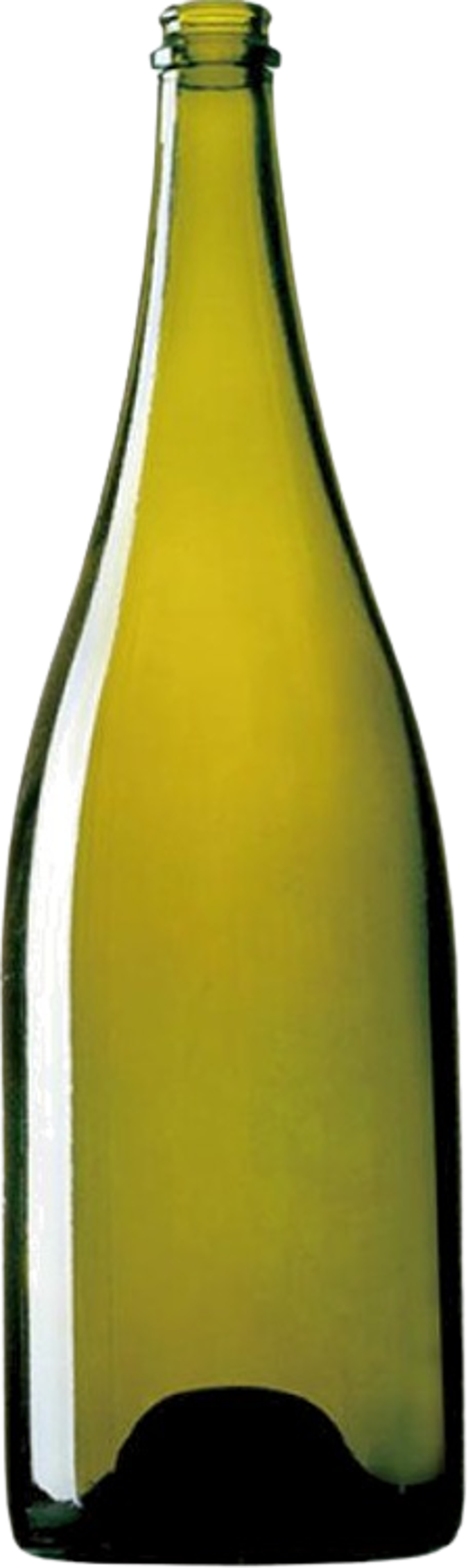
Most wineries settle the color question by category: reds and full-bodied whites in antique green, delicate whites and rosés in flint. A manufacturer with both colors already in production — like the زجاجة بوردو مستقيمة خضراء عتيقة سعة 1500 مل #840 — lets you run a mixed portfolio without waiting on a new furnace campaign for each color.
Lightweighting Bordeaux Bottles Without Losing Shelf Presence
Lightweight Bordeaux bottles trim glass mass from the base and body while keeping the external silhouette recognizable, which means the case still looks and stacks the same on a retail shelf. The main driver is freight: glass is dense, so shaving even 15-20% off bottle weight lowers the per-pallet weight of an ocean or truck shipment, which is where most of the shipping cost saving actually shows up.
The tradeoff is impact resistance — very light bottles need tighter glass distribution and consistent annealing to avoid weak points, so lightweighting is not just “thinner glass” but a mold and process change that a competent manufacturer validates before it goes into full production. Ask for drop-test or pallet-load data on any lightweight mold before switching your whole SKU over to it.
Matching Antique Green Across Your Full Bottle Range
Wineries rarely bottle a single format. A tasting-room or gift program might pair Bordeaux-format wine with olive oil, verjus, or a sparkling cuvée in Champagne-style glass — and matching the antique green tone across those formats keeps a shelf display looking like one cohesive brand rather than mismatched glass from different runs.

The زجاجة زيت مخروطية مستديرة عتيقة خضراء 1000 مل shows the same antique green family used outside the wine bottle itself, which is useful if your estate also sells oil or vinegar under the same label. For sparkling releases, the زجاجة شمبانيا خضراء عتيقة سعة 1500 مل #1550 extends that consistency into a Champagne-format bottle without introducing a visibly different glass tone next to your Bordeaux SKUs.
Sourcing Checklist: From Sample to Shipment
A structured sourcing process catches most of the problems that otherwise surface after a container has already left the factory.
| Stage | What to confirm |
|---|---|
| Spec sheet | Capacity, weight, neck finish (GPI/BVS/cork) and overall height/diameter |
| Physical sample | Color match, glass clarity, base stability, punt depth |
| Closure fit test | Cork, screw cap or crown finish seats correctly with your chosen closure supplier |
| Decoration trial | Label adhesion, silk-screen or frosting adhesion on the actual glass surface |
| Palletization check | Case count per pallet and resulting shipping weight |
Working through each stage with your chosen bordeaux wine bottle manufacturer before the first commercial order reduces the risk of a mismatched cap, an off-tone green, or a case configuration that does not fit your existing pallet program.
الأسئلة الشائعة
What makes a good Bordeaux wine bottle manufacturer?
A good bordeaux wine bottle manufacturer offers consistent color and weight across production runs, both antique green and flint options, verifiable closure compatibility, and the ability to provide a physical sample before a full order.
What is the difference between antique green and flint Bordeaux bottles?
Antique green Bordeaux bottles block more UV light and are the traditional choice for red wine, while flint (clear) Bordeaux bottles show off color and clarity but offer little UV protection on their own.
How much lighter are lightweight Bordeaux bottles?
Lightweight Bordeaux bottles typically shave roughly 15-20% off the glass mass of a standard 750ml bottle, though exact figures vary by mold and manufacturer.
Do I need a private mold to order custom Bordeaux bottles?
No — many manufacturers offer stock Bordeaux molds with lower minimums for faster launches, while a private mold is better suited to brands ready to scale volume with unique embossing or neck details.
Can the same manufacturer supply matching bottles for other products?
Many glass manufacturers, including GlassRock, produce antique green glass across multiple formats such as oil bottles and Champagne-style sparkling bottles, so a winery can keep a consistent glass tone across its full product range.
 English
 French
 Spanish
 Portuguese
 German
 Italian
 Japanese
 Korean
 Arabic
 Russian