
L×W×H Explained: How to Read Length, Width and Height on Packaging
L×W×H — often typed LxWxH — means Length × Width × Height, always in that order. Length is the longest horizontal side, width is the shorter horizontal side, and height is the vertical dimension when the package sits in its normal position. A box listed as 30 × 25 × 35 cm is therefore 30 cm long, 25 cm wide and 35 cm tall. Round bottles and jars use a different convention: diameter × height.
What order do the numbers go in?
In shipping, e-commerce and most packaging specifications, dimensions are written Length × Width × Height:
| Dimension | Definition | Example (30 × 25 × 35 cm box) |
|---|---|---|
| Length (L) | The longest side of the base, measured horizontally | 30 cm |
| Width (W) | The shorter side of the base, perpendicular to length | 25 cm |
| Height (H) | The vertical dimension, base to top, in normal resting position | 35 cm |
Two practical rules prevent most errors. First, length and width describe the footprint; height is always the third number. Second, when a listing gives only two numbers (“length and width”), it describes a flat footprint — a label panel, a pallet, a sheet — and height is either irrelevant or specified elsewhere. If a supplier’s drawing and a marketplace listing disagree on order, trust the drawing: it labels each dimension explicitly.
L×W×H vs H×W×D: why some industries flip the order
H×W×D (Height × Width × Depth) is the convention used for products viewed face-on: furniture, appliances, framed art, retail shelf displays. “Depth” replaces “length” because the measurement runs away from the viewer, front to back. The same physical object can therefore be listed as 30 × 25 × 35 cm (L×W×H, logistics view) and 35 × 30 × 25 cm (H×W×D, showroom view) without contradiction.
| Context | Convention | Order logic |
|---|---|---|
| Shipping cartons, parcels, e-commerce | L × W × H | Footprint first, then height |
| Furniture, appliances, shelf displays | H × W × D | As seen from the front |
| Bottles, jars, round containers | Diameter × Height | Rotationally symmetric |
| Pallets | L × W (footprint) | Height depends on the load |
When in doubt, never rely on number order alone — confirm which convention the document uses. A 5 cm error on one axis is the difference between a carton that closes and one that doesn’t.
How round bottles and jars are measured
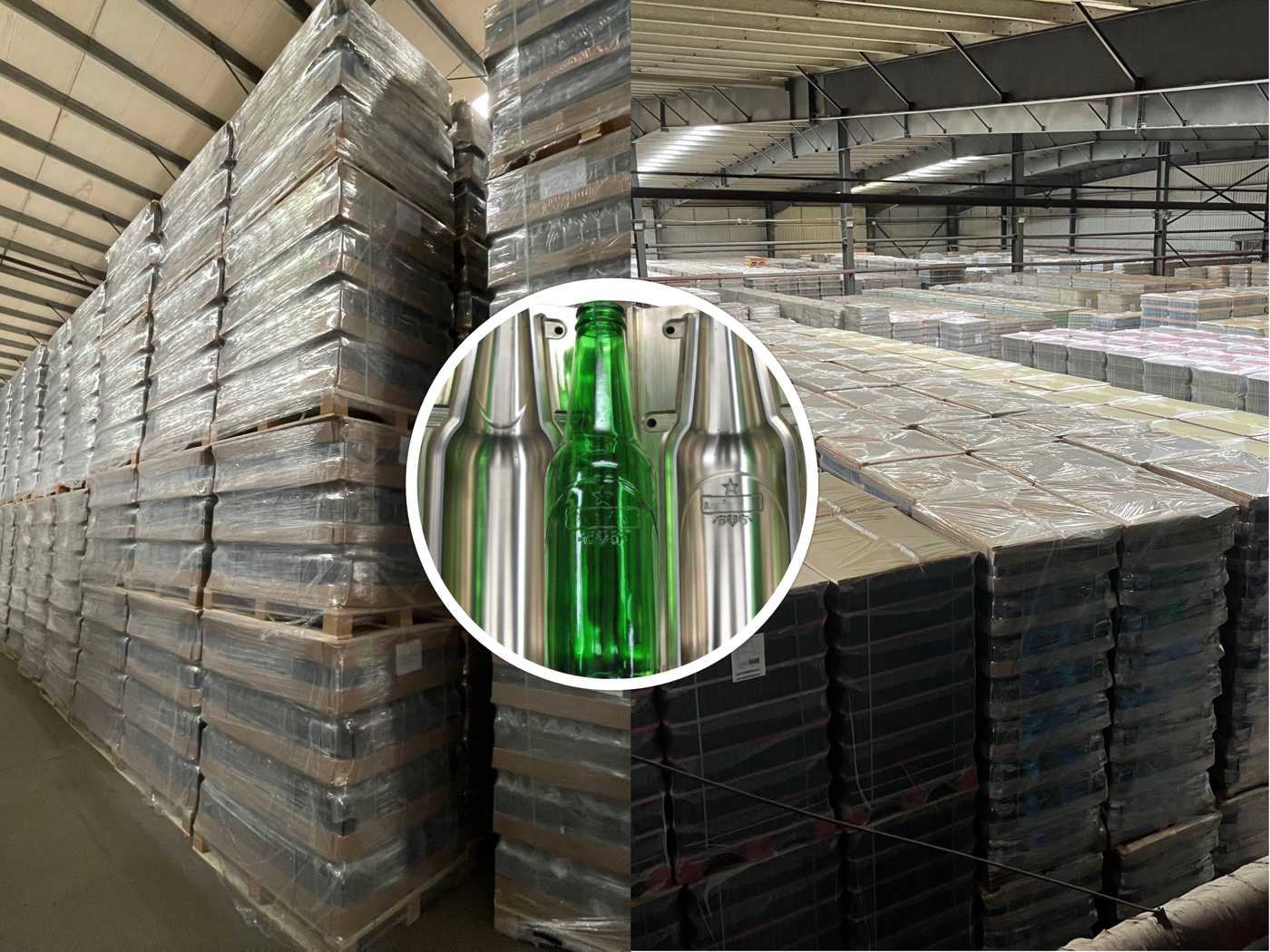
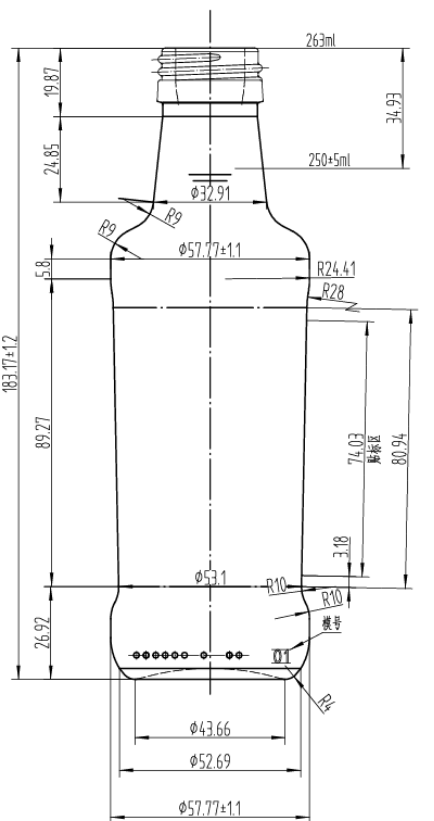
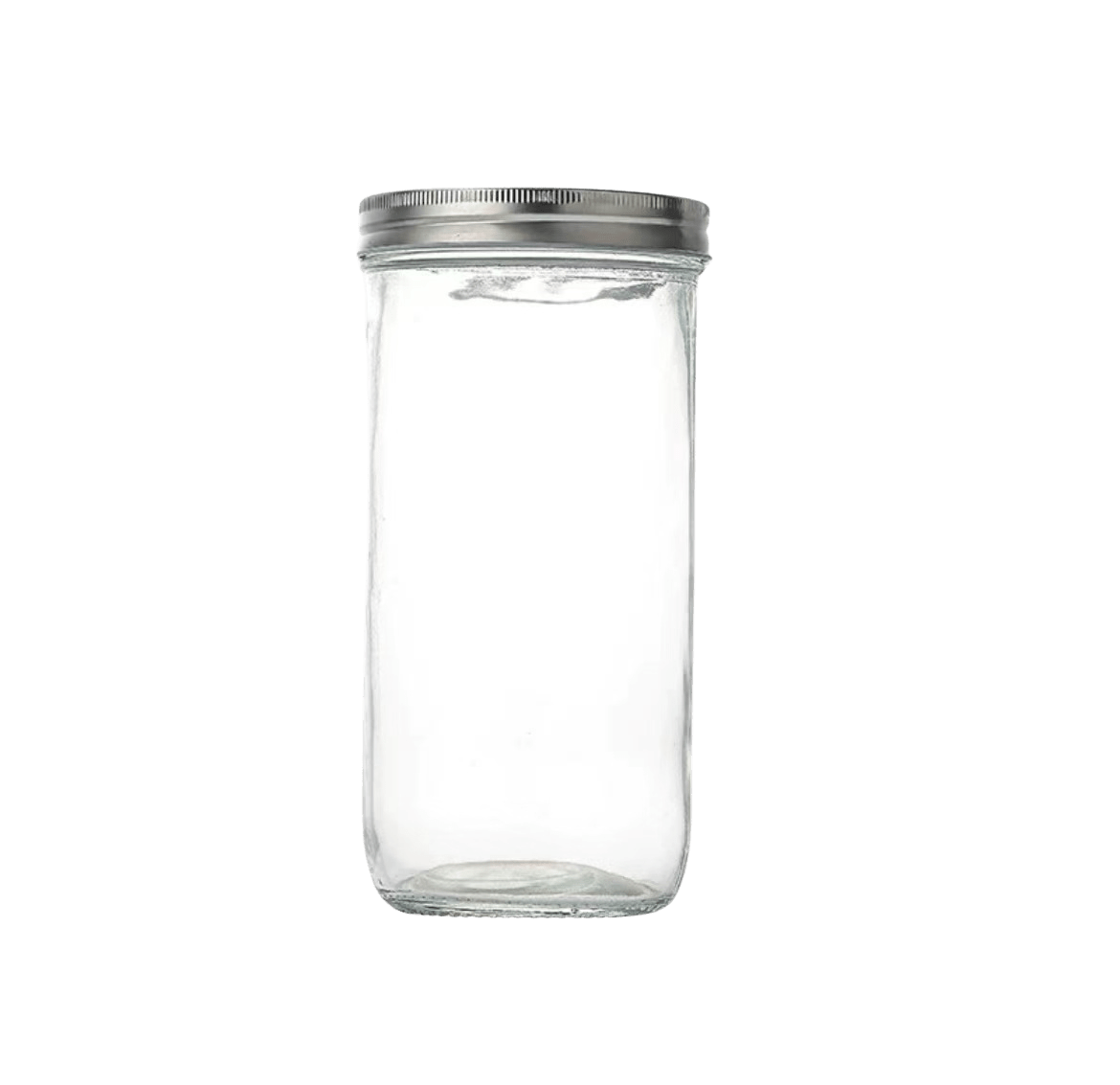
Cylindrical glass packaging doesn’t have a length or a width: it has a maximum body diameter and an overall height, written diameter × height (e.g. Ø 76 × 168 mm). A complete glass container drawing also specifies the label panel height, neck finish, and — critically — capacity figures that are independent of the outer dimensions. Two 8 oz jars can share a capacity yet differ in every external measurement.
The dimensions to expect on a professional bottle or jar specification: nominal fill capacity, brimful capacity, overall height, maximum body diameter, label panel height and circumference, neck finish designation, glass weight, and dimensional tolerances. Capacity alone never determines size — the same principle we detail in our bottle size guide. To convert between a drawing’s mL figures and fluid ounces, use our mL to oz converter.
Internal vs external dimensions and tolerances
Every box has two sets of dimensions. Internal dimensions determine what fits inside; external dimensions determine shipping cost and pallet fit. The difference — twice the wall thickness plus manufacturing clearance — is typically 6 to 12 mm per axis for corrugated cartons. Glass containers add their own dimensional tolerances (commonly ±1 to ±2 mm on height and diameter depending on size), which is why carton partitions are designed against the container’s maximum tolerated dimensions, not its nominal ones. Specifying a carton from nominal glass dimensions is one of the most common — and most expensive — packaging mistakes.

From product dimensions to cartons and pallets
Dimensions cascade: container → case → pallet. A worked example with a case of twelve 8 oz jars measuring 30 × 25 × 35 cm external:
| Step | Calculation | Result |
|---|---|---|
| Cases per layer (industrial pallet 120 × 100 cm) | (120 ÷ 30) × (100 ÷ 25) = 4 × 4 | 16 cases |
| Layers (max load height 175 cm, pallet 15 cm) | (175 − 15) ÷ 35 = 4.57 | 4 layers |
| Cases per pallet | 16 × 4 | 64 cases |
| Jars per pallet | 64 × 12 | 768 jars |
A 2 cm reduction in case height would allow a fifth layer — 20 more cases and 240 more jars per pallet. This is why professional buyers ask for external case dimensions before quoting freight, and why GlassRock publishes case and pallet quantities on every technical sheet. Standard pallet footprints are maintained by EPAL and ISO 6780.
الأسئلة الشائعة
What does L×W×H stand for?
Length × Width × Height, in that order. Length is the longest horizontal side, width the shorter horizontal side, height the vertical dimension in the package’s normal resting position.
Which number comes first, length or width?
Length comes first in the standard L×W×H convention. By convention length is the longer of the two horizontal dimensions, so 30 × 25 cm means 30 long by 25 wide.
What is the difference between L×W×H and H×W×D?
They describe the same three dimensions from different viewpoints. L×W×H (logistics) starts with the footprint; H×W×D (furniture, retail) describes the object face-on, with depth running front to back.
How are bottle dimensions written?
Round bottles and jars are specified as diameter × height (e.g. Ø 76 × 168 mm), plus neck finish and capacity figures. They have no length or width.
Are box dimensions internal or external?
It depends on the context: internal dimensions govern what fits inside, external dimensions govern shipping and palletization. Professional specifications state both; if only one figure is given, always ask which it is.
Is height always the last number?
In L×W×H, yes. In H×W×D, height comes first. This is why confirming the convention matters more than memorizing an order.


 English
 French
 Spanish
 Portuguese
 German
 Italian
 Japanese
 Korean
 Arabic
 Russian