
mL to oz Converter — US and UK Fluid Ounces
To convert milliliters to US fluid ounces, divide the number of milliliters by 29.5735295625. To convert milliliters to imperial fluid ounces, divide by 28.4130625. The converter below handles any mL to oz — or oz to mL — value instantly.
350 mL = 11.83 US fl oz
350 mL also equals 12.32 imperial fl oz.
350 ÷ 29.5735295625 = 11.8341 US fl oz
US fluid ounce = 29.5735295625 mL (NIST Handbook 44). Imperial fluid ounce = exactly 28.4130625 mL. Fluid ounces measure volume, not weight.
mL to oz conversion chart
The chart below covers the volumes people look up most often — from a 10 mL sample vial to a 3.75 L large-format bottle — in both US and imperial fluid ounces. For any value not listed, use the converter above.
| mL | US fl oz | Imperial fl oz |
|---|---|---|
| 10 mL | 0.34 | 0.35 |
| 15 mL | 0.51 | 0.53 |
| 20 mL | 0.68 | 0.70 |
| 25 mL | 0.85 | 0.88 |
| 30 mL | 1.01 | 1.06 |
| 40 mL | 1.35 | 1.41 |
| 50 mL | 1.69 | 1.76 |
| 60 mL | 2.03 | 2.11 |
| 80 mL | 2.71 | 2.82 |
| 100 mL | 3.38 | 3.52 |
| 120 mL | 4.06 | 4.22 |
| 150 mL | 5.07 | 5.28 |
| 187 mL | 6.32 | 6.58 |
| 200 mL | 6.76 | 7.04 |
| 250 mL | 8.45 | 8.80 |
| 300 mL | 10.14 | 10.56 |
| 331 mL | 11.19 | 11.65 |
| 350 mL | 11.83 | 12.32 |
| 355 mL | 12.00 | 12.49 |
| 375 mL | 12.68 | 13.20 |
| 475 mL | 16.06 | 16.72 |
| 500 mL | 16.91 | 17.60 |
| 570 mL | 19.27 | 20.06 |
| 700 mL | 23.67 | 24.64 |
| 710 mL | 24.01 | 24.99 |
| 720 mL | 24.35 | 25.34 |
| 750 mL | 25.36 | 26.40 |
| 900 mL | 30.43 | 31.68 |
| 945 mL | 31.95 | 33.26 |
| 1 L | 33.81 | 35.20 |
| 1.5 L | 50.72 | 52.79 |
| 1.75 L | 59.17 | 61.59 |
| 1.8 L | 60.87 | 63.35 |
| 2 L | 67.63 | 70.39 |
| 3 L | 101.44 | 105.59 |
| 3.75 L | 126.80 | 131.98 |
Three things to know when reading the chart. First, every figure is rounded to two decimals from an exact calculation — the chart never compounds rounding errors by converting a converted value. Second, the US and imperial columns are never interchangeable: the same 750 mL bottle is 25.36 oz in one system and 26.40 oz in the other. Third, if you need more precision — filling specifications, lab dilutions, regulatory paperwork — use the converter above and raise the decimal setting; it computes with the full factor and rounds only what it displays.
How to convert mL to US fluid ounces
One US fluid ounce is defined as exactly 29.5735295625 mL (NIST Handbook 44). So the conversion is a single division:
US fl oz = mL ÷ 29.5735295625
Worked example — 350 mL: 350 ÷ 29.5735295625 = 11.8349… ≈ 11.83 US fl oz. A quick sanity check for mental math: 30 mL is just over 1 US fl oz, so 350 mL should land a little under 12 oz — and it does. For rough estimates, dividing by 30 gets you within about 1.4% of the exact answer; for labels, specifications and anything contractual, use the full factor.
How to convert US fluid ounces to mL
Going the other way, multiply by the same factor:
mL = US fl oz × 29.5735295625
Worked example — 12 US fl oz: 12 × 29.5735295625 = 354.8823… ≈ 354.88 mL. That’s why the classic 12-ounce serving corresponds to the 355 mL bottle and can: 355 mL is the nearest whole-milliliter capacity, and the 0.12 mL difference is far below any filling tolerance. The same logic explains many “odd” metric capacities — 44.36 mL is a 1.5 oz shot, 473 mL is a US pint, and 946 mL is a US quart.
US vs imperial fluid ounces: are they the same?
No. One US fluid ounce equals approximately 29.5735 mL, while one imperial (UK) fluid ounce equals exactly 28.4130625 mL — the US unit is about 4.1% larger. The two systems drifted apart in the 19th century: the imperial system defined its gallon by the volume of ten pounds of water, while the US kept the older English wine gallon. Every conversion on this page therefore exists in two versions, and mixing them up produces errors big enough to matter in recipes, lab work and packaging specifications alike.
| Unit | Milliliters |
|---|---|
| 1 US fl oz | 29.5735295625 mL |
| 1 imperial fl oz | 28.4130625 mL |
| Difference | 1.1604670625 mL (US is ≈ 4.1% larger) |
A practical tell: British and Commonwealth sources quote a 750 mL bottle as 26.4 oz, American sources as 25.4 oz. Both are right — they’re using different ounces. When a document just says “oz,” check which system it means before you rely on the number.
Fluid ounces measure volume, not weight
A fluid ounce is a unit of volume; the ounce on a kitchen scale is a unit of weight (mass). They are different quantities that happen to share a name. One US fluid ounce of water weighs about 1.04 ounces; a fluid ounce of honey weighs roughly 1.5 ounces, and a fluid ounce of olive oil about 0.96 ounces — same volume, different weights, because density differs. So “8 oz of flour” (weight) cannot be measured in a liquid measuring cup, and 100 mL of syrup does not weigh 100 grams. Whenever you convert with this page, make sure the source figure is genuinely a volume: milliliters, liters and fluid ounces convert between each other; grams and weight-ounces do not, unless you also know the density.
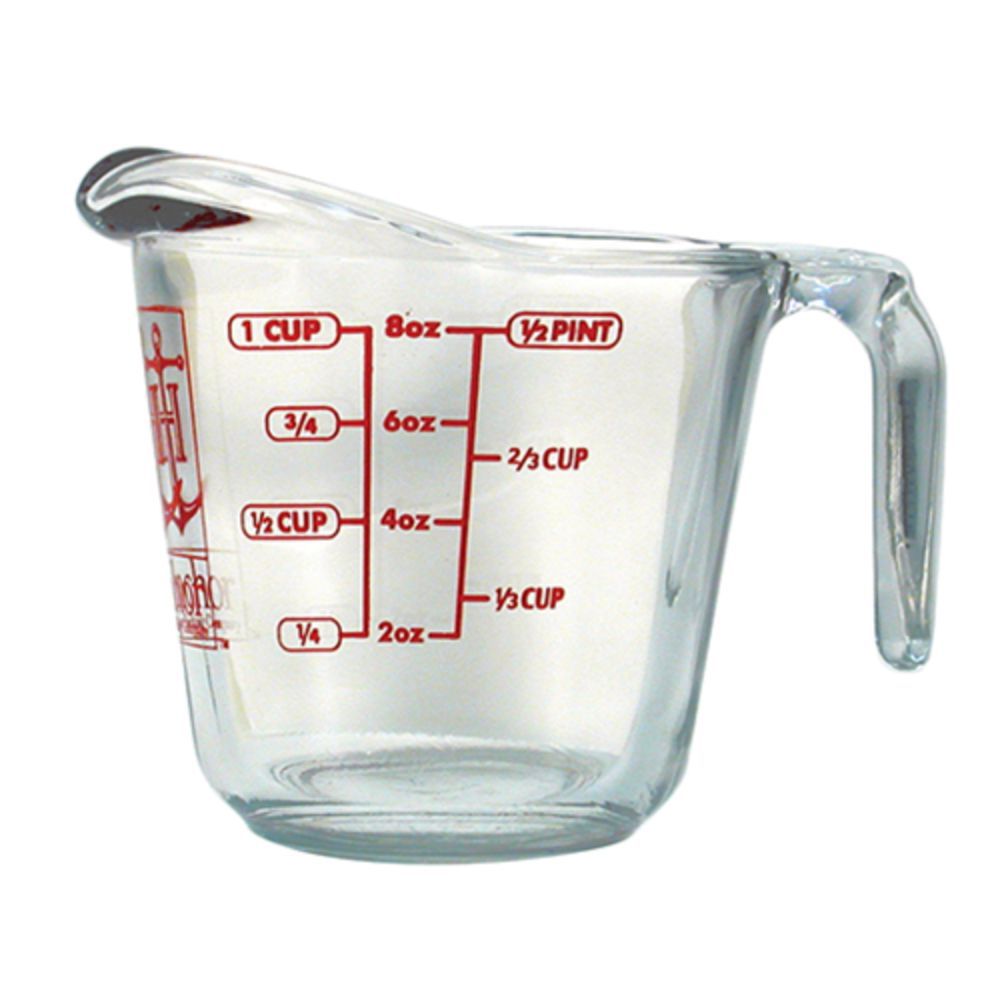
The confusion has real consequences in packaging. A “16 oz jar” can mean a jar that holds 16 fluid ounces of liquid (473 mL) or a jar sized for 16 weight-ounces of a product like honey — two very different containers. Capacity specifications for glass are always volumes; if a brief arrives expressed in weight, the first step is to convert it to milliliters using the density of the actual product, and only then look for a bottle or jar.
Common bottle capacities in mL and oz
In packaging, capacities are specified in milliliters, but buyers in the US and UK constantly need the ounce equivalent — for labels, listings and customer-facing copy. These are the capacities we quote most often at GlassRock:
| Capacidade | US fl oz | Imperial fl oz | Typical packaging use |
|---|---|---|---|
| 30 mL | 1.01 | 1.06 | Dropper bottles, cosmetic samples |
| 50 mL | 1.69 | 1.76 | Spirits miniatures, cosmetics |
| 100 mL | 3.38 | 3.52 | Travel-size, premium samples |
| 250 mL | 8.45 | 8.80 | Sauces, oils, RTD beverages |
| 375 mL | 12.68 | 13.20 | Half-size spirits bottles |
| 500 mL | 16.91 | 17.60 | Liqueurs, oils, waters |
| 700 mL | 23.67 | 24.64 | Standard European spirits bottle |
| 750 mL | 25.36 | 26.40 | Standard North American spirits bottle |
| 1 L | 33.81 | 35.20 | Bar and duty-free spirits, juices |
| 1.75 L | 59.17 | 61.59 | US value-format spirits (“handle”) |
See our complete liquor bottle size chart for every authorized US spirits format, pour counts, and B2B guidance on choosing between them. For jars, our 4 oz and 8 oz container size guide covers the two most common food, cosmetic and candle formats.

How many ounces is 350 mL?
350 mL = 11.83 US fl oz (350 ÷ 29.5735295625) or 12.32 imperial fl oz. The 350 mL size is a regional small spirits format, newly authorized in the US in 2025, and also a common capacity for sauces and syrups.
How many ounces is 80 mL?
80 mL = 2.71 US fl oz or 2.82 imperial fl oz. This capacity appears in cosmetics, samples and small jars rather than beverage bottles — it sits between the 50 mL miniature and the 100 mL travel formats.
How many ounces is 375 mL?
375 mL = 12.68 US fl oz or 13.20 imperial fl oz. Exactly half of a 750 mL bottle, the 375 mL “half bottle” is a standard spirits trial size — sometimes informally (and inaccurately) called a pint, which would actually be 473 mL.
How many ounces is 500 mL?
500 mL = 16.91 US fl oz or 17.60 imperial fl oz. Half a liter is one of the most versatile capacities in packaging — the classic liqueur bottle in Europe, and a standard size for water, oils and vinegars. Note it’s about 0.9 oz more than a US pint (16 oz).
How many ounces is 700 mL?
700 mL = 23.67 US fl oz or 24.64 imperial fl oz. This is the standard spirits bottle across Europe and the UK, and since January 2025 it is also an authorized US standard of fill — which is why you now see 700 mL bottles on American shelves.
How many ounces is 750 mL?
750 mL = 25.36 US fl oz or 26.40 imperial fl oz. The standard North American spirits bottle, commonly called a fifth. At a 1.5 oz pour it yields 16.91 servings — 16 full pours with about 40 mL left over, not the “exactly 16 shots” often claimed.
How many ounces is 1 liter?
1 L (1,000 mL) = 33.81 US fl oz or 35.20 imperial fl oz. The liter bottle is the duty-free and back-bar standard for spirits, and the reference size for waters and juices. As a rule of thumb, a liter is about 5.8% more than a US quart (32 oz).
How many ounces is 1.75 liters?
1.75 L (1,750 mL) = 59.17 US fl oz or 61.59 imperial fl oz. This is the US “handle” of spirits. Despite the common nickname, it is not a half gallon — a US half gallon is 64 US fl oz (about 1.893 L), roughly 143 mL more.
mL and oz conversion: frequently asked questions
How many mL are in 1 fluid ounce?
One US fluid ounce is 29.5735295625 mL; one imperial fluid ounce is exactly 28.4130625 mL. For quick mental math, “about 29.6 mL” (US) or “about 28.4 mL” (imperial) is accurate enough for everyday use — but use the full factors for anything that ends up on a label or specification.
Is 1 oz the same as 30 mL?
Not exactly. 30 mL is a convenient rounding of the US fluid ounce (29.5735 mL) and overstates it by about 1.4%. The rounding is so common that US nutrition labeling actually defines a fluid ounce as exactly 30 mL for label purposes — but for measurement and packaging work, the true factor is 29.5735295625.
How many ounces is 100 mL?
100 mL is 3.38 US fl oz or 3.52 imperial fl oz. This is the airline liquid limit in carry-on luggage (usually stated as 100 mL / 3.4 oz), and a standard travel and sampling size for spirits and cosmetics alike.
What is 12 oz in mL?
12 US fl oz equals 354.88 mL — which is why the standard North American can and bottle is 355 mL, the nearest whole milliliter. In imperial ounces, 12 oz would be 340.96 mL, a figure you may encounter in older UK packaging.
How many mL is a shot?
A standard US shot of 1.5 fl oz equals 44.36 mL. Other common pour sizes: 1 oz is 29.57 mL, 1.25 oz is 36.97 mL, and a 2 oz double is 59.15 mL. Shot sizes vary by country — Japan’s 30 mL and the UK’s 25 or 50 mL servings are legally defined measures, not fluid-ounce roundings.
How many ounces is 500 mL of water?
500 mL of any liquid is 16.91 US fl oz by volume. If you meant weight: 500 mL of water weighs 500 g, or about 17.6 avoirdupois ounces. The volume answer and the weight answer differ because fluid ounces and weight ounces are different units.
How do I convert liters to fluid ounces?
Multiply liters by 33.814 for US fluid ounces (1,000 ÷ 29.5735295625) or by 35.195 for imperial fluid ounces. So 2 L is 67.63 US fl oz and 3 L is 101.44 US fl oz. The converter above accepts liters directly — select “Liters — L” as the input unit.
Why do the US and UK use different fluid ounces?
Britain redefined its measures in 1824 around the imperial gallon (the volume of 10 lb of water), after American independence — so the US retained the older English wine gallon of 231 cubic inches. Each gallon divides into 128 US or 160 imperial fluid ounces, leaving the two ounces about 4.1% apart.
Which fluid ounce do nutrition labels use?
US nutrition labeling (FDA) defines a fluid ounce as exactly 30 mL for serving-size declarations, slightly larger than the measured US fluid ounce of 29.5735 mL. That’s why a 355 mL can is labeled 12 fl oz but its nutrition panel math treats a fluid ounce as 30 mL. UK labels use milliliters directly.
Does 1 fluid ounce of liquid weigh 1 ounce?
Only approximately, and only for water-like liquids. One US fluid ounce of water weighs about 1.04 oz; one imperial fluid ounce of water weighs almost exactly 1 oz (that was the original design of the imperial system). Denser liquids like syrups weigh more per fluid ounce; alcohols weigh less.
How many ounces is 750 mL?
25.36 US fl oz, or 26.40 imperial fl oz. If you’re comparing spirits bottles, note that the “26 oz bottle” of older Canadian usage and the American “25-ounce fifth” are the same 750 mL bottle described in two different ounce systems.
What bottle size is 16.9 oz?
16.9 US fl oz is 500 mL — the ubiquitous half-liter water bottle. The label usually reads “16.9 fl oz (500 mL)”. Similarly, 8.45 oz is 250 mL, 11.83 oz is 350 mL, and 33.81 oz is one liter.
How many cups is 250 mL?
250 mL is 1.057 US customary cups (a US cup is 236.588 mL, i.e. 8 US fl oz) — see our full mL to cups chart — and exactly 1 metric cup, the measure used in Australia and common in modern recipes. When a recipe’s origin is unclear, the 6% gap between the two cups can matter in baking.
Is 40 mL the same as 40 g?
Only for water and liquids of similar density. Milliliters measure volume, grams measure mass; 40 mL of vegetable oil weighs about 37 g, while 40 mL of honey weighs about 57 g. To convert between mL and grams you must know the liquid’s density — there is no universal factor.
How precise are the conversions on this page?
All figures are computed with the exact definitions — 29.5735295625 mL per US fluid ounce (NIST Handbook 44) and 28.4130625 mL per imperial fluid ounce — with rounding applied only at display. The converter keeps full precision internally and lets you choose 0 to 6 decimal places.
What’s the fastest way to estimate mL from ounces in my head?
Multiply ounces by 30 and knock off a little: 6 oz → 180 mL minus ~2.5 mL ≈ 177 mL (exact: 177.44 mL). Going the other way, divide mL by 30 and add ~1.4%. For anything beyond estimation — recipes at scale, lab work, packaging specs — use the exact factor or the converter above.
Converting ounces because you’re speccing a container? Tell us the capacity and product, and we’ll match it to real glass. Find a suitable bottle in the GlassRock range.
Working with spirits formats? See our complete liquor bottle size chart — every US-authorized capacity from 50 mL to 3.75 L, with pour counts and market guidance.

 English
 French
 Spanish
 Portuguese
 German
 Italian
 Japanese
 Korean
 Arabic
 Russian