
A bottle closure only works if it matches the bottle’s neck finish — the moulded thread and sealing surface at the top of the container. Finish designations such as 28-400 или 28-410 describe two different bottles with the same 28 mm thread diameter but different thread heights, and a cap made for one will not seal on the other. This guide covers every common closure family, how to read a finish code, how to verify compatibility before you commit to a mould, and the four failure modes that account for almost all sealing problems.

Why closure compatibility matters
The closure is where a packaging project most often fails, and it fails late — usually on the filling line, with glass already delivered and product waiting. The reason is structural: the bottle, the cap and the capping machine are typically bought from three different suppliers, each of whom assumes someone else has checked the interface.
There is a second reason it matters more for glass than for other materials. The neck finish is formed first in the moulding cycle, in the blank mould, and it is never reworked afterwards — see how glass bottles are made. Once a mould is cut for a 28-400 finish, changing to 28-410 means new tooling. On a custom project that is a five-figure decision, which is why closure selection belongs at the start of the brief, not the end.
The anatomy of a neck finish
Five measurements define a threaded finish, and they are quoted on every professional technical drawing. T is the outside diameter across the thread. E is the root diameter at the base of the thread. I is the bore, the internal opening. H is the finish height. S is the distance from the sealing surface to the transfer bead.
Of these, the sealing surface deserves special attention because it is the only one that is not a number. It is the flat top ring where the liner makes contact. A chip, a dent, an out-of-flat condition or a moulding fault of a fraction of a millimetre on this ring will leak regardless of how well the cap fits. When you audit incoming glass, this is the surface to inspect.
How to read a finish code
The GPI/SPI system used across most of the industry writes a finish as two numbers, for example 28-400.
The first number is the T dimension in millimetres — 28-400 has a 28 mm thread outside diameter. The second number is the finish series, which encodes the thread profile and height:
| Series | Thread turns | Height | Typically used for |
|---|---|---|---|
| 400 | 1 turn | Shortest | General purpose, jars, sauces |
| 410 | 1.5 turns | Taller | Where a more secure hold is wanted |
| 415 | 2 turns | Tallest | Tall caps, pumps, dispensing closures |
| 425 | 1.5 turns, wider root | Medium | Wide-mouth food jars |
So 28-400 and 28-410 accept the same 28 mm cap diameter, but the 410 finish is taller with more thread. Fit a 400 cap on a 410 bottle and it will not seat on the sealing surface; fit a 410 cap on a 400 bottle and it will bottom out or spin. This single confusion is, in our experience, the most common closure error in packaging projects.
Two other systems appear regularly. ROPP (roll-on pilfer-proof) finishes have no moulded thread at all — the thread is formed into the aluminium cap by the capping head during application, which is why ROPP is common on spirits. Cork finishes have a smooth tapered bore with no thread, dimensioned by bore diameter and taper.
The main closure families
Six families cover almost all glass packaging. Each implies a different finish, a different capping machine and a different position on the shelf.
Bartop corks and glass stoppers
A tapered cork or synthetic plug with a decorative top in wood, aluminium, plastic or glass. Reclosable by hand, which is why they dominate premium spirits meant to be poured repeatedly. They require a smooth cork finish and are applied with light vertical pressure rather than torque.
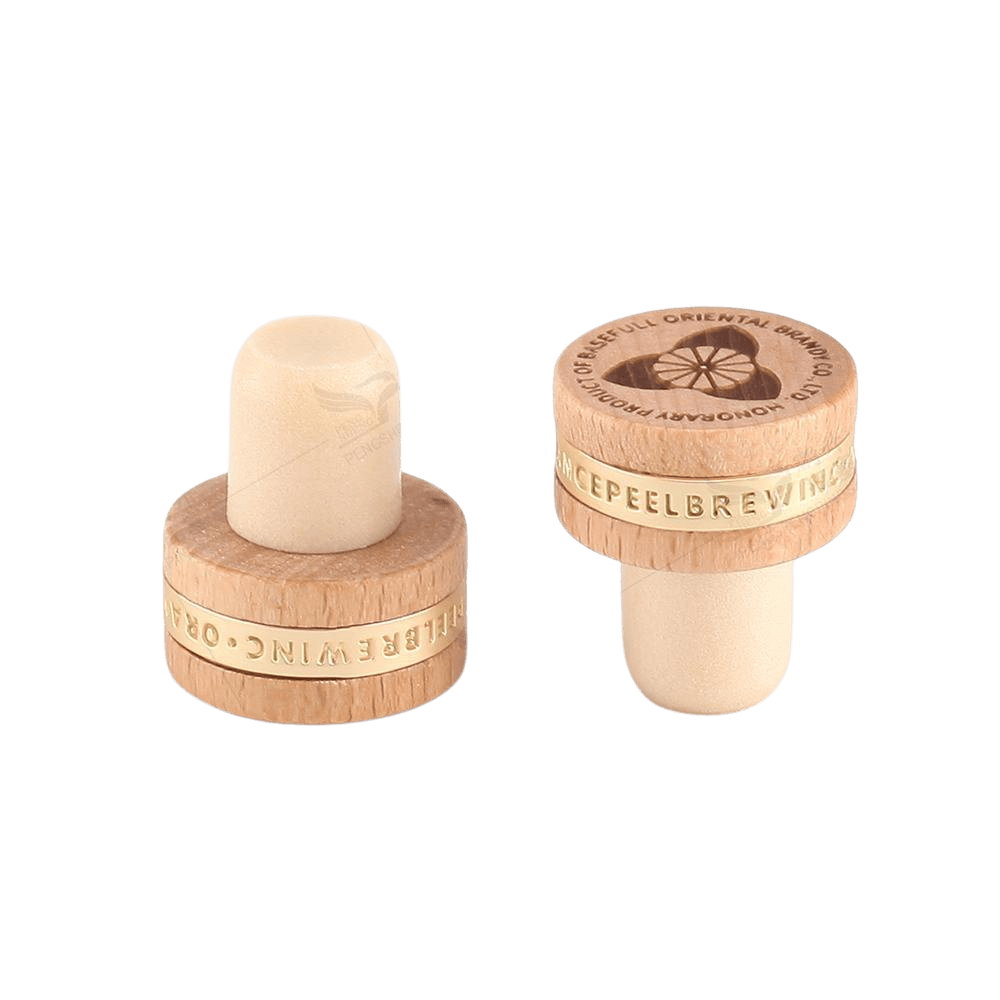
Premium spirits, reclosable
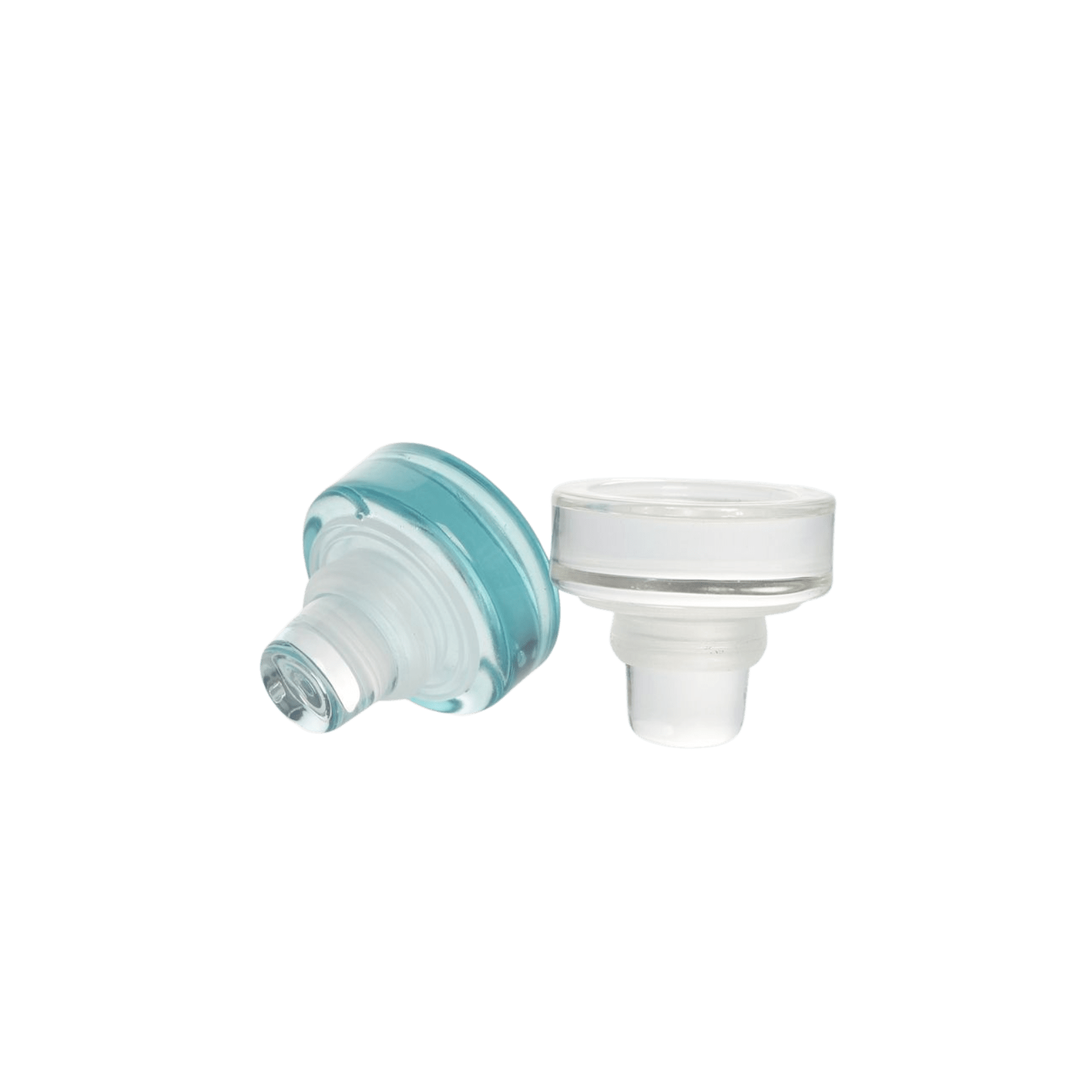
Luxury tier, heavy feel

Modern spirits and liqueurs
Wine corks
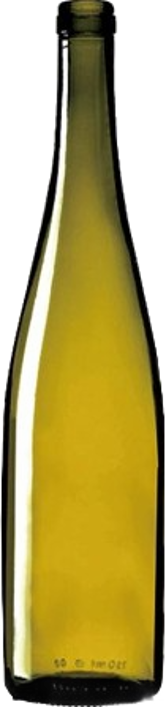
Cylindrical corks driven into a straight cork finish and held by compression. Natural, agglomerate, micro-agglomerate and synthetic variants trade cost against oxygen transmission consistency and taint risk. Champagne corks are larger, mushroom-shaped after insertion, and require a heavier finish with a wire cage seat.
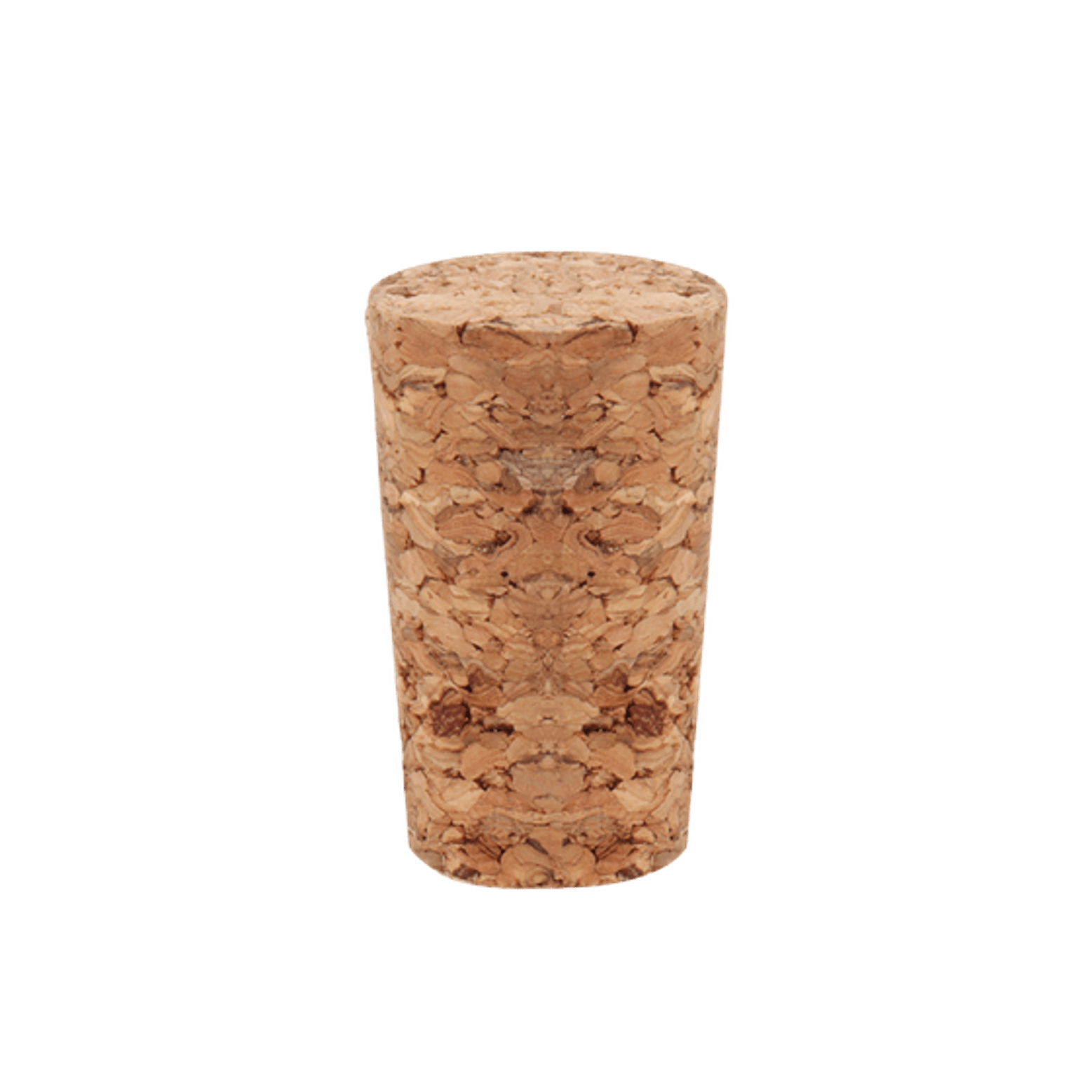
Still wine, ageing
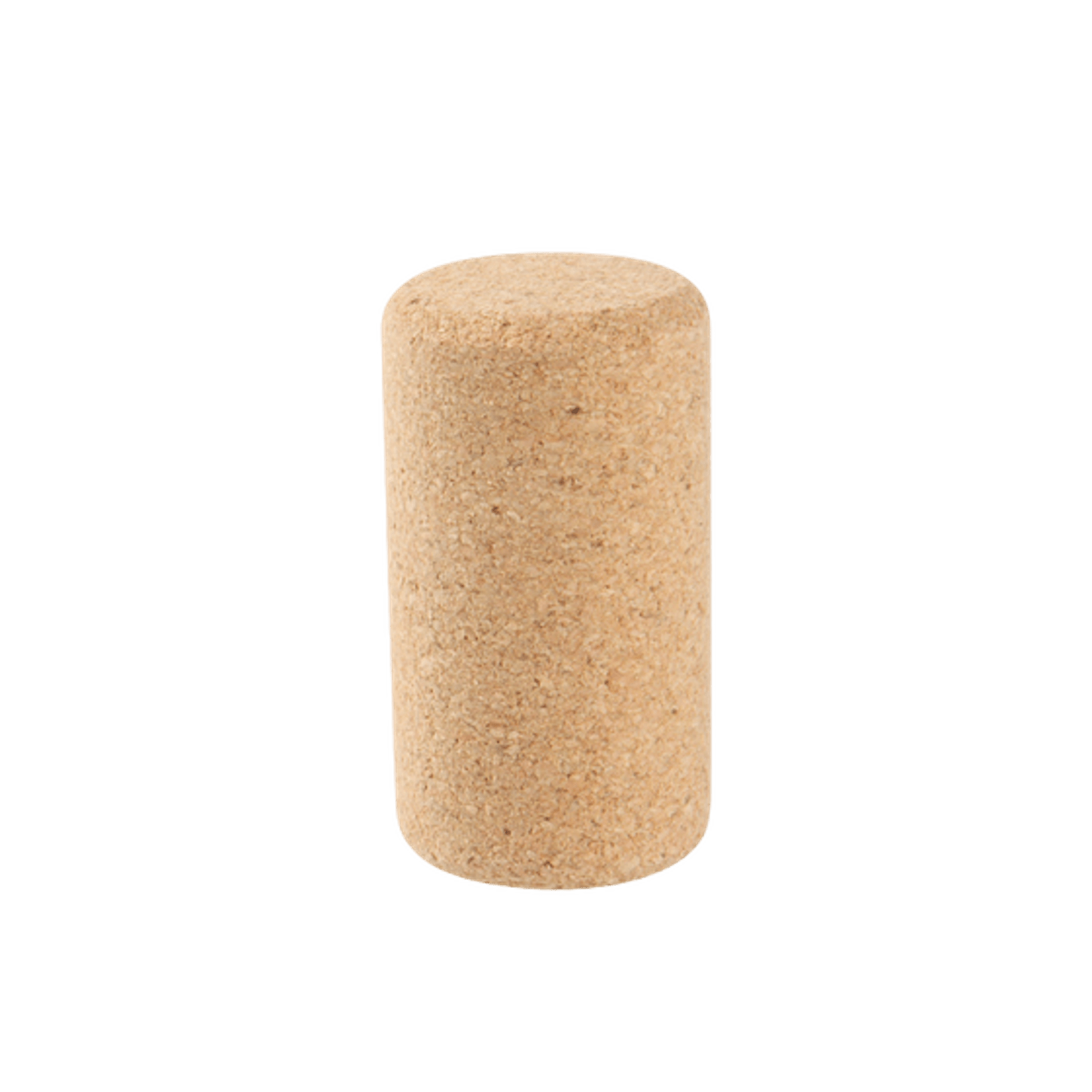
Consistent OTR, lower taint risk

Sparkling, with wire cage
Screw caps
Aluminium or plastic caps engaging a moulded thread, or ROPP caps threaded onto the bottle during application. They give the most consistent seal available, integrate tamper evidence in the pilfer band, and run fastest on the line. Pourer inserts can be fitted for controlled dispensing.
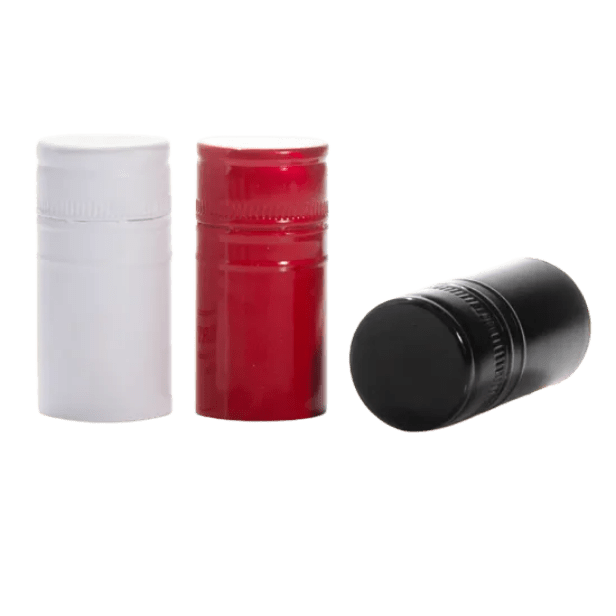
Spirits, oils, sauces
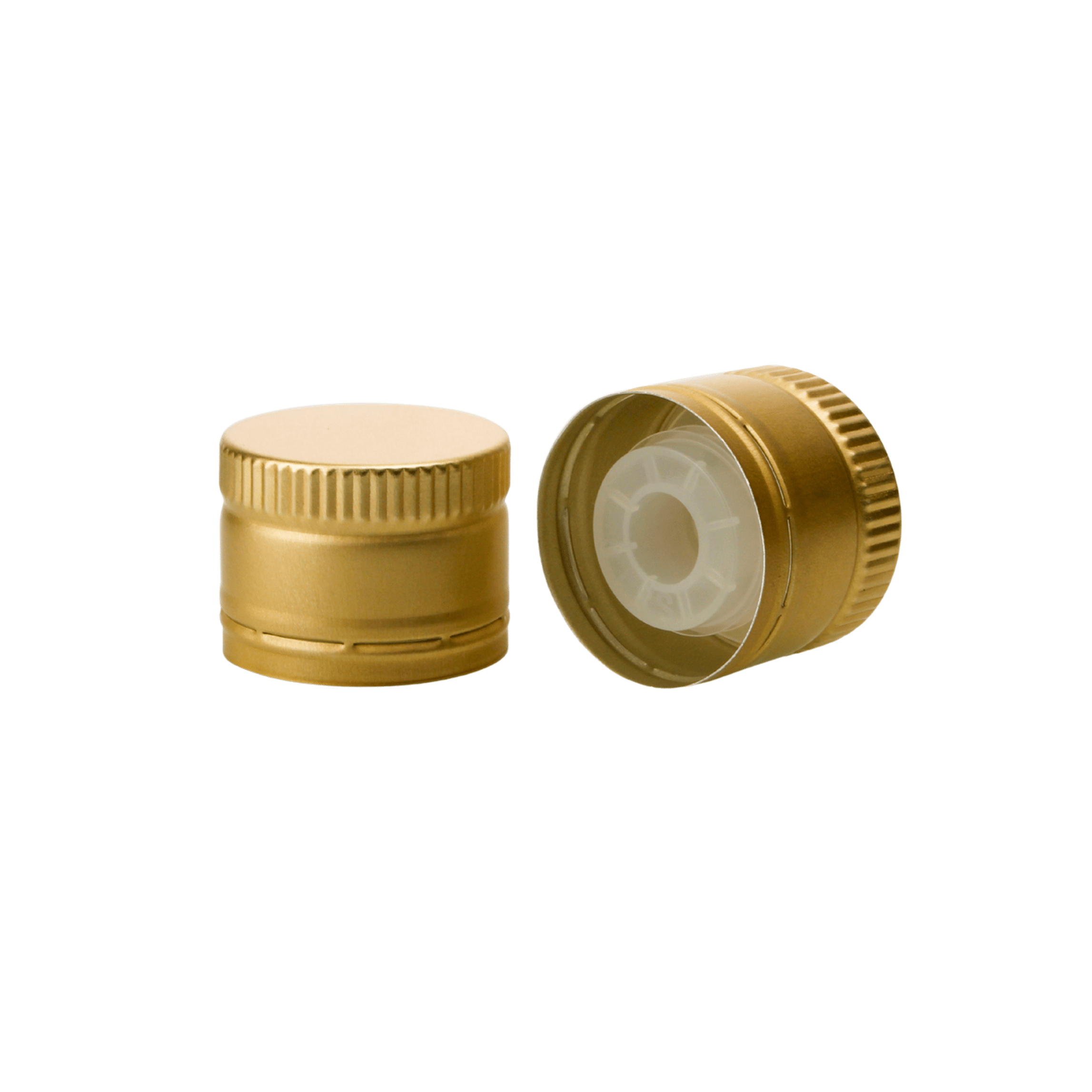
Controlled pour, oils and spirits
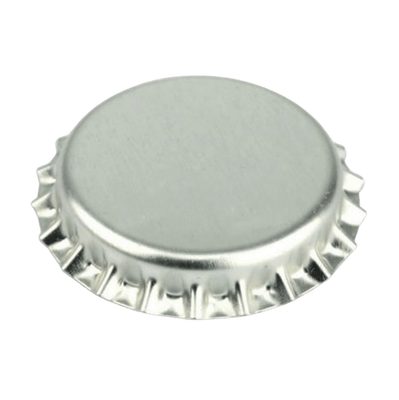
Beer and carbonated drinks
Crown caps
The 26 mm tinplate crown, crimped over a crown finish, remains the standard for beer and carbonated soft drinks because it holds pressure reliably and costs very little. Pry-off and twist-off variants use different finish geometries and are not interchangeable — a point worth confirming explicitly, since both are called “crown”. See our guide to beer bottle sizes and formats.
Jar caps
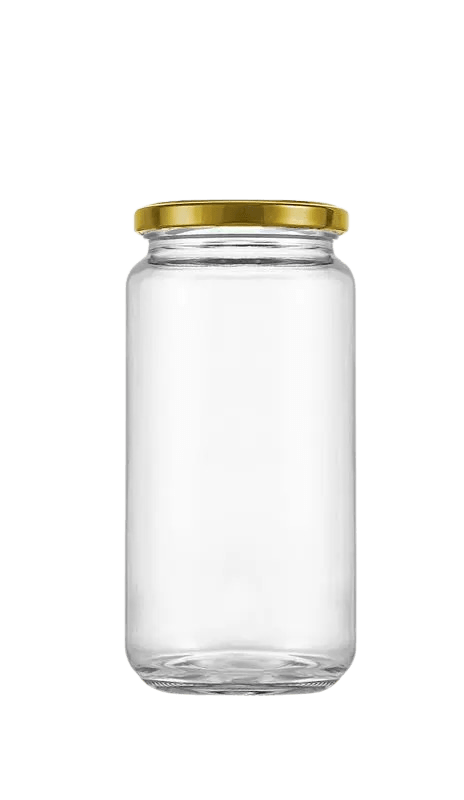
Metal lug caps and continuous-thread caps for food jars, usually with a vacuum-sealing compound and a button that indicates seal integrity. Mason jar systems use a two-part lid and band. Finish choice here is driven by the filling and pasteurisation process as much as by the product.

Two-part, home and artisan
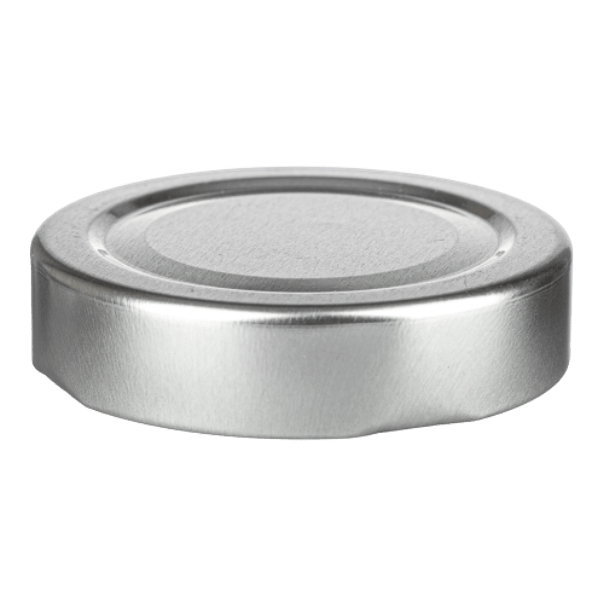
Food jars, vacuum seal
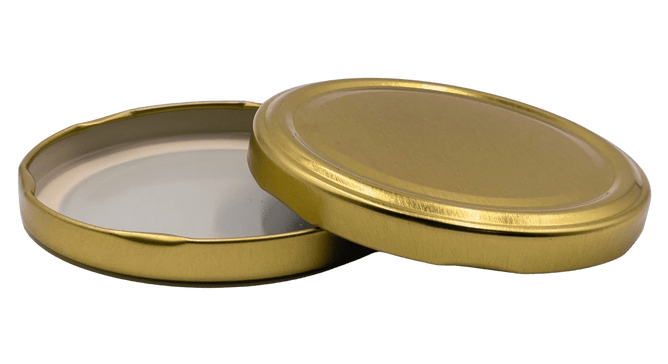
Low-profile food jars
Capsules and over-caps
Capsules are not closures — they are decorative and tamper-evident sleeves fitted over a cork or cap. Tin, aluplastic, polylaminate and PVC variants differ in cost, appearance and recyclability. They shrink or spin onto the neck, so the neck profile below the finish has to accommodate them.
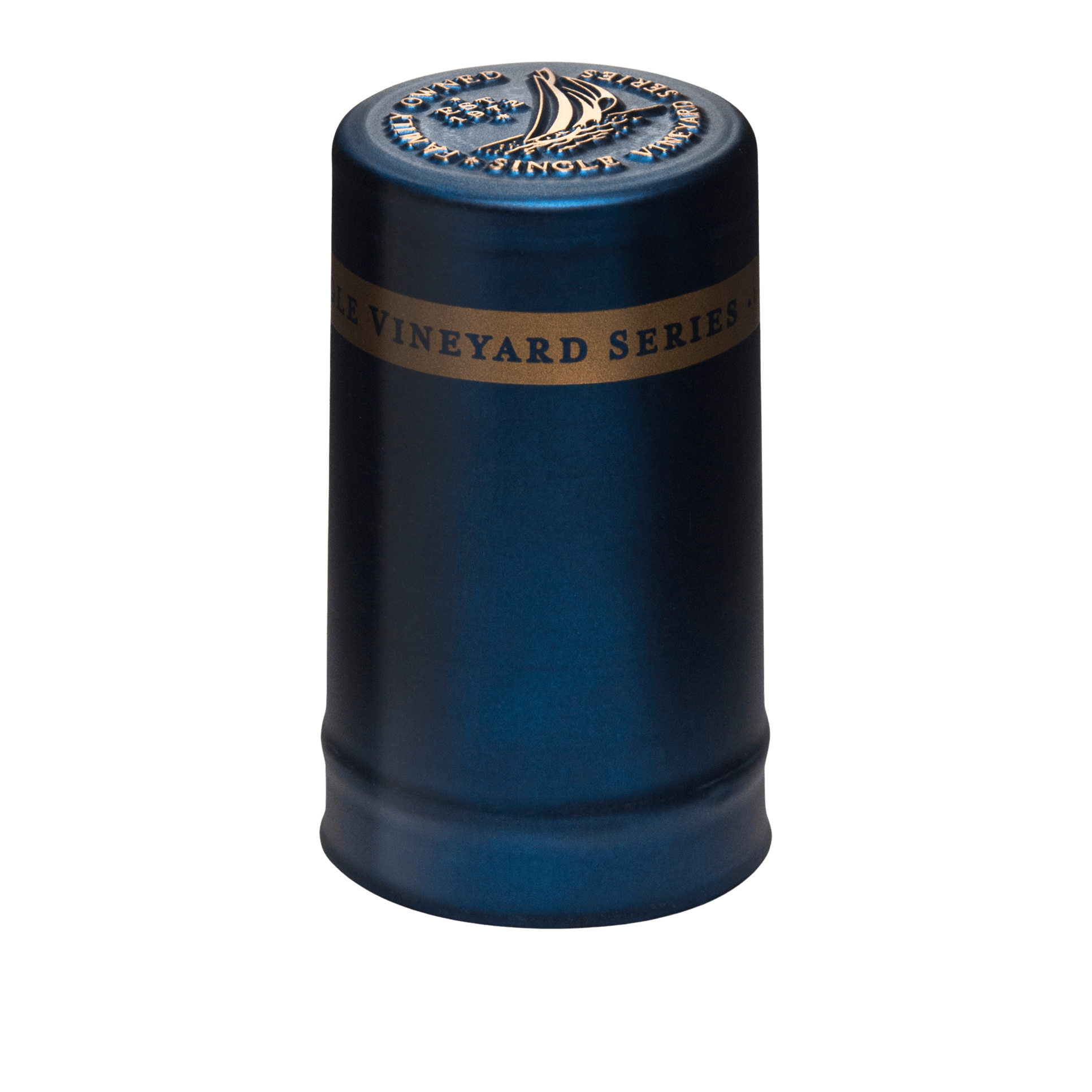
Premium wine and spirits
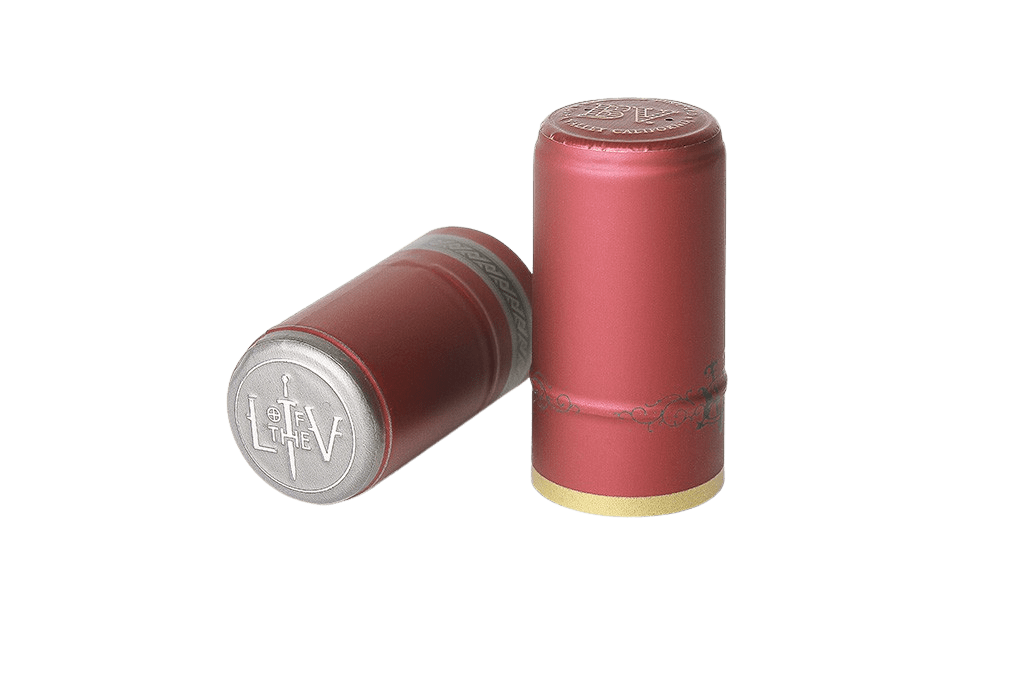
Cost-effective premium look
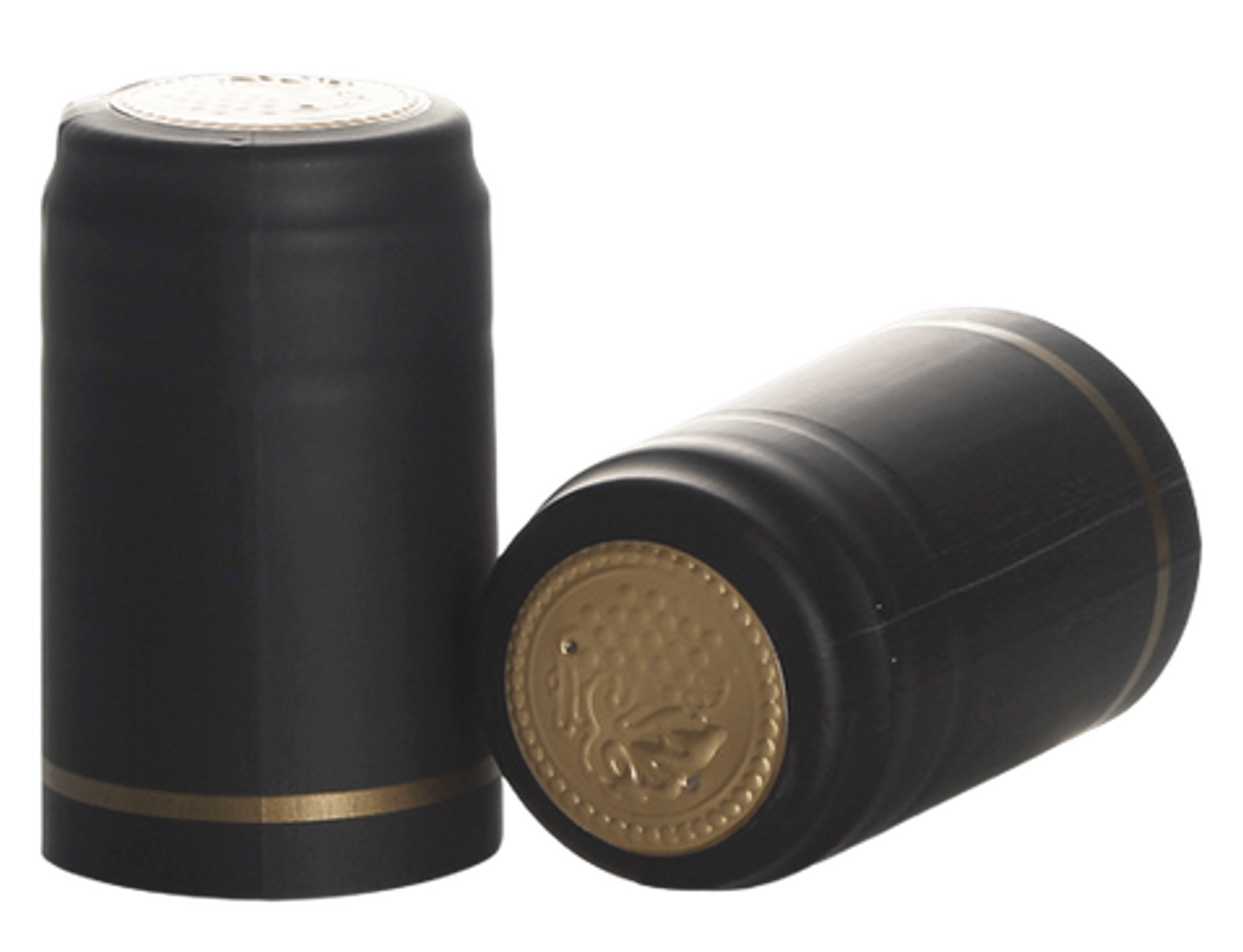
Volume production
Cork versus screw cap
For wine, the debate is largely settled on technical grounds and unsettled on cultural ones: screw caps give lower and more consistent oxygen transmission and eliminate cork taint, while cork retains strong consumer associations in several markets. For spirits, bartop corks dominate the premium tier precisely because the ritual of pulling the stopper is part of the product experience.
What matters commercially is that this is a bottle decision, not a cap decision. A cork finish and a threaded finish are different mould cavities. Decide before tooling.
The liner: the part that actually seals
The cap holds the closure down; the liner inside it does the sealing. It is the most frequently overlooked component in a packaging specification and a common cause of failures that look like glass problems.
| Liner | Seals well against | Watch out for |
|---|---|---|
| Expanded polyethylene (EPE) | General purpose, water-based products | Limited chemical resistance |
| Pulp and polyethylene (Poly-Seal) | Dry goods, low-cost applications | Not for high-alcohol or oils |
| PTFE-faced | Aggressive chemistry, essential oils, high ABV | Highest cost |
| Induction seal (foil) | Tamper evidence plus hermetic seal | Requires an induction sealer on the line |
| Plastisol (jars) | Vacuum-packed food, pasteurised | Process temperature must be specified |
The rule is straightforward: specify the liner against the product, not against the cap. A high-ABV spirit, an essential oil and a vinegar-based sauce will each attack a different liner material.
Application torque and capping
A correct cap on a correct finish still leaks if it is applied wrong. Application torque is specified per closure diameter, and a widely used rule of thumb is roughly half the cap diameter in millimetres, expressed in inch-pounds — so a 28 mm cap is applied at approximately 14 in·lb. Manufacturers publish exact figures; use theirs rather than the rule.
Under-torque leaves the liner uncompressed and the product leaks or oxidises. Over-torque distorts the liner, strips the plastic thread or, on glass, can crack the finish. Both faults are set by the capping machine, which is why removal torque should be measured on production samples at start-up and periodically thereafter, not assumed.
Recyclability and material choice
Closure material increasingly matters for a packaging brief, and the picture is mixed. Aluminium caps recycle well and are widely accepted, though they must be separated from the glass. Tinplate crowns are magnetically separable and recover easily. Natural cork is a renewable, carbon-negative harvested material but has limited recycling infrastructure. PVC capsules are the weakest option environmentally and are being phased out by many brands in favour of tin, aluplastic or polylaminate.
None of these is a large share of a package’s total footprint compared with the glass itself — the levers that matter most are covered under cullet ratio and lightweighting. But closure material is highly visible to consumers, and PVC in particular is now a reputational rather than a technical question.
How to verify compatibility before you order
Six checks, in order. Doing them takes an afternoon; skipping them costs a production run.
- Get the finish drawing from the glass supplier, with tolerances on T, E, I, H and S — not just the finish code.
- Get the cap drawing from the closure supplier and confirm it states the same finish designation.
- Confirm the liner against your actual product chemistry and ABV, in writing from the closure supplier.
- Physically fit samples. Apply real caps to real bottles from the intended mould, not to a lookalike from stock.
- Run a torque and leak test: apply at specified torque, invert, hold, and measure removal torque after 24 hours.
- Confirm the capping head on your filling line accepts the cap dimensions and the bottle height and neck profile.
If you are also specifying a capsule, add a seventh check: that it fits over the applied closure and shrinks cleanly onto the neck profile below the finish.
Frequently asked questions
What does 28-400 mean on a bottle?
It is a GPI finish designation. The first number, 28, is the thread outside diameter in millimetres. The second, 400, is the finish series, which defines the thread profile and height — the 400 series has a single thread turn and is the shortest of the common series.
What is the difference between 28-400 and 28-410?
Both have a 28 mm thread diameter, but 410 is a taller finish with about 1.5 thread turns instead of 1. The caps are not interchangeable: a 400 cap will not seat properly on a 410 bottle, and a 410 cap will bottom out on a 400 bottle.
What is a neck finish?
The neck finish is the moulded top of the bottle — the thread or cork bore, the sealing surface and the transfer bead. It is formed first in the moulding cycle and never reworked, so it is the least forgiving dimension on a glass container.
Can I use any cap on any bottle?
No. The cap must match the bottle’s finish designation exactly, and the liner must suit the product. Even caps of the same diameter differ by finish series, and a mismatch will leak, spin or crack the finish.
What is a ROPP closure?
ROPP stands for roll-on pilfer-proof. The aluminium cap arrives with no thread; the capping head rolls the thread into it against the bottle’s finish during application. It is common on spirits and gives a tight seal with integrated tamper evidence.
Which closure is best for spirits?
There is no single answer. Bartop corks suit premium products meant to be poured repeatedly and reclosed by hand. ROPP and screw caps give a more consistent seal, run faster and cost less. The choice sets the bottle finish, so make it before tooling.
What torque should I apply to a screw cap?
Use the closure manufacturer’s published figure. As a rough sanity check, application torque in inch-pounds is often around half the cap diameter in millimetres — roughly 14 in·lb for a 28 mm cap. Verify by measuring removal torque on production samples.
Do wine and champagne use the same finish?
No. Champagne finishes are heavier and dimensioned to withstand internal pressure and to seat a wire cage, and champagne corks are larger in diameter than still-wine corks. See our wine bottle sizes guide for the corresponding formats.
Is a capsule a closure?
No. A capsule is a decorative and tamper-evident sleeve fitted over a cork or cap. It contributes nothing to the seal. It does, however, need the neck profile below the finish to accommodate it, so specify it alongside the bottle.
Why is my product leaking even though the cap fits?
Check three things in order: the liner material against your product chemistry, the application torque on the capper, and the sealing surface of the bottles themselves. In most cases the finish and cap are correct and one of these three is not.
What is the difference between pry-off and twist-off crowns?
Both are 26 mm crown caps, but the bottle finishes differ: twist-off finishes have a shallow thread that lets the crown be turned off by hand, pry-off finishes do not. They are not interchangeable, and both are commonly called simply “crown”, so confirm which one your bottle has.
Related guides
- Perfume and cologne bottle sizes: mL, ounces and how long they last
- How glass bottles are made: the complete production process
- Custom glass bottles: the complete manufacturing guide
- Glass bottle coatings: hot end, cold end and anti-scratch
- Liquor bottle sizes: the complete reference
- Wine bottle sizes, from the 187 mL split up
- Beer bottle sizes: every format in mL and ounces
 English
 French
 Spanish
 Portuguese
 German
 Italian
 Japanese
 Korean
 Arabic
 Russian