
Finding the right whisky bottle manufacturer shapes everything from your shelf presence to your unit economics, since bottle format, mold ownership and decoration all lock in months before launch. This guide walks through the formats, tooling options, finishing techniques and order minimums a custom glass partner should be able to walk you through before you commit to a design.
What a Custom Whisky Bottle Manufacturer Actually Does
A dedicated whisky bottle manufacturer handles more than pouring molten glass into a mold. For a spirits brand, the job spans mold design, color and weight engineering, decoration, closure compatibility and, often, palletization for export. Brands sourcing custom spirit bottles typically need a partner who can move between stock shapes and fully private molds without slowing down a launch timeline.
For premium and craft whisky lines, the manufacturer relationship also covers quality consistency across production runs — glass weight, base flatness and neck-finish tolerance all affect how well a bottle performs on a high-speed filling line downstream.
Whisky Bottle Formats and Specs
Most whisky brands choose from a short list of proven formats before commissioning anything custom. The table below outlines the common starting points.
| Format | Typical Use | Common Neck Finish |
|---|---|---|
| 50ml miniature | Sampling, airline/hospitality, gifting sets | Screw finish, tamper band |
| 200мл | Travel retail, limited releases | Screw finish or cork |
| 700ml | Standard in EU and many export markets | Cork or screw (ROPP) |
| 750ml | Standard in the US and several Asian markets | Cork or screw (ROPP) |
| 1L | Duty-free, bulk retail | Cork or screw (ROPP) |
| 1.75L (handle) | Value / bar-pour formats | Screw finish with handle mold |
Choosing between 700ml and 750ml early matters — it decides the neck-finish tooling and, if you’re building a private mold, the cavity dimensions your glass bottle manufacturer will cut.
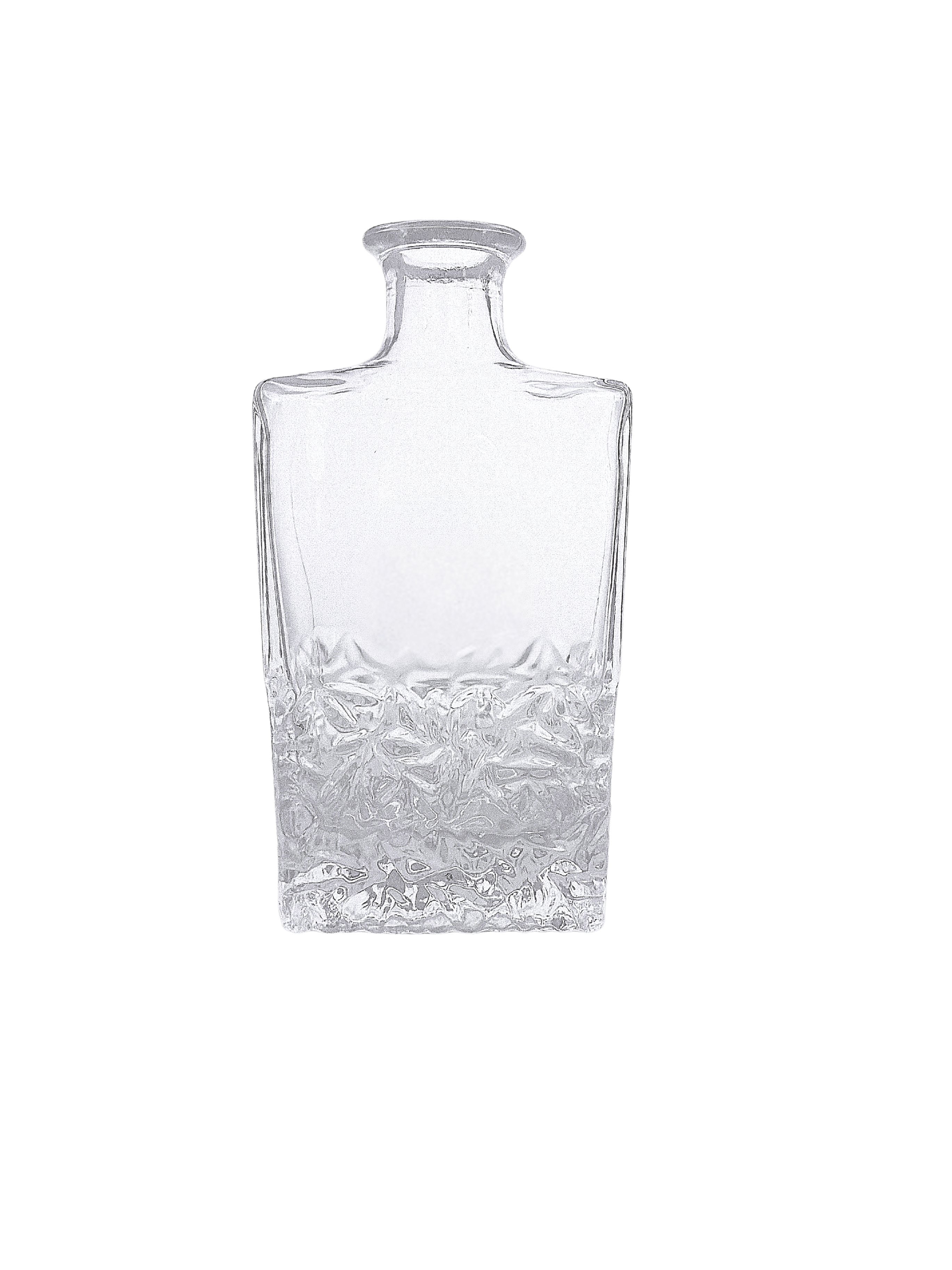
Mold Options and the Production Process
Custom whisky bottles start from one of two mold paths, and the choice affects both cost and lead time:
- Stock mold — an existing cavity shared across customers, often with a custom neck ring, color or embossed logo. Fastest route to market and the lowest minimum order.
- Private mold — a dedicated cavity cut to your exact bottle design. Higher upfront tooling cost, but the shape, base markings and glass distribution are yours alone.
Once a mold is confirmed, production follows the standard IS-machine sequence: batch melting, gob forming, blow-and-blow or press-and-blow shaping, annealing to relieve internal stress, then inspection and palletizing. A well-run whisky bottle manufacturer will share sample bottles and a pre-production inspection report before committing to a full run.
Decoration, Coatings and Closures
Premium spirit packaging leans heavily on finishing to signal shelf tier. Common options for custom whiskey bottles include:
- Silk-screen printing for crisp logos and text directly on the glass surface.
- Frosting (acid-etch or coating) for a matte, tactile finish popular with craft distillers.
- Embossing molded into the glass itself for a permanent brand mark that survives label changes.
- Metallic or spray coating for color effects that go beyond standard flint, amber or antique green glass.
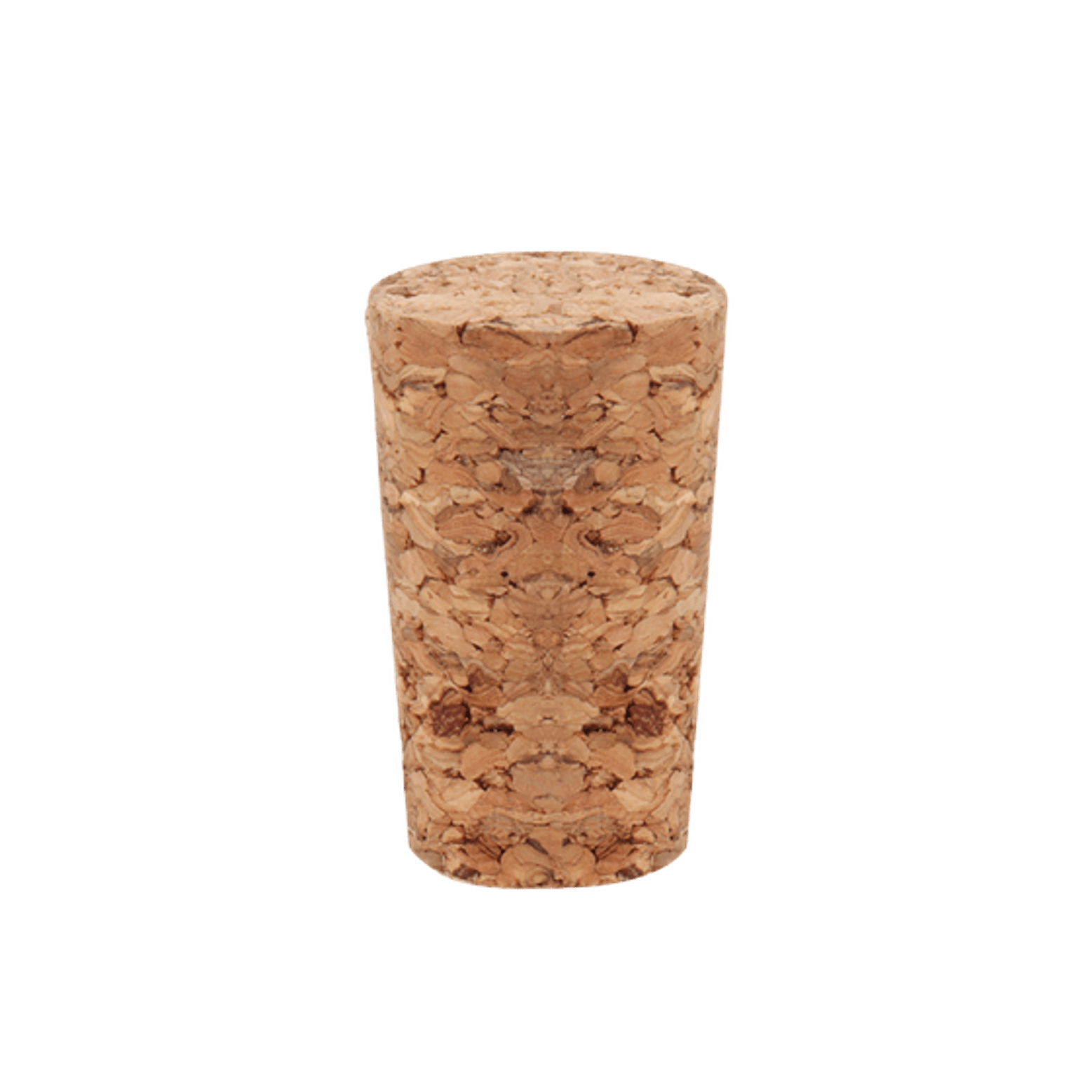
Closure choice should be settled alongside decoration, since cork-finish and screw-finish (ROPP) necks require different tooling. Bar-pour and travel-retail formats usually favor tamper-evident screw closures, while premium 700ml/750ml releases often pair natural or synthetic cork with a wood or metal topper.
| Technique | Best For |
|---|---|
| Silk-screen printing | Logo-forward branding, multi-color labels |
| Frosting | Craft and small-batch positioning |
| Embossing | Long-term brand marks, tamper visibility |
| Spray/metallic coating | Limited editions, gift packaging |

Choosing the Right Manufacturer
For most spirit brands, the shortlist comes down to three questions: can the manufacturer support your target MOQ, do they have in-house decoration and closure-compatibility testing, and can they show you comparable runs for premium spirit bottles at your volume? Stock-mold programs typically start at lower minimums than a private mold, so it’s worth confirming both numbers before locking in a bottle design.
Lead time is the other variable that catches new brands off guard — private mold tooling adds weeks before the first sample even ships, so build that into a launch calendar rather than treating it as a rounding error.
ЧАСТО ЗАДАВАЕМЫЕ ВОПРОСЫ
What is the minimum order for a custom whisky bottle manufacturer?
Minimums vary by mold type: stock-mold programs with a custom neck ring or embossed logo generally allow smaller orders, while a fully private mold requires a higher volume to offset tooling cost. Confirm both figures with your manufacturer before finalizing a design.
How long does it take to get custom whisky bottles made?
Stock-mold orders with custom decoration can often ship faster since no new tooling is needed. Private-mold programs add lead time upfront for mold cutting and sample approval before regular production begins.
What’s the difference between 700ml and 750ml whisky bottles?
700ml is the common standard across the EU and many export markets, while 750ml is standard in the US and several Asian markets. The two require different neck-finish and cavity tooling, so the format should be locked in before mold work starts.
Can a glass bottle manufacturer match cork and screw closures on the same mold?
Not typically on the same cavity — cork-finish and screw-finish (ROPP) necks use different tooling. If you want both options, discuss this with your manufacturer at the mold-design stage.
What decoration options work best for premium whisky packaging?
Silk-screen printing, frosting and embossing are the most common choices for premium spirit bottles, each suited to a different shelf positioning — from bold logo work to a subtler, tactile finish.
 English
 French
 Spanish
 Portuguese
 German
 Italian
 Japanese
 Korean
 Arabic
 Russian