
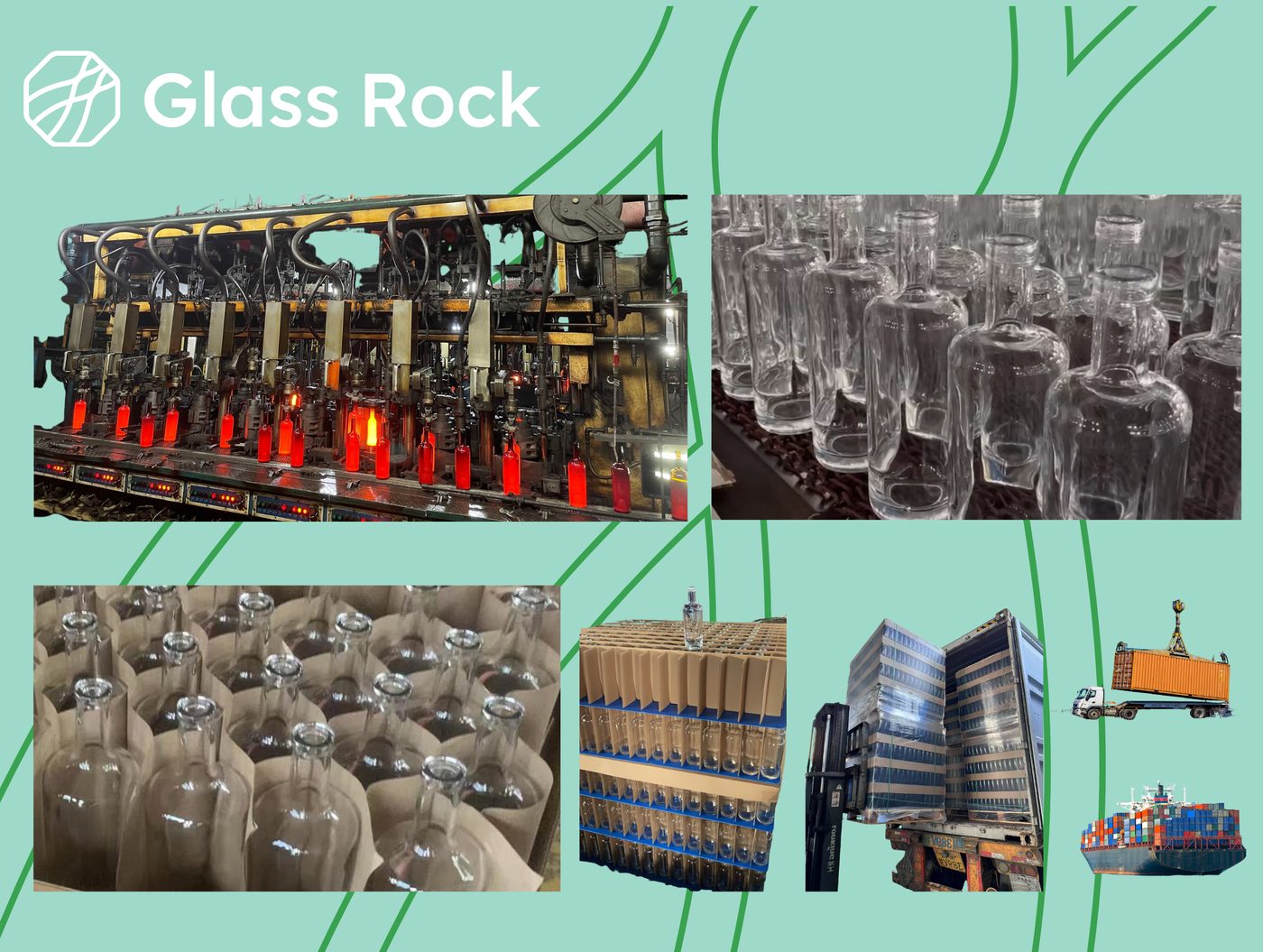
Glass is one of humanity’s oldest and most versatile materials — and it’s still made from a few simple, abundant ingredients. Here’s exactly how glass is made, from raw sand to a finished bottle.
What is glass made of?
Container glass (the soda-lime glass used for bottles and jars) is made from three main raw materials:
- Silica sand (~70%) — the main glass former.
- Soda ash (sodium carbonate) — lowers the melting temperature, saving energy.
- Limestone (calcium carbonate) — adds durability and chemical stability.
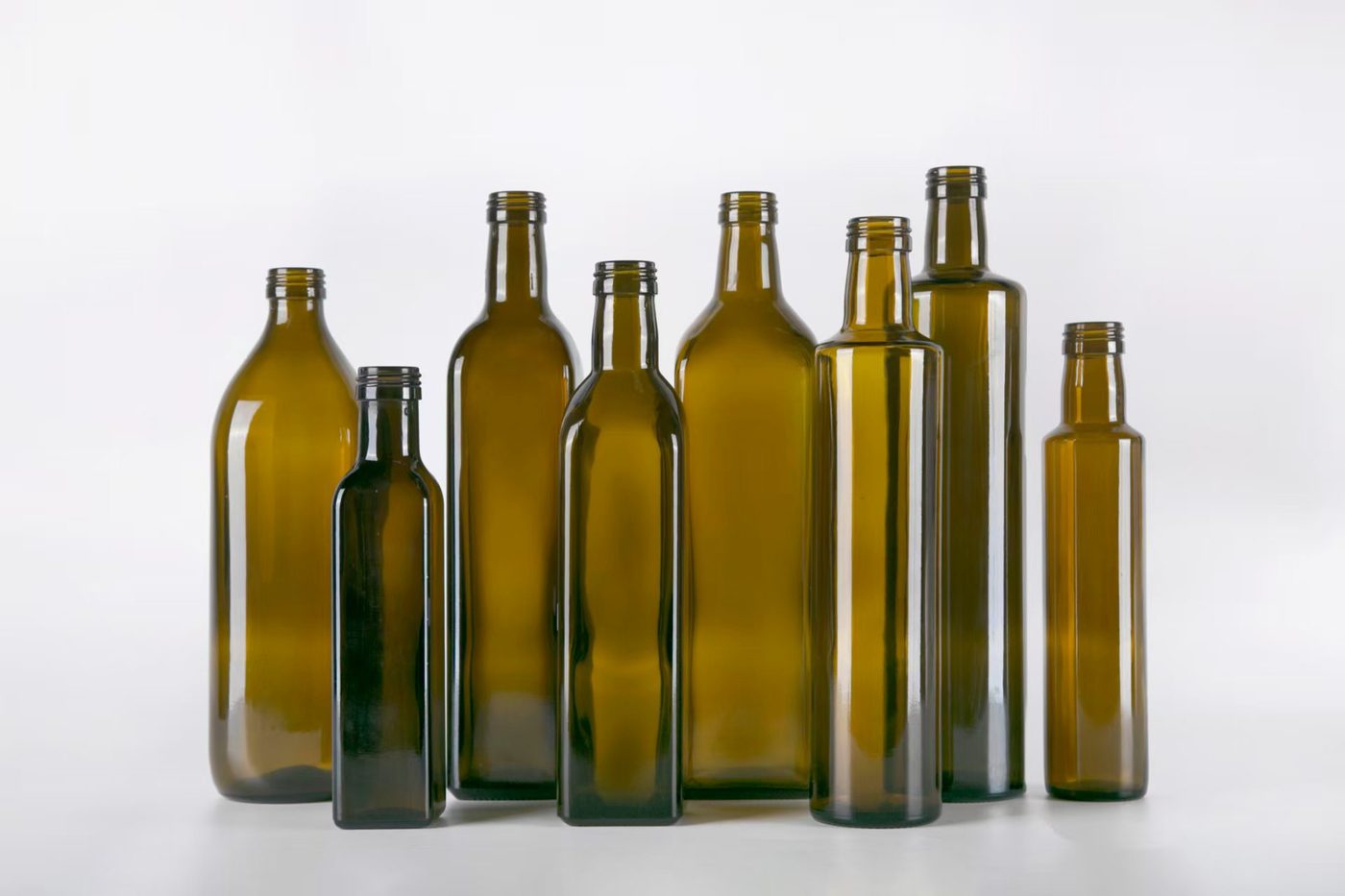
Manufacturers also add Scherben (recycled glass), plus small amounts of additives and colorants — iron for green, carbon or sulphur for amber, cobalt for blue.
Step 1 — Batching
The raw materials are precisely weighed and mixed into a “batch,” together with cullet. Using recycled glass lowers the melting temperature and energy use.
Step 2 — Melting
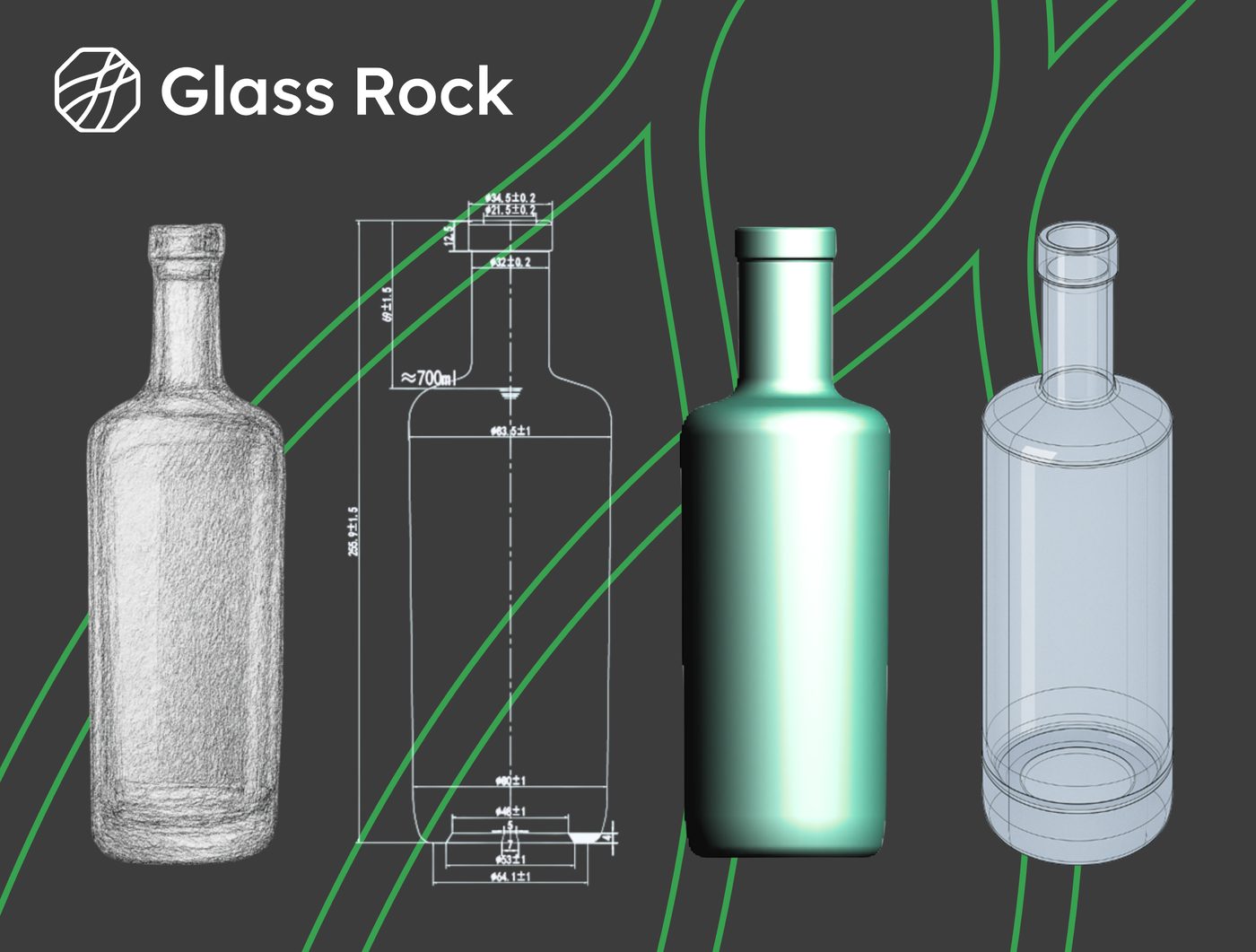
The batch is fed into a furnace and melted at roughly 1,500–1,700 °C until it becomes a glowing, honey-like molten glass.
Step 3 — Conditioning & gob forming
The molten glass is cooled to a precise working temperature and cut into uniform pieces called gobs, each the exact weight of one bottle.
Step 4 — Forming the bottle
Gobs drop into an IS (Individual Section) machine, which shapes them in two ways:
- Blow-and-blow — for narrow-neck bottles (water, beer, spirits).
- Press-and-blow — for wide-mouth jars such as mason jars (food, cosmetics).
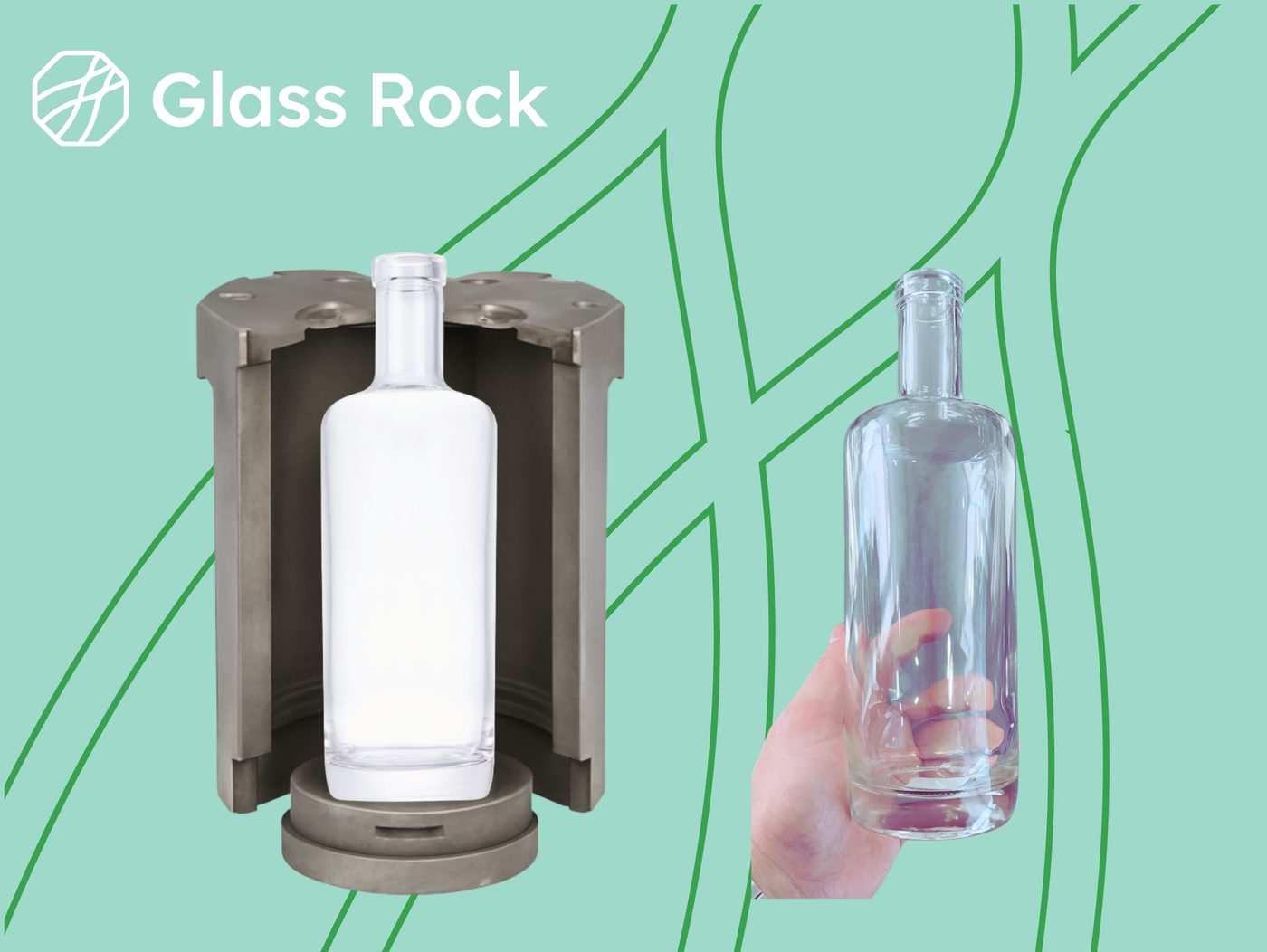
First a “parison” (rough pre-form) is made, then compressed air blows it into the final mould shape. Flat glass, by contrast, is made by the float process — floating molten glass on a bath of molten tin.
Step 5 — Annealing
The hot bottles travel through an annealing lehr, a long oven that cools them slowly and evenly. This relieves internal stress — the single most important step for a strong, durable bottle.
Step 6 — Coating & inspection
Bottles receive hot- and cold-end coatings for strength and scratch resistance, then pass automated inspection for cracks, thickness and shape before packing.
Types of glass
- Soda-lime glass — the everyday glass used for bottles and jars.
- Borosilicate glass — heat- and chemical-resistant (lab glass, cookware).
- Flint, amber and green glass — colour variations of soda-lime glass.
Is glass sustainable?
Yes — glass is 100% and infinitely recyclable with no loss of quality. Every tonne of recycled cullet saves raw materials and energy, which is why GlassRock builds recycled content into production.
Frequently asked questions
What is glass made from?
Mainly silica sand, soda ash and limestone, melted together at high temperature.
At what temperature does glass melt?
Container glass is melted at around 1,500–1,700 °C.
Is glass recyclable?
Yes — glass can be recycled endlessly without losing quality.
What’s the difference between soda-lime and borosilicate glass?
Soda-lime is standard bottle glass; borosilicate withstands higher heat and thermal shock.
At GlassRock, we turn these raw materials into custom glass bottles and jars for brands worldwide. Browse our glass bottle range, see the liquor bottle sizes guide or our oz to mL conversion guide, and find more in our glass packaging resources.
 English
 French
 Spanish
 Portuguese
 German
 Italian
 Japanese
 Korean
 Arabic
 Russian