
A qualified champagne bottle manufacturer is not just producing another wine bottle — it is engineering a pressure vessel. Sparkling wine develops several atmospheres of internal pressure from dissolved CO₂, and a bottle that cannot handle that load is a safety and quality risk long before it ever reaches a dinner table.
Why Champagne Bottles Need a Different Manufacturing Standard
Still wine bottles are essentially unpressurized containers. Sparkling wine bottles are not. During secondary fermentation or carbonation, dissolved CO₂ builds internal pressure that the glass, the punt, and the closure all have to contain for months or years of storage, transport, and handling. A bottle blown to still-wine tolerances will not reliably survive that load, which is why sourcing from an actual champagne bottle manufacturer — one that pressure-tests sparkling wine bottles as a normal part of production — matters more than picking the cheapest quote.
The practical risks of under-engineered glass are not theoretical: stress concentrations around the punt, inconsistent wall thickness from an uneven gob distribution, and under-annealed glass all raise the chance of a bottle failing under pressure, heat cycling, or a simple knock during palletizing.
What a Qualified Champagne Bottle Manufacturer Controls
Beyond the mold itself, a manufacturer producing sparkling wine bottles has to hold several variables in tight range at once: glass distribution around the punt, wall thickness consistency, and annealing time in the lehr. These are the same fundamentals covered in our guide to how glass bottles are made, but for sparkling formats the tolerances are tighter and the punt is deeper to redistribute stress evenly across the base.
| Format | Volume | Typical glass weight | Internal pressure rating |
|---|---|---|---|
| Split | 200 ml | ~400–450 g | ~5–6 atm |
| Half (Demi) | 375 ml | ~700–750 g | ~5–6 atm |
| Standard | 750 ml | ~835–900 g | ~5–6 atm |
| Magnum | 1.5 L | ~1,600–1,700 g | ~5–6 atm |
Notice that weight does not scale down for lighter marketing claims the way it can on a still wine bottle — pressure resistant glass keeps a minimum wall thickness regardless of format, because thinning the glass to cut shipping weight is exactly what compromises pressure resistance in the first place.
Glass Color, Weight and UV Protection
Most sparkling wine programs choose between transparent and antique green glass. Antique green offers more UV protection for light-sensitive cuvées during extended lees aging, which is one reason it remains the default for traditional-method champagne. Transparent glass is more common for rosé and prestige bottlings where showcasing color is part of the brand story — see our 1500ml Transparent Champagne Bottle as an example of a stock format built to sparkling-wine pressure tolerances rather than still-wine ones.
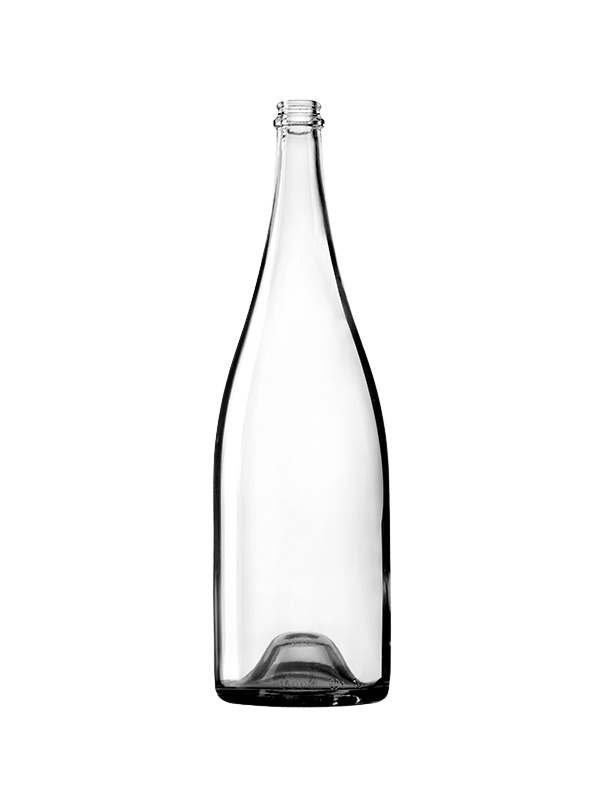
For a broader comparison of how color choices affect light exposure across formats, see our guide to glass bottle colors and UV protection.
Closures and Finishes for Sparkling Wine
Finished champagne uses a mushroom-shaped cork secured with a wire cage (the agraffe) to keep it from being pushed out under pressure. During secondary fermentation before disgorgement, many producers instead use a crown cap — the same closure used on beer — because it is cheaper and easier to remove during riddling and disgorgement.
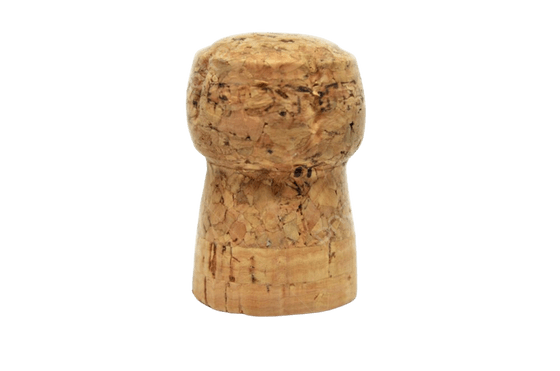
Whichever closure a brand lands on, the neck finish and cork diameter have to be verified against the bottle’s actual production tolerances — not just a spec sheet — which is why closure compatibility should be part of any sampling round before tooling is finalized. Our bottle closure types guide covers neck finish compatibility in more depth for still and sparkling formats alike.
Sourcing, Molds and Lead Times
Pressure-rated tooling is more specialized than a standard still-wine mold, so lead times and minimum order quantities for a private champagne bottle mold typically run higher than for a stock still-wine format. Buyers who want to test a market before committing to custom tooling often start with a stock sparkling mold and only move to a private mold once volume justifies it — the same logic covered in our MOQ guide for custom glass bottles.
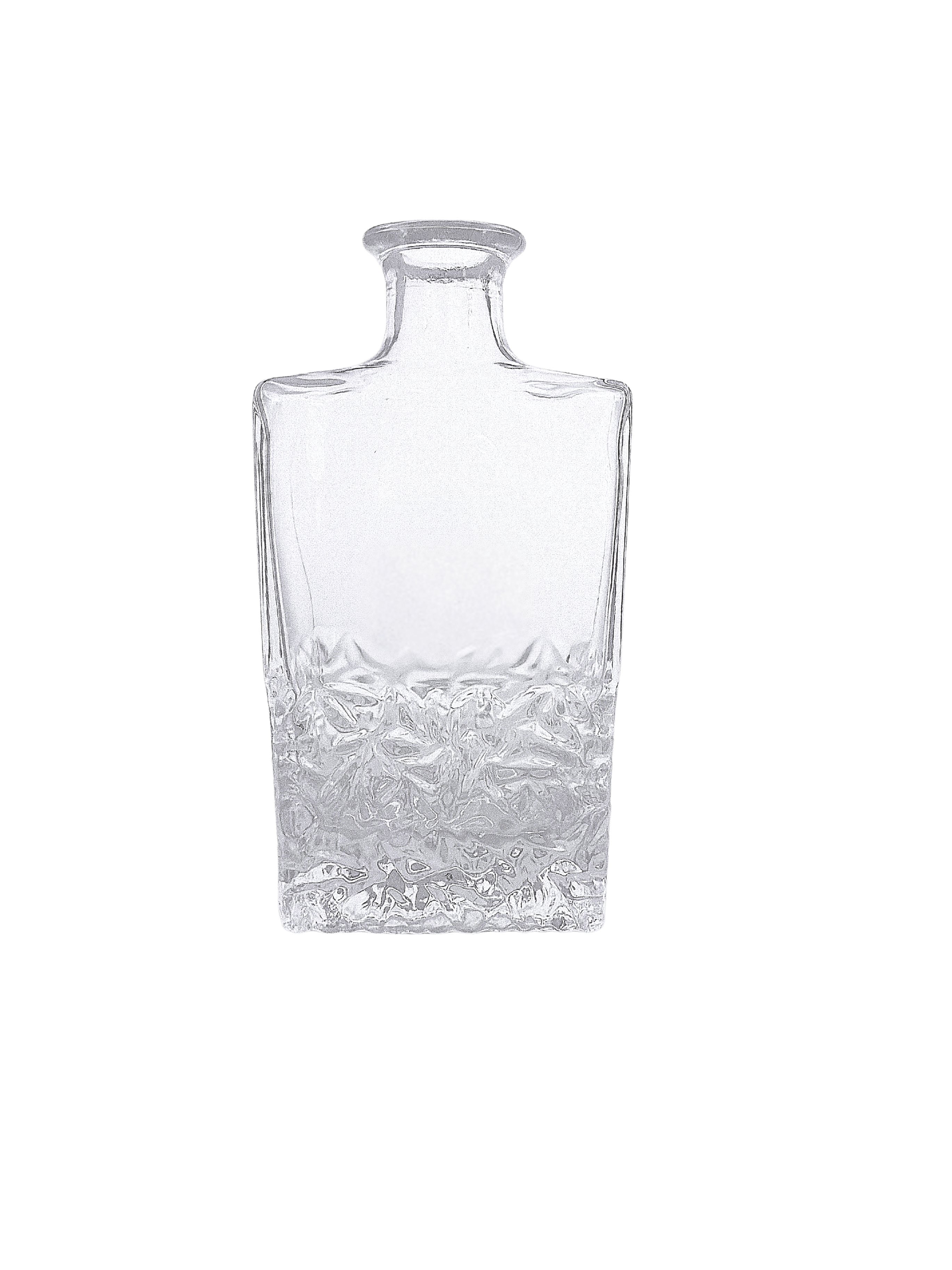
A manufacturer with a broad catalog can also support adjacent formats for tastings, sample kits, or gift sets — for example a Weinflasche alongside the standard bottle lineup — without forcing a brand to manage two separate suppliers for the core range and the smaller-format extras.
FAQ
What should you look for in a champagne bottle manufacturer?
Look for a manufacturer that pressure-tests sparkling wine bottles, controls wall thickness and punt geometry consistently, and can supply both stock and private-mold formats with verifiable annealing quality.
How much internal pressure do champagne bottles need to withstand?
Traditional-method champagne bottles typically need to hold around 5 to 6 atmospheres of internal pressure (roughly 72–90 psi), depending on residual sugar and the length of secondary fermentation.
What’s the difference between champagne bottles and standard sparkling wine bottles?
Traditional-method champagne bottles are generally built heavier because the bottle itself undergoes secondary fermentation under pressure, while Charmat-method sparkling wine (like most prosecco) is carbonated in a tank first and can use a somewhat lighter bottle.
Can I get champagne bottles in both clear and antique green glass?
Yes. Most sparkling wine bottle manufacturers offer both transparent and antique green finishes in the same formats — antique green adds UV protection, while transparent glass is often chosen to showcase rosé or prestige cuvées.
What closures are used on sparkling wine and champagne bottles?
A mushroom-shaped cork secured with a wire cage is standard on finished champagne, while crown caps are common during secondary fermentation before disgorgement.
Do champagne bottle MOQs differ from still wine bottles?
Often, yes. Pressure-rated tooling is more specialized, so custom champagne bottle molds tend to carry higher minimums and longer lead times than standard still-wine molds — ask your supplier for current figures before budgeting.
 English
 French
 Spanish
 Portuguese
 German
 Italian
 Japanese
 Korean
 Arabic
 Russian