
Wine Bottle Sizes: From the 187 mL Split to the 15 L Nebuchadnezzar
The standard wine bottle holds 750 mL — 25.36 US fl oz, or about five 5 oz glasses. Below it sit the 187.5 mL split and the 375 mL half bottle; above it, large formats double in steps — 1.5 L magnum, 3 L double magnum, 6 L Methuselah — up to the 15 L Nebuchadnezzar, worth twenty standard bottles. This guide lists every size in mL, ounces and glasses, explains the Champagne names, and covers what each format means for a wine brand.
Wine bottle sizes chart
| Tamaño | Nombre | US fl oz | 5 oz glasses | = 750 mL bottles |
|---|---|---|---|---|
| 187.5 mL | Split / Piccolo / Quarter | 6.34 | 1.3 | ¼ |
| 375 mL | Half / Demi | 12.68 | 2.5 | ½ |
| 750 mL | Standard | 25.36 | 5.1 | 1 |
| 1.5 L | Magnum | 50.72 | 10.1 | 2 |
| 3 L | Double magnum · Jeroboam (Champagne) | 101.44 | 20.3 | 4 |
| 4.5 L | Jeroboam (Bordeaux) · Rehoboam (Champagne) | 152.16 | 30.4 | 6 |
| 6 L | Imperial (Bordeaux) · Methuselah (Champagne) | 202.88 | 40.6 | 8 |
| 9 L | Salmanazar | 304.33 | 60.9 | 12 |
| 12 L | Balthazar | 405.77 | 81.2 | 16 |
| 15 L | Nebuchadnezzar | 507.21 | 101.4 | 20 |
All conversions use the exact factor of 29.5735295625 mL per US fluid ounce. Format names are trade conventions, not regulated designations, and — as the table shows — the same name can mean different volumes in Bordeaux and in Champagne.
In the United States, wine may only be sold in container sizes authorized by the TTB; the final rule of January 10, 2025 expanded that list of standards of fill for wine as well as for spirits. Always confirm the current authorized list for each market before committing to a format.
How many glasses in a bottle of wine?
A 750 mL bottle yields 5.07 glasses at the standard US pour of 5 oz (147.87 mL): five full glasses with about 10.7 mL left in the bottle. Restaurants pouring 6 oz servings get 4.2 glasses per bottle — a difference that decides by-the-glass pricing. A magnum serves 10, a Jeroboam 20 to 30 depending on which Jeroboam you mean, and a Nebuchadnezzar a party of a hundred.
For any other bottle-and-pour combination, our mL to oz converter gives the exact figure — the same tool we use for spirits pour counts.
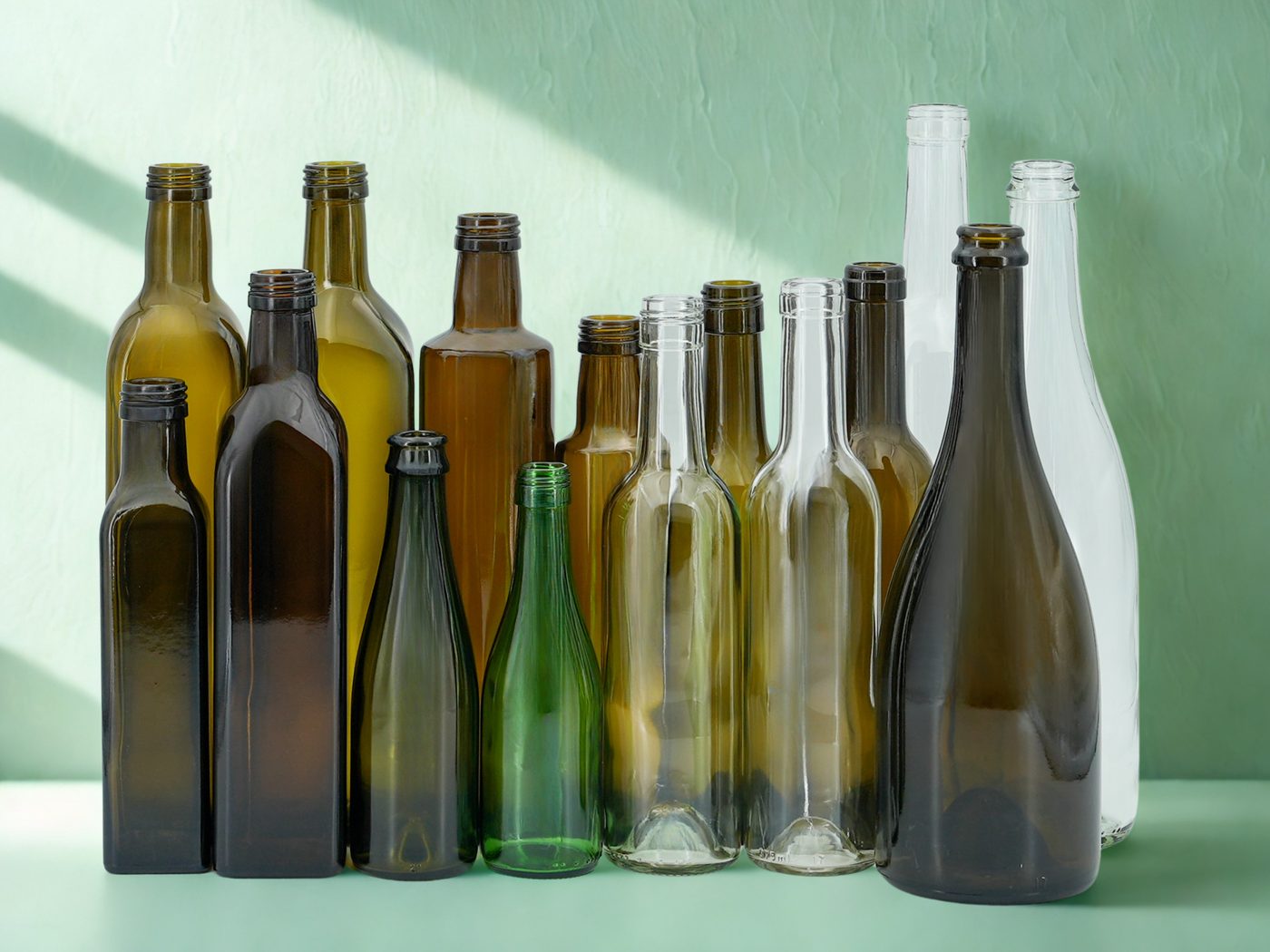
Champagne bottle sizes and their biblical names
Large-format Champagne bottles are traditionally named after biblical kings — Methuselah, Salmanazar, Balthazar, Nebuchadnezzar. The trap is that Champagne and Bordeaux use some of the same names for different volumes: a Jeroboam of Champagne is 3 L, a Jeroboam of Bordeaux 4.5 L; a 6 L bottle is a Methuselah in Champagne but an Imperial in Bordeaux. On any order or listing, confirm the volume in liters rather than trusting the name.
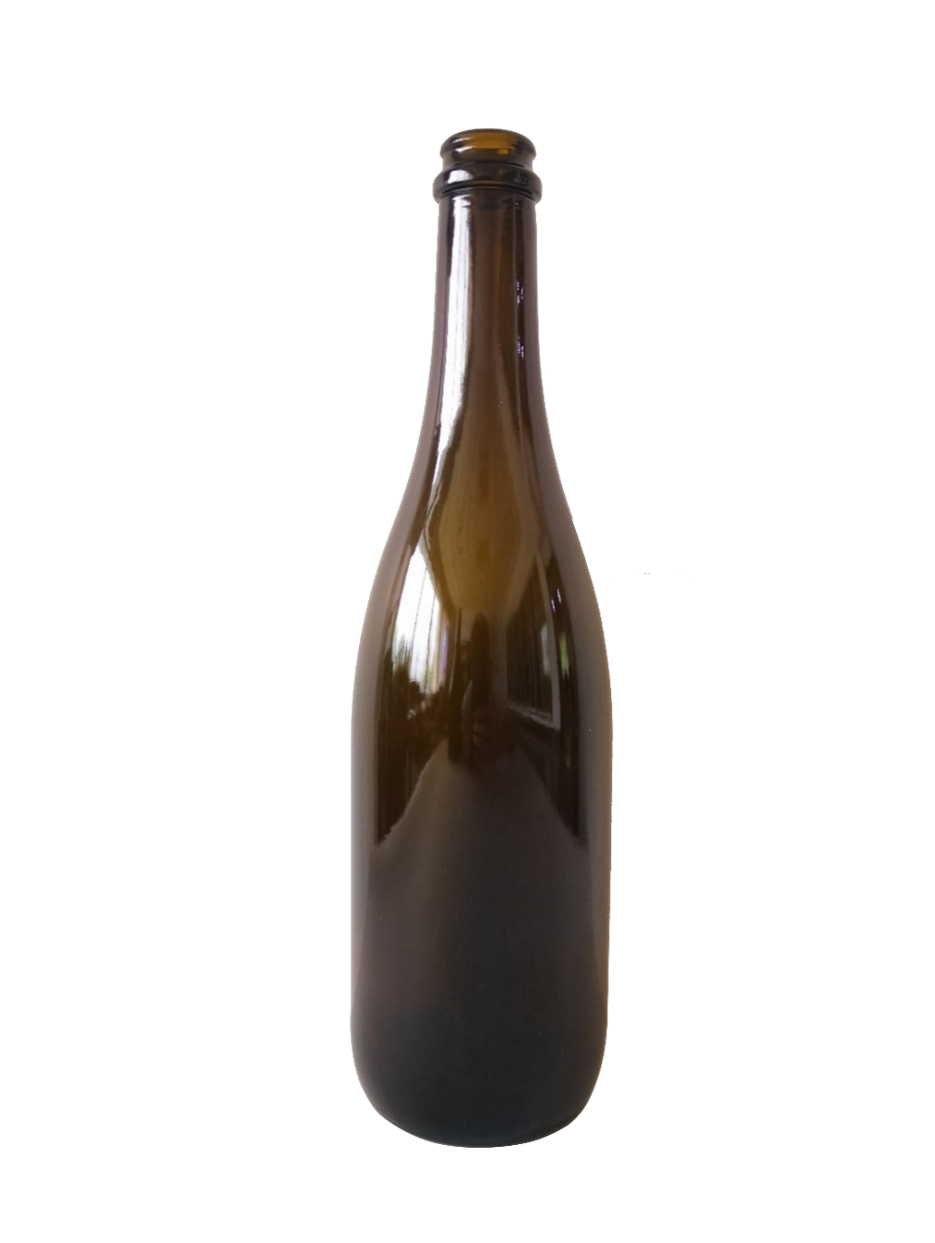
Champagne adds a physical constraint: the wine carries 5–6 bar of pressure, so bottles are made of thicker glass (a standard Champagne bottle weighs about 900 g empty, versus roughly 400–500 g for a still-wine bottle), with a deep punt and a reinforced crown-then-cork finish. Formats above 3 L are usually filled by transvasage, and giants above 9 L are produced in tiny quantities — which is why a Nebuchadnezzar costs far more than twenty standard bottles.
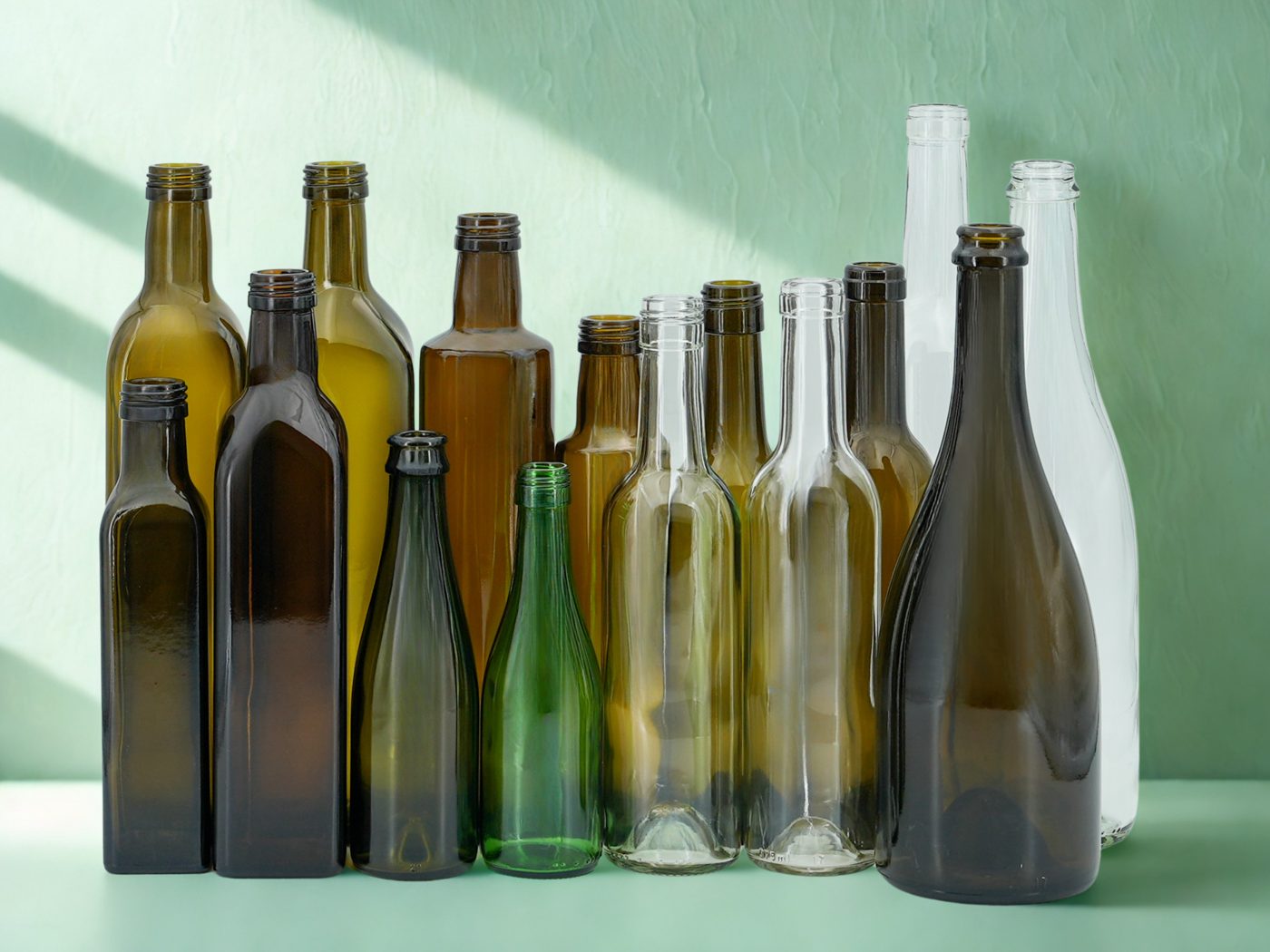
Bordeaux, Burgundy and Champagne: the three classic shapes
Shape signals style before the label is read. The high-shouldered Bordeaux bottle suits structured reds and catches sediment when pouring; the slope-shouldered, wider Burgundy bottle is the home of Pinot Noir and Chardonnay; the Champagne bottle is an engineering object as much as a package. Alsace and Mosel add the tall slim flute; rosé increasingly uses clear, skittle-shaped custom designs. As with every container, capacity does not fix dimensions — two 750 mL bottles can differ by 6 cm in height, which changes cartons, pallet mathematics and shelf fit.
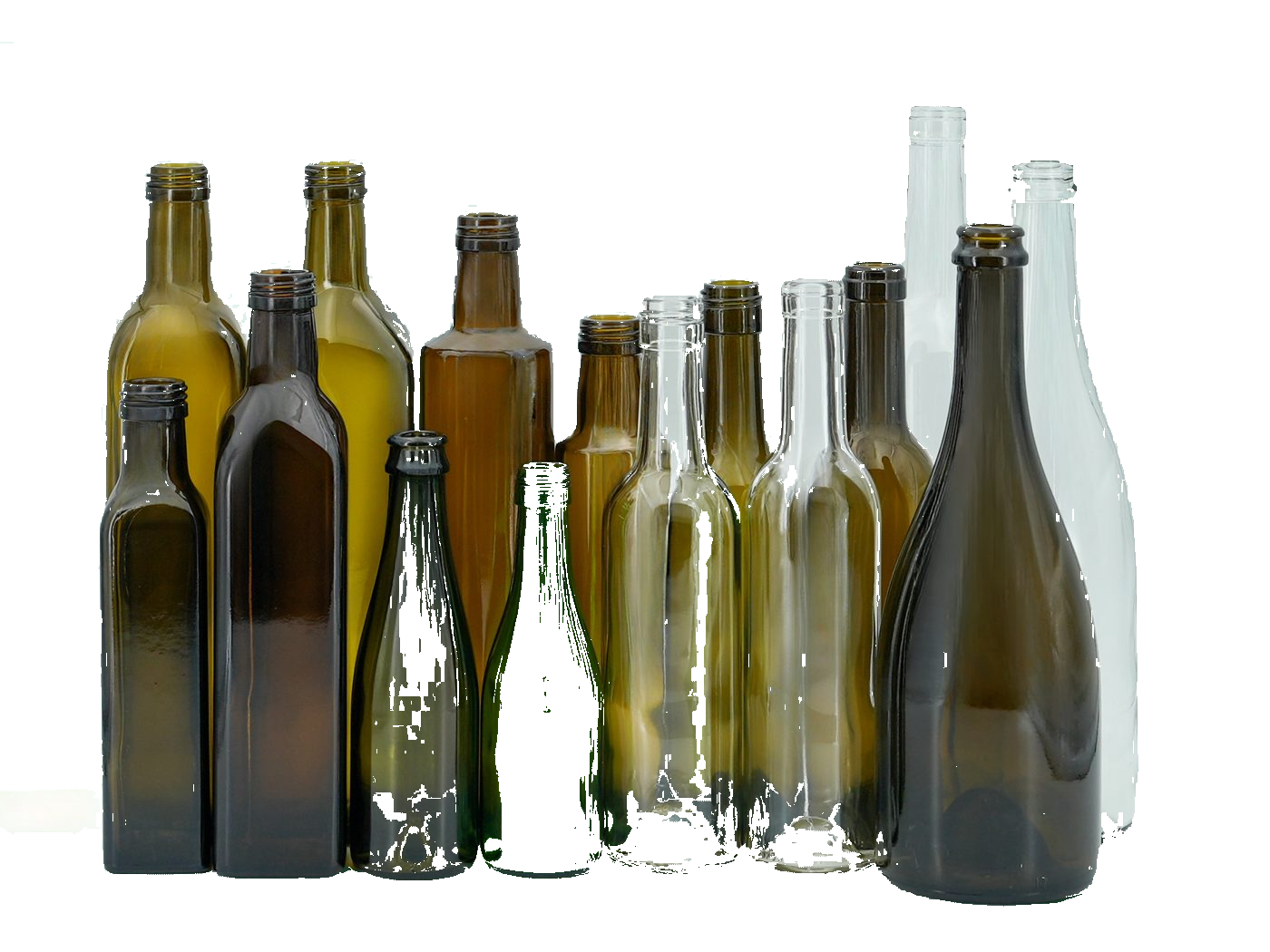
Choosing a wine bottle format: B2B guidance
For a wine brand the practical questions are narrower than the folklore suggests. The 750 mL bottle is the international retail standard and should anchor any range. The 375 mL half bottle serves restaurants, dessert wines and trial; 187.5 mL splits dominate airlines and single-serve. Magnums age wine more slowly (less oxygen per liter) and are the collector and gifting format; anything above 3 L is display, auction and event territory. Glass color matters as much as size — antique green and dead-leaf protect against light strike; flint shows off rosé but demands UV care. Weight is the sustainability lever: lightweight 750s now reach 380–420 g without losing perceived quality.
Every GlassRock wine bottle ships with a full technical drawing — capacity, height, diameter, punt, weight, finish and pallet quantities.
PREGUNTAS FRECUENTES
What are the wine bottle sizes in order?
From small to large: 187.5 mL split, 375 mL half, 750 mL standard, 1.5 L magnum, 3 L double magnum, 4.5 L Jeroboam/Rehoboam, 6 L Imperial/Methuselah, 9 L Salmanazar, 12 L Balthazar and 15 L Nebuchadnezzar.
How many ounces is a 750 mL bottle of wine?
25.36 US fluid ounces (750 ÷ 29.5735295625). In imperial ounces, used in the UK, the same bottle is 26.40 imp fl oz.
How many glasses of wine are in a bottle?
5.07 glasses at the standard 5 oz pour — five full glasses per 750 mL bottle. At a generous 6 oz pour, just over four.
What is a magnum of wine?
A 1.5 L bottle — exactly two standard bottles, or about ten 5 oz glasses. Magnums age wine more slowly because the air-to-wine ratio is lower, which is why collectors prize them.
Why are large Champagne bottles named after biblical kings?
The tradition emerged in Champagne in the 19th century, starting with Jeroboam; houses extended the series (Methuselah, Salmanazar, Balthazar, Nebuchadnezzar) as showpiece formats grew. The names are marketing heritage, not regulation.
Is a Jeroboam 3 liters or 4.5 liters?
Both, depending on region: 3 L in Champagne, 4.5 L (sometimes 5 L) in Bordeaux. Always confirm the stated volume in liters on the label or specification.
Why do Champagne bottles have a deep punt and thick glass?
The wine holds 5–6 bar of internal pressure. Thick walls and the domed punt distribute that stress safely — which is also why a Champagne bottle weighs roughly twice as much as a still-wine bottle.

 English
 French
 Spanish
 Portuguese
 German
 Italian
 Japanese
 Korean
 Arabic
 Russian