
Finding the right vodka bottle manufacturer means weighing more than price per case: mold ownership, glass weight, closure compatibility and decoration options all shape how your brand looks on the shelf and how fast you can get from sample to fill line. This guide walks through the sourcing decisions procurement teams and small-brand founders face before placing a first order.
Why You Need a Reliable Vodka Bottle Manufacturer
Vodka is judged on clarity as much as on taste, so the bottle carries more visual weight than packaging for almost any other spirit. A capable vodka bottle manufacturer needs to deliver consistently clear, defect-free flint glass, hold tight tolerances on neck finish so capping lines don’t jam, and support the decoration methods (frosting, screen printing, embossing) that premium vodka brands rely on to stand out without adding a label. Buyers moving from a co-packer’s stock bottle to a branded package typically start here, before deciding how far to go on mold ownership.
The right partner also matters for lead time predictability: a stalled mold order or an incompatible neck finish can delay a launch by months, which is why the sourcing path below is worth mapping out before requesting samples.
Stock, Private Mold or Custom Mold
Most vodka brands choose between three sourcing paths, and the right one depends on order volume, budget for tooling, and how differentiated the bottle needs to look.
| Option | Tooling investment | Typical lead time | Design flexibility | Best for |
|---|---|---|---|---|
| Stock mold | None | Shortest | Low — shared silhouette | New brands testing the market |
| Private mold | Moderate | Medium | Medium — embossed logo on a shared base shape | Growing brands wanting shelf distinction without full tooling cost |
| Custom mold | Highest | Longest | High — fully proprietary silhouette | Established brands building a signature bottle |
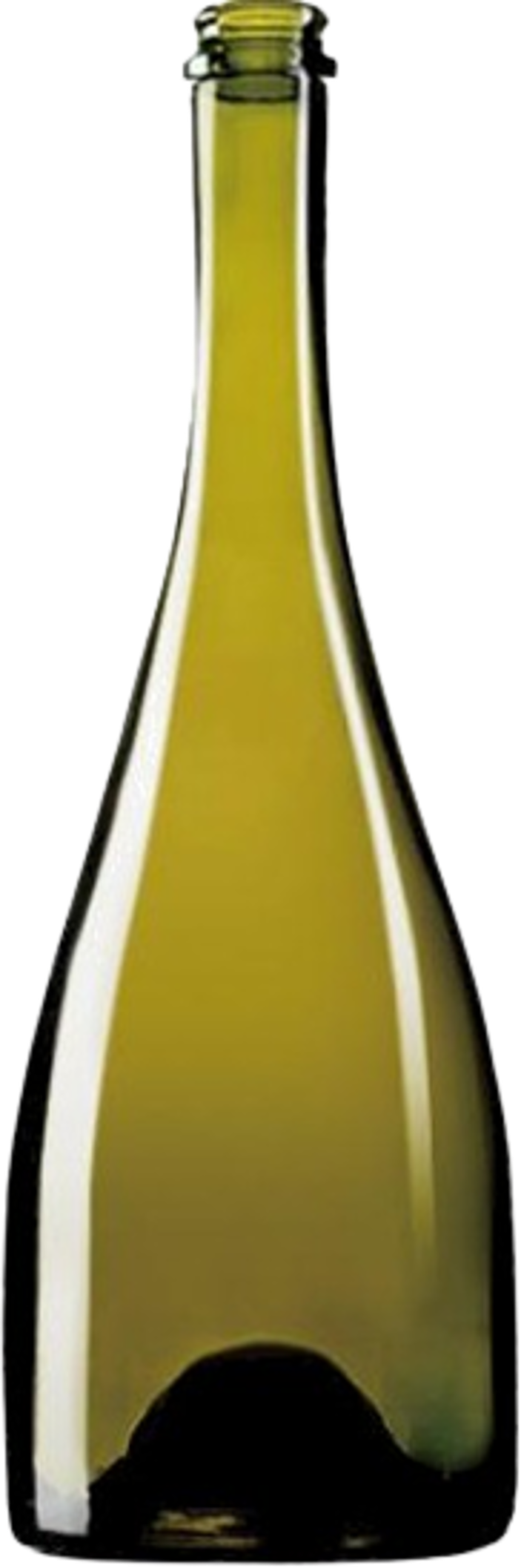
Stock-mold vodka bottles keep minimum order volumes lower and get product to market fastest, which is why they remain the default entry point. A Botella de champán verde antiguo de 750 ml #900 shows the kind of existing silhouette a stock or private-mold order can start from before any custom tooling is discussed. As volume grows, brands typically renegotiate toward private or custom molds rather than starting there — mirroring the same tooling logic that applies to any custom glass bottle mold project, regardless of spirit category.
Glass Weight, Color and Shape
Flint (clear) glass is the near-universal choice for vodka because it shows off the product’s clarity — antique green or amber glass, common for wine and whisky, works against that goal. Within flint glass, brands still choose between:
- Standard weight bottles, which keep unit cost and freight lower for high-volume brands.
- Heavyweight or reinforced-base bottles, which read as premium on shelf and in hand, common for super-premium and craft vodka lines.
- Sculpted or faceted shapes, which need a private or custom mold but create strong shelf differentiation.
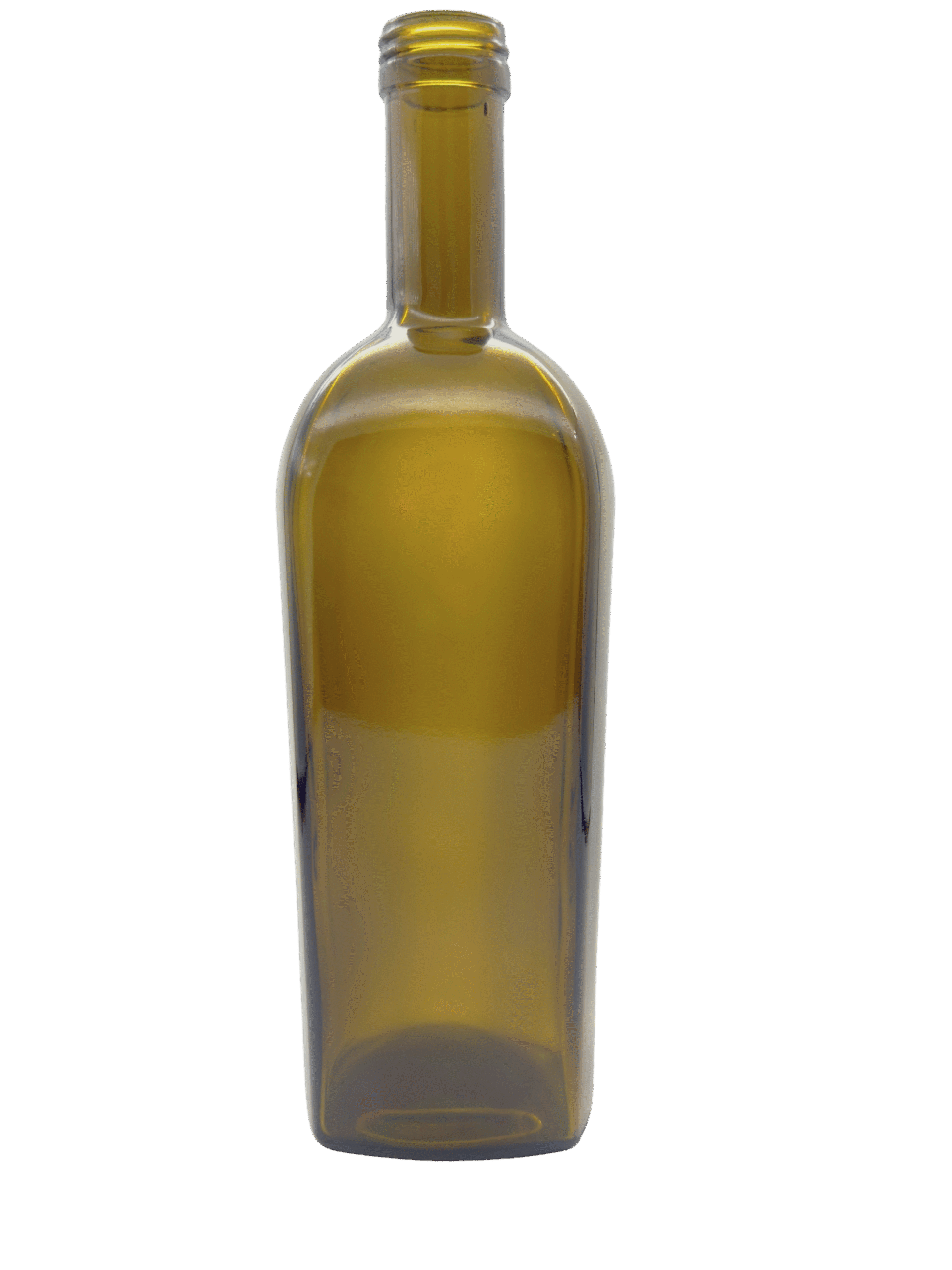
A Botella Cónica Cuadrada para Aceite de Oliva de 750 ml illustrates the kind of clean, flint-style base silhouette many vodka programs start sampling with before layering on frosting or an embossed panel. Weight and shape choices also interact with shipping cost — a heavier bottle looks premium but adds freight weight across a full pallet, so it’s worth confirming both before finalizing an order.
Closures and Neck Finishes
Vodka bottles almost always ship with an aluminum ROPP (roll-on pilfer-proof) screw cap, which requires the bottle’s neck finish to match the capping head on the manufacturer’s or co-packer’s fill line. Cork finishes appear on some premium and craft vodka releases for a more artisanal look, but they trade off tamper-evidence and resealability.
| Tipo de cierre | Typical use case | Notes |
|---|---|---|
| Aluminum ROPP screw cap | Mainstream and premium vodka | Tamper-evident, resealable, needs matching neck finish |
| Natural or synthetic cork | Craft and artisanal releases | Premium feel, not resealable after opening |
| T-cork with capsule | Ultra-premium, gift editions | Highest perceived value, higher unit cost |
Confirming neck finish compatibility early avoids a common and costly mistake: ordering bottles that don’t fit the capping head already installed on a co-packer’s line. If you haven’t settled on a closure yet, it’s worth reviewing neck finish standards before finalizing bottle molds.
Decoration, Sampling and Production
Because vodka bottles rely on the glass itself for shelf appeal, decoration technique matters as much as shape. Frosting (acid-etched or coated) is the most common premium treatment, giving a soft, opaque finish that still reads as glass. Silk-screen printing adds logos or text directly onto the surface without a label, and deep embossing works the brand mark into the glass itself for a look that survives ice buckets and condensation.

A Botella Hock de 750 ml en color verde antiguo #542 gives a sense of the round, capping-line-ready base shapes a vodka bottle manufacturer can adapt with frosting or embossing before a first production run. Whichever decoration is chosen, expect a sampling stage — usually a 3D rendering followed by physical pre-production samples — before the mold (for private or custom paths) moves to bulk manufacturing. Reviewing samples against your fill line’s capping and labeling equipment at this stage, rather than after the first container ships, is what keeps a launch on schedule.
PREGUNTAS FRECUENTES
What glass color is used for vodka bottles?
Flint (clear) glass is the standard choice for vodka because it showcases the product’s clarity; antique green or amber glass is reserved for wines and spirits where UV protection matters more than transparency.
How do I choose a vodka bottle manufacturer?
Compare mold ownership options (stock, private or custom), confirm the manufacturer’s flint glass quality and neck-finish tolerances, and check which decoration methods — frosting, screen printing, embossing — they support before committing to a first order.
Do I need a custom mold to launch a vodka brand?
No. Most brands launch on a stock or private mold to control tooling cost and lead time, then move to a fully custom mold once volume justifies the investment.
What closure is standard for vodka bottles?
An aluminum ROPP (roll-on pilfer-proof) screw cap is the standard closure for vodka, offering tamper evidence and resealability; cork finishes appear mainly on premium and craft releases.
How long does it take to source custom vodka bottles?
Stock-mold orders typically move fastest since no tooling is required, while private and custom mold projects add tooling and sampling time before bulk production can begin.
 English
 French
 Spanish
 Portuguese
 German
 Italian
 Japanese
 Korean
 Arabic
 Russian