
Finding the right supplier of glass bottles for distilleries is one of the first packaging decisions a spirits brand makes, and it shapes everything downstream: how fast you can launch, how much you pay per case, and how easily you can scale from a farmers-market table to a national distributor list. Unlike big-brand spirit bottle orders, distillery packaging usually starts small, changes often, and needs a supplier willing to work at craft volumes without treating every order like an afterthought.
Sourcing Glass Bottles for Distilleries: What Matters Most
A distillery packaging supplier has to solve a different problem than a supplier serving a national beverage brand. Distilleries typically order in smaller, more frequent batches; they change label art and proof points between runs; and many are still validating a recipe or a market before committing to a signature bottle shape. The right supplier for glass bottles for distilleries understands that mix of constraints and offers a path that doesn’t force a six-figure tooling commitment before the first case ships.
In practice, that means three things matter more than anything else in the early conversation with a supplier: minimum order quantities that match your actual production runs, bottle formats that already suit spirits (proof-grade glass thickness, standard neck finishes for common closures), and a decoration process that can keep up with label or embossing changes as the brand evolves.
MOQs and Mold Options for Small-Batch Producers
Most distilleries start with stock bottles and grow into a mold that’s theirs alone. A stock bottle carries the lowest MOQ because the mold is already shared across many customers, so you can order a few hundred or a few thousand cases and decorate them with your own label. When volume and brand identity justify it, a private mold — sometimes shared exclusively with one or two other brands — adds a distinguishing detail like an embossed logo at a mid-range MOQ. A fully custom mold, built only for your silhouette, is the last step, reserved for brands with the volume to amortize tooling cost across a large number of cases.
| Stage | Mold type | Typical MOQ | Best for |
|---|---|---|---|
| Starter | Stock bottle, custom label | Lowest | New brands, test batches, seasonal releases |
| Growth | Private / shared mold | Mid-range | Distilleries with a proven core SKU |
| Established | Fully custom mold | Higher | Flagship bottles sold at scale across markets |
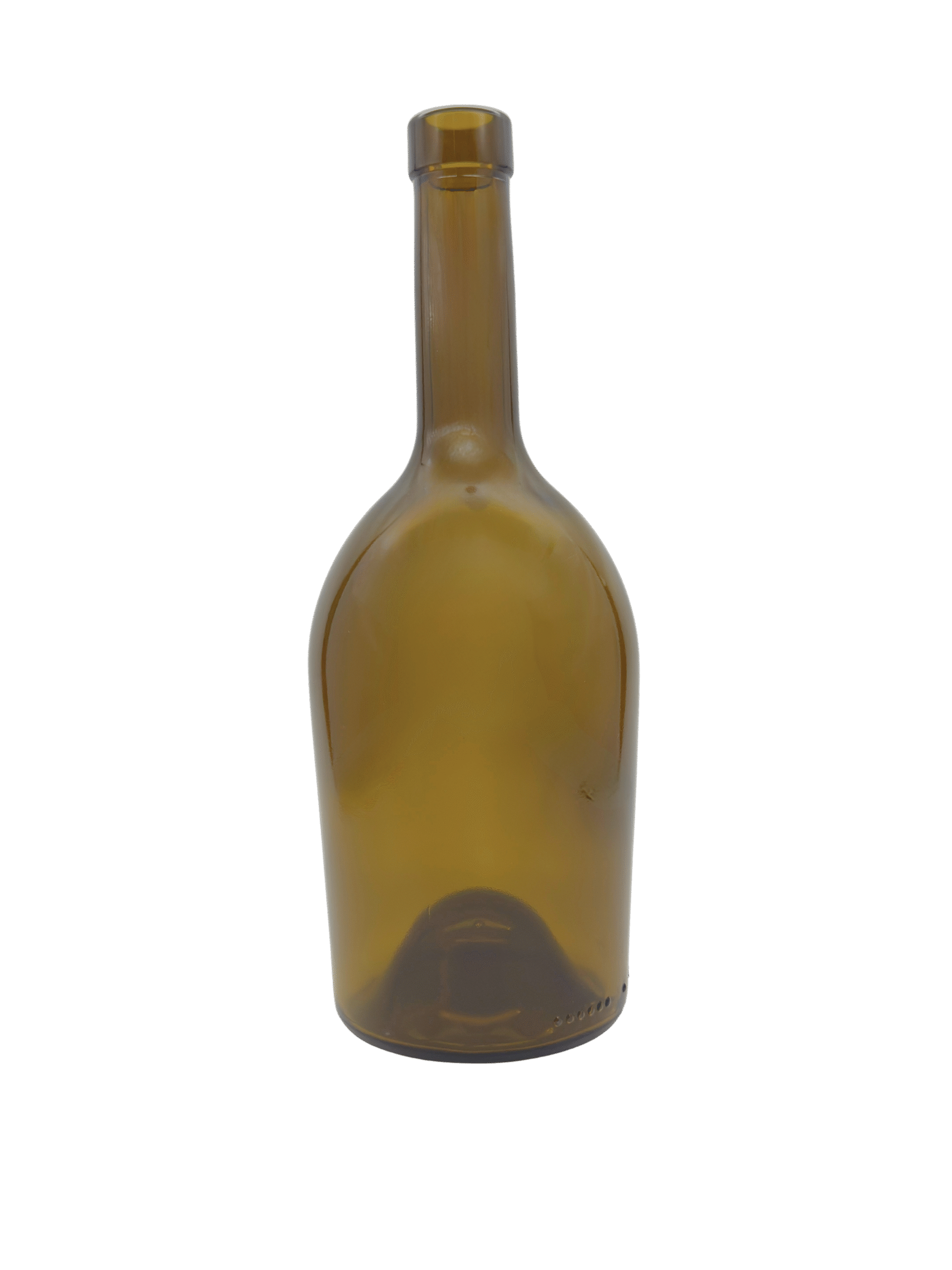
GlassRock works with distilleries across all three stages, which is why bottles like the 750 ml Flasche in Antikgrün, individuell gestaltet #520 exist as a stock option that still reads as a premium, purpose-built spirit bottle rather than a generic container.
Bottle Formats and Closures for Spirits
Custom spirit bottles for distilleries generally fall into a handful of proven formats: the classic round bottle, flask-style bottles for handle-friendly packs, and taller silhouettes that give a whiskey or gin label more shelf presence. Neck finish matters as much as the body shape — it determines which closures fit, and closures are half the shelf impression of a spirits bottle.
Cork remains the standard for premium spirits because of the ritual of the pour, while T-top and bartop closures give a heavier, more tactile finish that many craft distillers prefer for their flagship release. A well-fitted stopper also protects against evaporation during storage, which matters for barrel-finished or slow-moving inventory.
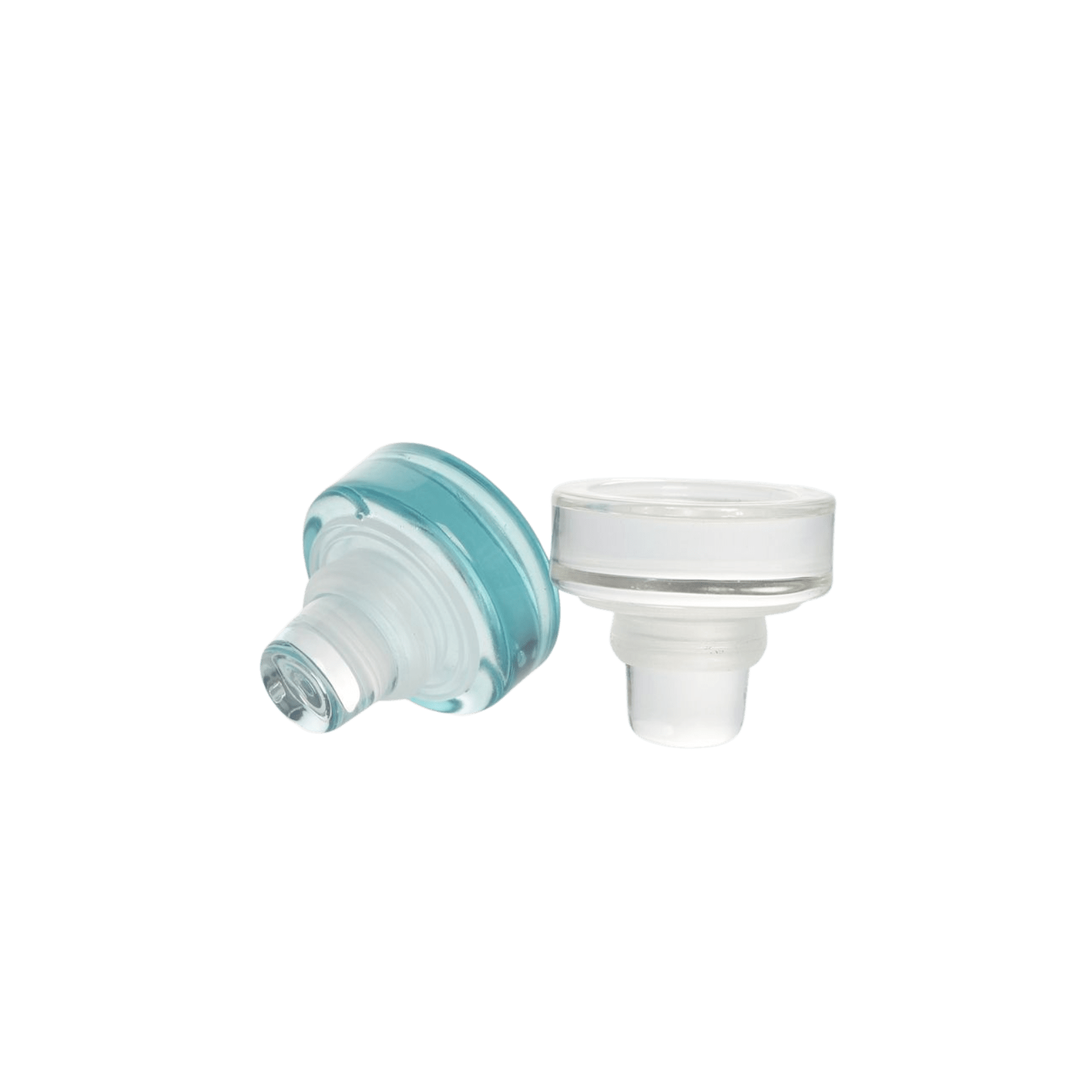
Ask any prospective distillery packaging supplier whether their neck finishes are built to standard closure specifications — a mismatch between bottle neck and stopper diameter is one of the most common (and most avoidable) delays in a first production run.
Custom Branding and Decoration
Because distillery brands live and die on shelf differentiation, decoration is where a lot of the sourcing conversation ends up. Silk screen printing puts a logo or proof statement directly on the glass for a permanent, label-free look. Frosting softens the glass to a matte finish that reads as premium and hides minor fill-line variation. Embossing works the brand mark directly into the mold itself, which only makes sense once you’ve committed to a private or custom shape.
Distilleries experimenting with a distinct silhouette — rather than a straight cylinder — often start with an already-tooled specialty shape and apply custom decoration on top, which is a lower-risk way to stand out before investing in a fully custom mold. A bottle like the Gestreifte Fruchtflasche shows how an existing mold can still carry a strong, distinctive silhouette for a craft spirits label.

Working With a Reliable Packaging Supplier
Beyond mold and bottle format, the operational side of the relationship is what determines whether a supplier actually works for a growing distillery. Ask about lead times for both stock and custom orders, whether partial-pallet or mixed-SKU shipments are possible for smaller distilleries, and how the supplier handles quality control on glass thickness and neck-finish tolerance — inconsistent necks are what cause bottling-line jams on a craft distillery’s filling equipment.
It’s also worth asking how the supplier supports you as volume grows: can the same stock bottle transition into a private mold without starting the sourcing search over, and does the supplier have in-house decoration so silk screening or frosting doesn’t add a second vendor and a second lead time to every order.
FAQ
What MOQ should a distillery expect when sourcing glass bottles for distilleries?
Stock bottles typically carry the lowest minimum order quantities, since the mold is shared across many customers; private and fully custom molds require higher MOQs to offset tooling investment.
What is the difference between a private mold and a custom mold?
A private mold is shared exclusively with a small number of brands and usually adds a distinguishing detail like an embossed logo, while a fully custom mold is built only for one brand’s unique bottle silhouette.
Which closures are most common on glass bottles for distilleries?
Cork remains standard for premium spirits, while T-top and bartop stoppers are popular for craft releases that want a heavier, more tactile closure and better protection against evaporation.
Can a distillery start with stock bottles and move to custom later?
Yes — most distilleries start with a stock bottle and custom label, then graduate to a private or fully custom mold once sales volume justifies the tooling investment.
What decoration options work best for a craft spirits brand?
Silk screen printing, frosting, and embossing are the most common decoration techniques for custom spirit bottles, each suited to a different budget and stage of brand maturity.
 English
 French
 Spanish
 Portuguese
 German
 Italian
 Japanese
 Korean
 Arabic
 Russian