
4 oz and 8 oz Container Sizes: How Much They Hold and How to Choose the Right Jar
Four US fluid ounces equal 118.29 mL, half a US cup, or 8 tablespoons. Eight US fluid ounces equal 236.59 mL, exactly one US cup, or 16 tablespoons. These two capacities are among the most common glass jar and container sizes for food, cosmetics, candles and sampling. This guide covers the exact conversions, what fits inside each size, and how to choose between them for a packaging project.
How much is 4 oz?
Four US fluid ounces equal 118.29 mL, which is half a US cup または 8 US tablespoons. In imperial units, 4 US fl oz equal approximately 4.16 imperial fluid ounces. As a mental picture: a 4 oz jar holds about as much as half a standard coffee mug.
Formula: 4 × 29.5735295625 = 118.2941 mL. For any other value, use our mL to oz converter.
How much is 8 oz?
Eight US fluid ounces equal 236.59 mL, which is exactly one US cup または 16 US tablespoons. In imperial units, 8 US fl oz equal approximately 8.33 imperial fluid ounces. Note that an 8 oz container is not the same as a half-pint of beer in the UK: the imperial half-pint is 284.13 mL, about 20% larger.
Formula: 8 × 29.5735295625 = 236.5882 mL.
Container size conversion chart
| 定員 | mL | US cups | Tablespoons | Typical container |
|---|---|---|---|---|
| 1 fl oz | 29.57 | 1/8 | 2 | Sample vial, dropper bottle |
| 2 fl oz | 59.15 | 1/4 | 4 | Travel jar, spice sample |
| 4 fl oz | 118.29 | 1/2 | 8 | Cosmetic jar, jam sampler, small candle |
| 6 fl oz | 177.44 | 3/4 | 12 | Yogurt jar, votive candle |
| 8 fl oz | 236.59 | 1 | 16 | Standard jam jar, candle tumbler, cream jar |
| 12 fl oz | 354.88 | 1.5 | 24 | Salsa jar, large candle |
| 16 fl oz | 473.18 | 2 | 32 | Pint jar, sauce jar |
| 32 fl oz | 946.35 | 4 | 64 | Quart jar, bulk food |
Values use the NIST factor of 29.5735295625 mL per US fluid ounce. Container names are informal trade descriptions, not regulated designations.
Fluid ounces vs ounces by weight: the trap on jar labels
A fluid ounce measures volume; an ounce without “fluid” measures weight. This distinction matters more for jars than for bottles, because food products in jars are usually declared by net weight, while the jar itself is sized by volume.
Example: a “4 oz” glass jar has a fill capacity of about 118 mL. Filled with honey (density ≈ 1.42 g/mL), it actually contains around 5.9 oz net weight of product. Filled with a whipped cosmetic butter (density ≈ 0.6 g/mL), the same jar holds only about 2.5 oz by weight. Two brands can therefore use the identical jar and print very different net contents on the label.
For packaging development, always specify three numbers separately: the jar’s brimful capacity, the intended fill volume, and the product’s net weight declaration. Capacity alone never determines the label.
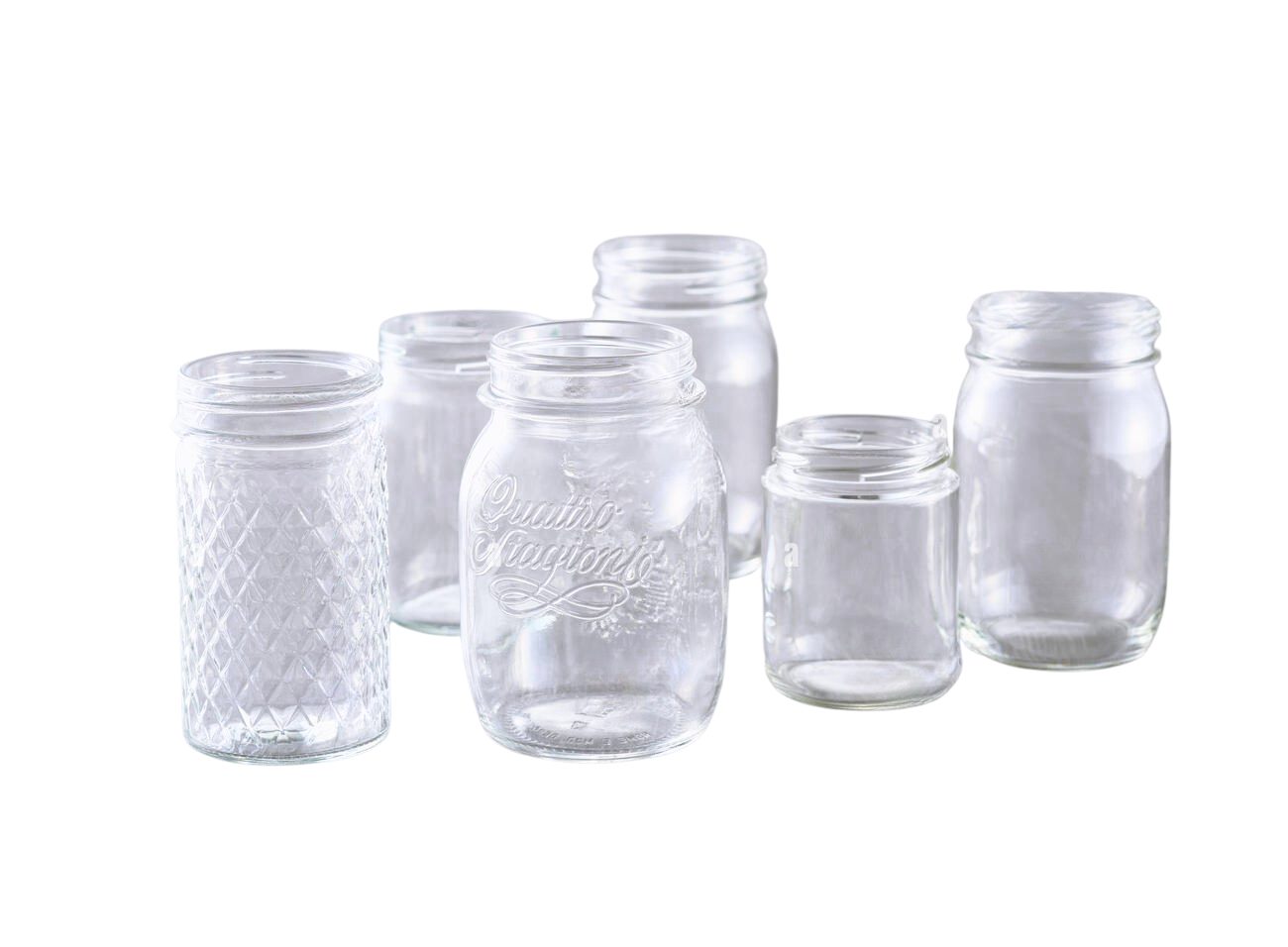
Typical uses for 4 oz and 8 oz glass jars
4 oz (118 mL) containers
The 4 oz format is the workhorse of sampling and premium small-batch products: cosmetic creams and balms, artisan jam and honey samplers, spice blends, single-serve desserts, votive and travel candles, and gift-set components. Its small label panel rewards simple, high-contrast branding, and its low glass weight keeps shipping costs down for e-commerce brands.

8 oz (237 mL) containers
The 8 oz format is the standard retail size for jam, honey, nut butters, candles and face creams. Holding exactly one US cup, it is intuitive for consumers and efficient for fill lines. Straight-sided 8 oz jars maximize label area and stack cleanly; shorter, wider profiles suit candles where flame-to-glass distance matters.
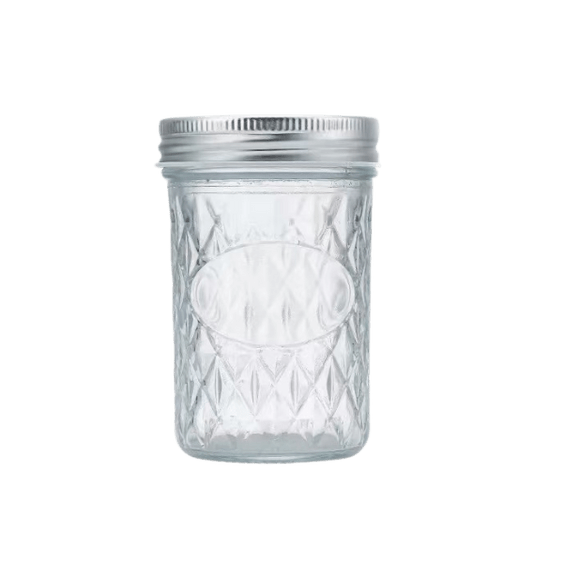
How to choose between 4 oz and 8 oz for your product
| Criterion | 4 oz favors | 8 oz favors |
|---|---|---|
| Price positioning | Premium per-unit pricing, low facial price | Value perception, standard shelf price |
| Product cost | Expensive contents (actives, saffron, balms) | Everyday contents (jam, candles) |
| Usage cycle | Products used sparingly or that expire fast | Daily-use products |
| Channel | Gifting, hotel amenities, sampling, DTC trial | Grocery retail, core range |
| Logistics | Lower weight per unit, denser cartons | Fewer units to fill, cap and label per liter sold |
Many brands run both: 4 oz as the discovery and gifting size, 8 oz as the core retail unit — ideally in the same jar family so closures, decoration and brand blocking stay consistent on shelf.
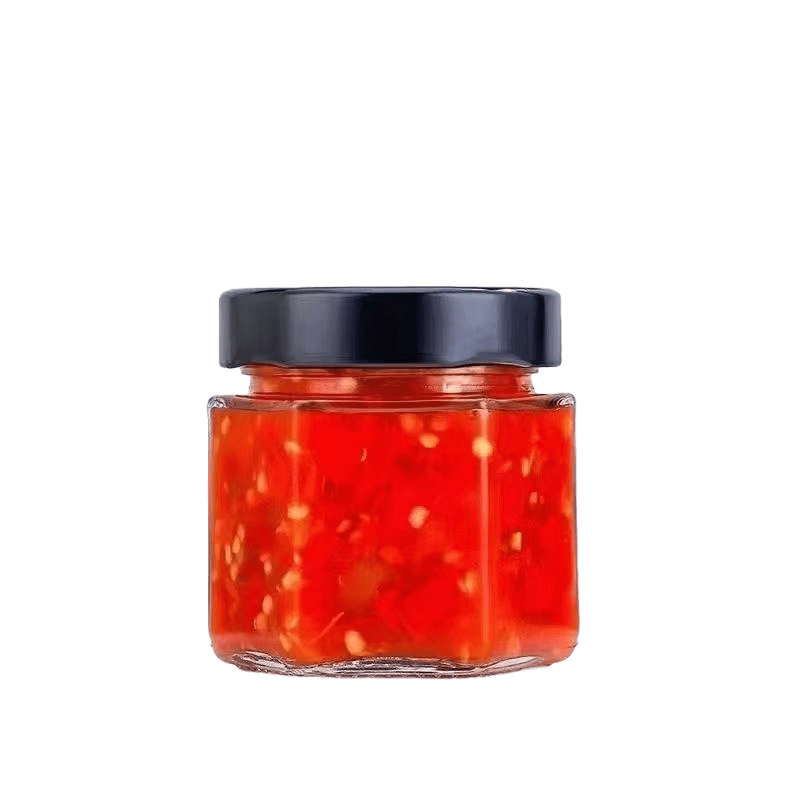
One capacity, many shapes: a 4 oz jar can be low and wide (cosmetics), straight-sided (food), or hexagonal (honey), each with different heights, diameters, neck finishes and case counts. Capacity never defines dimensions — always work from the manufacturer’s technical drawing. See our complete guide to bottle and container capacities for the same principle applied to bottles.
よくあるご質問
How many cups is 4 oz?
Four US fluid ounces equal exactly half a US cup (0.5 cup), or 8 tablespoons. This applies to volume only: 4 oz by weight converts to cups differently depending on the ingredient’s density.
How many mL is 4 oz?
4 US fluid ounces = 118.29 mL. In imperial fluid ounces, 4 US fl oz ≈ 4.16 imp fl oz (about 113.65 mL would be 4 imperial fl oz).
Is 8 oz always one cup?
Eight US fluid ounces always equal one US cup by volume. Eight ounces by weight equals one cup only for water-like liquids; denser or lighter products differ.
How many mL is 8 oz?
8 US fluid ounces = 236.59 mL, which is exactly one US customary cup (236.5882 mL).
What size is a standard jam jar?
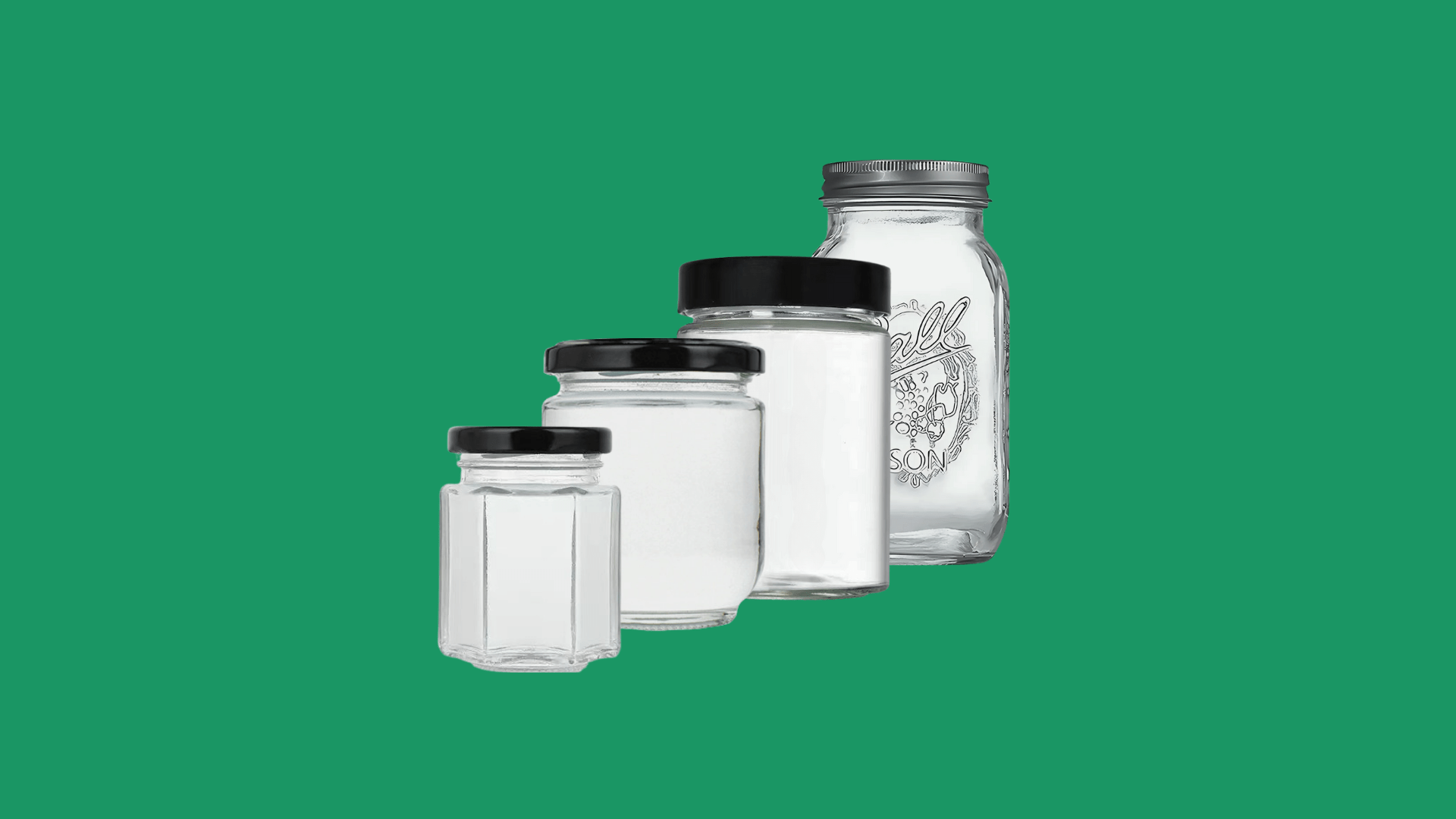
In North America, 8 oz (237 mL) is the most common retail jam jar, with 4 oz used for samplers and gift sets. European jam jars are typically sized in metric: 212 mL, 250 mL or 370 mL. For the full US canning range, see our mason jar sizes guide.
Does a 4 oz jar hold 4 oz of product by weight?
Not necessarily. A 4 oz jar holds 4 fluid ounces (118 mL) by volume. The net weight depends on the product’s density: about 5.9 oz for honey, but only about 2.5 oz for a whipped balm.


 English
 French
 Spanish
 Portuguese
 German
 Italian
 Japanese
 Korean
 Arabic
 Russian