
A 750ml gin bottle manufacturer that can hold tight tolerances on weight, neck finish and decoration is the difference between a gin launch that looks premium on shelf and one that gets bounced by your co-packer’s filling line. This guide walks through the shapes, weights, finishes and sourcing checks that matter when you’re specifying a custom 750ml gin bottle for the first time.
Why 750ml Is the Standard Gin Format
750ml is the default fill size across nearly every gin category, from London Dry to contemporary craft styles, because it matches standard case configurations, bar pour costs and retail shelf sets in most markets. Choosing a custom gin bottle at this volume means your brand fits existing distribution and merchandising without forcing retailers or distributors to make an exception for a non-standard SKU. A custom gin bottles program built around 750ml also keeps your options open for export, since the format is recognized in the US, EU and most Asian markets without relabeling for volume.
That said, 750ml is a format, not a shape. Two bottles at the same fill volume can differ by more than 150 grams in glass weight and look completely different on a bar shelf, which is where the choices below start to matter.
Bottle Shapes & Weights Compared
Most 750ml gin bottles fall into a handful of recognizable silhouettes. The table below compares the shapes buyers ask about most when briefing a manufacturer.
| Shape | Typical weight | Shelf presence | Common neck finish |
|---|---|---|---|
| Tall cylinder (Nordic style) | Lightweight, 420-500g | Modern, minimalist | Screw cap / ROPP |
| Boston round, flint glass | Mid-weight, 500-580g | Classic apothecary look | Cork or bartop |
| Wide-shoulder Dorica-style | Heavier, 580-650g | Premium, substantial in hand | Cork with capsule |
| Square / flask profile | Mid-weight, 520-600g | Distinctive, stands out in a row | Screw cap or cork |
Heavier glass reads as more premium at the point of sale, but it also raises freight cost per case and, for export brands, the landed cost per bottle. A luxury gin packaging brief doesn’t have to mean the heaviest glass on the market — a well-proportioned wide-shoulder shape can read as premium at a moderate weight if the mold is cut cleanly.
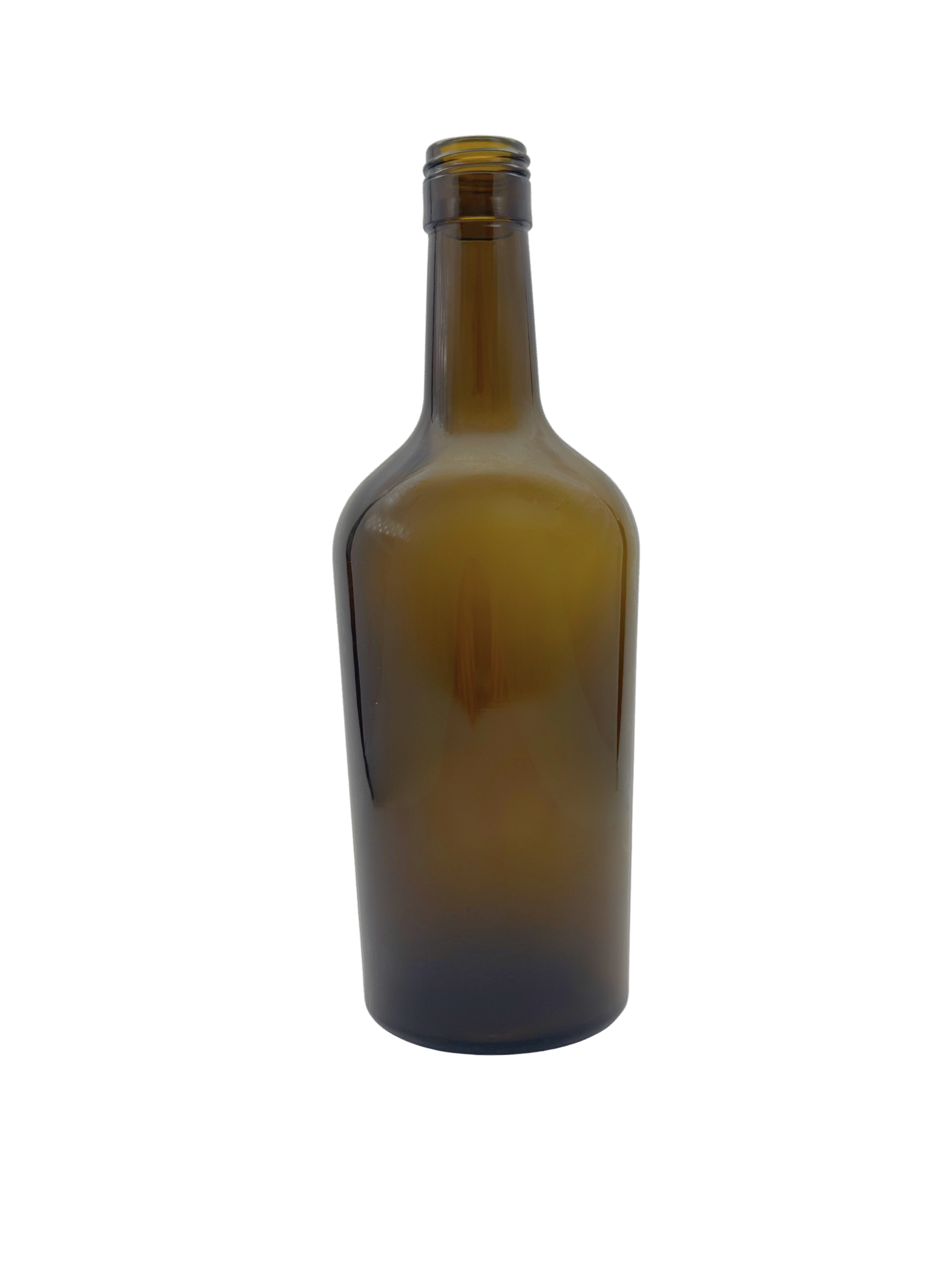
The 750ml アンティークグリーン 特注ボトル #430 above is an example of a 750ml mold already in GlassRock’s library — a useful starting reference when you’re briefing your own shape.
Working With a 750ml Gin Bottle Manufacturer
A custom glass bottle manufacturer typically moves a gin bottle project through the same broad stages regardless of shape: a design brief and 3D rendering, a sample or prototype run for approval, then tooling before mass production. Because gin brands are often launching a new SKU rather than replacing an existing one, sampling accuracy matters more than turnaround speed — a bottle that looks right on screen but sits wrong in the hand will cost you more time in a second sample round than a slightly longer first-round lead time.
GlassRock also manufactures 750ml molds across other product lines — wine, spirits and food — which means the tooling knowledge for weight control, neck finish accuracy and color consistency at this volume carries over directly to a gin program.
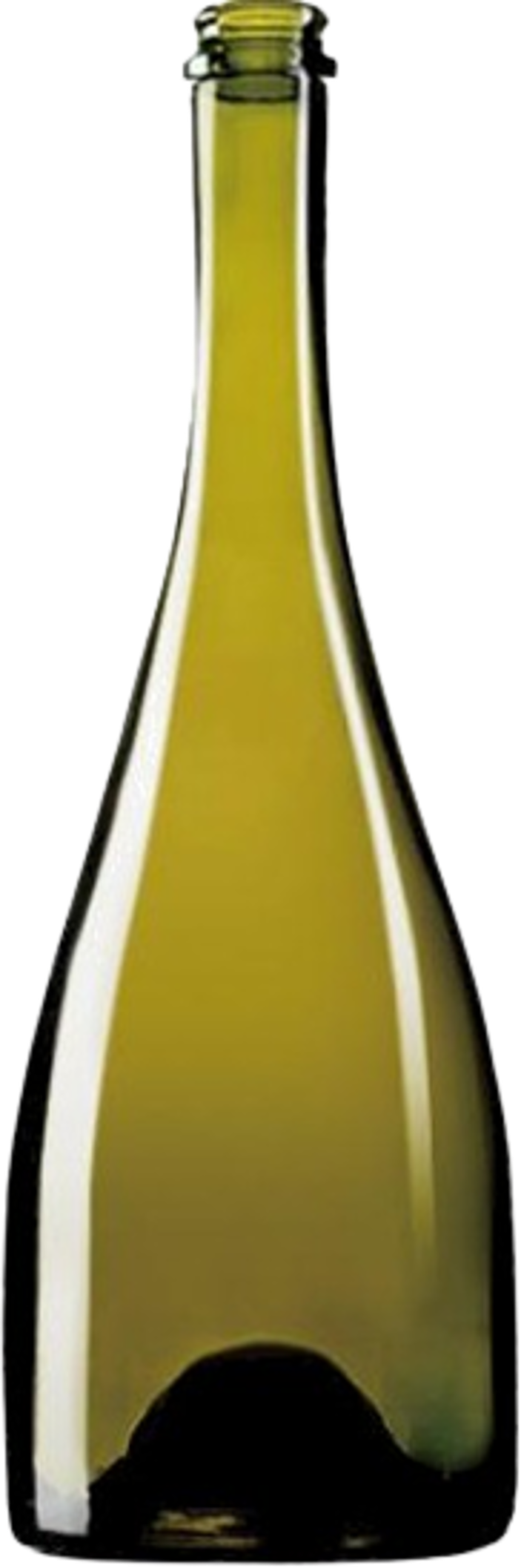
Antique green, as seen on the 750ml アンティークグリーン シャンパンボトル #900, is worth considering for gin too: it blocks more UV light than flint glass, which matters if your gin uses botanicals or natural colorants that fade under bright retail lighting.
Decoration & Luxury Finishing
Decoration is where a gin bottle stops looking like generic glass and starts looking like a brand. The right technique depends on your budget, your artwork, and how much of the bottle you want to cover.
| Technique | Best for | Investment level |
|---|---|---|
| Silk screen printing | Bold logos, 1-4 spot colors | Low-medium |
| Frosting (acid-etch or matte coating) | Premium, tactile finish | Medium |
| Embossing (in-mold relief) | Brand marks felt without looking | Medium-high, tied to tooling |
| Metallic hot-stamp or foil | Small accents, limited editions | Medium |
Embossing has to be built into the mold itself, so it’s a decision you make at the tooling stage, not after the fact — another reason to lock your bottle shape early when working with a 750ml gin bottle manufacturer. Screen printing and frosting, by contrast, can usually be applied to a stock or lightly modified bottle, which keeps costs down for a first production run.
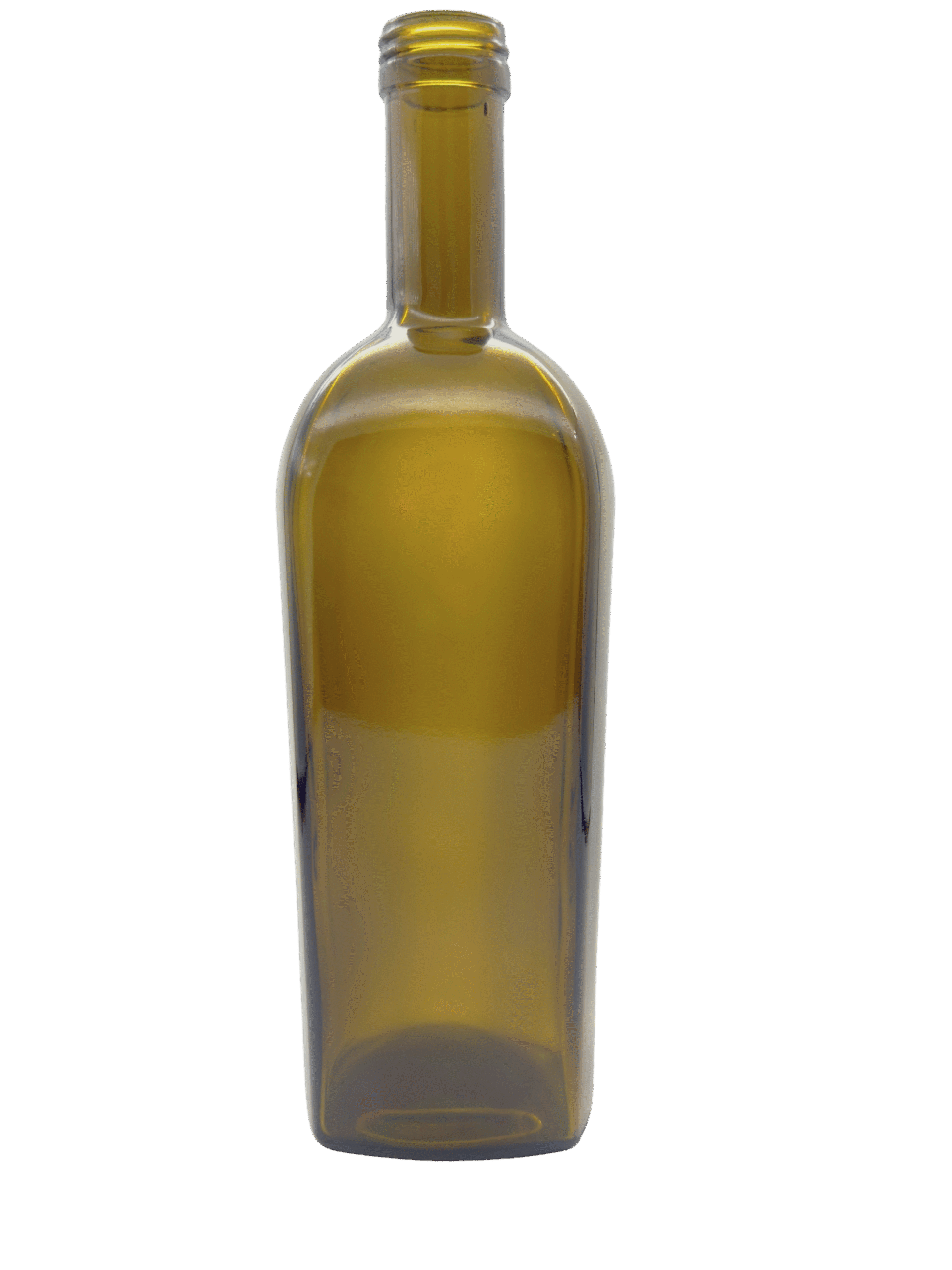
The 750ml tooling behind a bottle like the Conical Square Olive Oil Bottle 750ml shows the same manufacturer capability applied to a different product category — the same shoulder-forming and neck-finish control that a conical 750ml oil bottle needs is what keeps a gin bottle’s pour consistent.
Sourcing Checklist
Before you commit to a manufacturer or a mold, confirm the following:
- Neck finish compatibility — confirm your chosen closure (cork, screw cap, bartop) matches the neck finish on the mold, not just the bottle volume.
- Color consistency — ask to see a sample from a live production run, not just a rendered mockup, especially for antique green or other tinted glass.
- Weight tolerance — heavier bottles vary more between batches; ask what tolerance the manufacturer holds on your target weight.
- Decoration compatibility — confirm your decoration technique has been proven on that specific shape, not just on flat glass panels.
- Case and pallet fit — check that your bottle’s shoulder and base diameter work with standard case dividers for 750ml spirits.
よくあるご質問
What makes a good 750ml gin bottle manufacturer?
A good 750ml gin bottle manufacturer holds consistent glass weight and color between production runs, supports the neck finish your closure needs, and can prove out your chosen decoration technique on a real sample before mass production.
How much does a custom gin bottle mold cost?
Mold cost depends on the complexity of the shape, whether it includes embossing, and how many cavities the mold uses. A simpler cylindrical shape is generally less expensive to tool than a wide-shoulder or heavily embossed design.
Can I use a stock bottle instead of a custom mold?
Yes. Many gin brands launch on a stock 750ml shape and add custom decoration such as screen printing, frosting or a custom label, which avoids mold tooling cost entirely and shortens lead time.
What’s the difference between flint and antique green glass for gin?
Flint glass is clear and shows off the liquid’s natural color, while antique green blocks more UV light and gives a more traditional, apothecary-style look. The choice usually comes down to brand positioning rather than a functional requirement for gin, since gin is less light-sensitive than wine.
Does bottle weight affect shipping cost?
Yes. Heavier glass increases the weight per case, which raises freight cost, especially for export. Many brands balance a premium look with a moderate glass weight to control landed cost per bottle.
What neck finishes work with 750ml gin bottles?
Cork, screw cap (ROPP) and bartop finishes are all common on 750ml gin bottles. The neck finish has to be specified with the mold, so confirm your closure choice before tooling begins.
 English
 French
 Spanish
 Portuguese
 German
 Italian
 Japanese
 Korean
 Arabic
 Russian