
One of the first questions every packaging buyer asks is about the glass bottle MOQ—the minimum order quantity a manufacturer requires before a run is economically viable. The answer shapes your launch budget, your warehousing plan, and whether a custom shape is even realistic for your stage. This guide breaks down how minimums actually work, why they differ so dramatically between stock and private molds, and how to keep your first order lean without overpaying per unit.
What Glass Bottle MOQ Really Means
MOQ is not an arbitrary number a sales rep invents. It reflects the physics and economics of a glass furnace. Once a forming machine is set up for a specific bottle, the cost of changeover, mold conditioning, and color transition is fixed regardless of whether you run 5,000 units or 500,000. The minimum simply spreads that fixed cost across enough bottles to keep the per-unit price sane.
Three factors drive the glass bottle MOQ on any quote:
- Mold type — stock (shared) molds versus a private mold made only for you.
- Glass color — a color change in the furnace is expensive, so rarer colors carry higher minimums.
- Decoration and finishing — screen printing, frosting, or coating each add their own setup thresholds.
Stock Mold Bottles: The Lowest Minimums
If you want the smallest possible order, stock mold bottles are the answer. These use existing molds the manufacturer already owns and rotates across many customers. Because there is no tooling to build, minimums drop sharply—often to a single pallet or a few thousand units rather than tens of thousands.
Stock molds are ideal when you are validating a product, running a limited edition, or simply do not need a proprietary silhouette. You still control your brand through labeling, closures, and decoration, while skipping the tooling cost entirely. Our Perfume Bottle GR_257 is a good example of a ready-tooled shape that lets cosmetic brands launch with a genuinely low MOQ glass bottles order.

Featured Product: Perfume Bottle GR_257
The trade-off is exclusivity: because the mold is shared, a competitor could theoretically use the same base shape. For most early-stage brands, that risk is well worth the dramatically lower entry point.
Private Mold MOQ: Owning Your Shape
When a distinctive bottle is central to your brand, you commission a private mold. The mold is engineered to your drawing and used exclusively for your orders. The catch is the private mold MOQ: because the manufacturer must recover tooling investment and dedicate furnace time, minimums climb—commonly into the tens of thousands of units per color.
That sounds steep, but the math often favors private molds at scale. Spread tooling across a full production year and the per-bottle premium can be modest, while you gain a shape no competitor can copy. Premium spirits brands frequently take this route. Pieces like our 750ml Antique Green Customized Bottle #480 show how a dedicated wine or spirits silhouette can anchor a premium shelf presence.
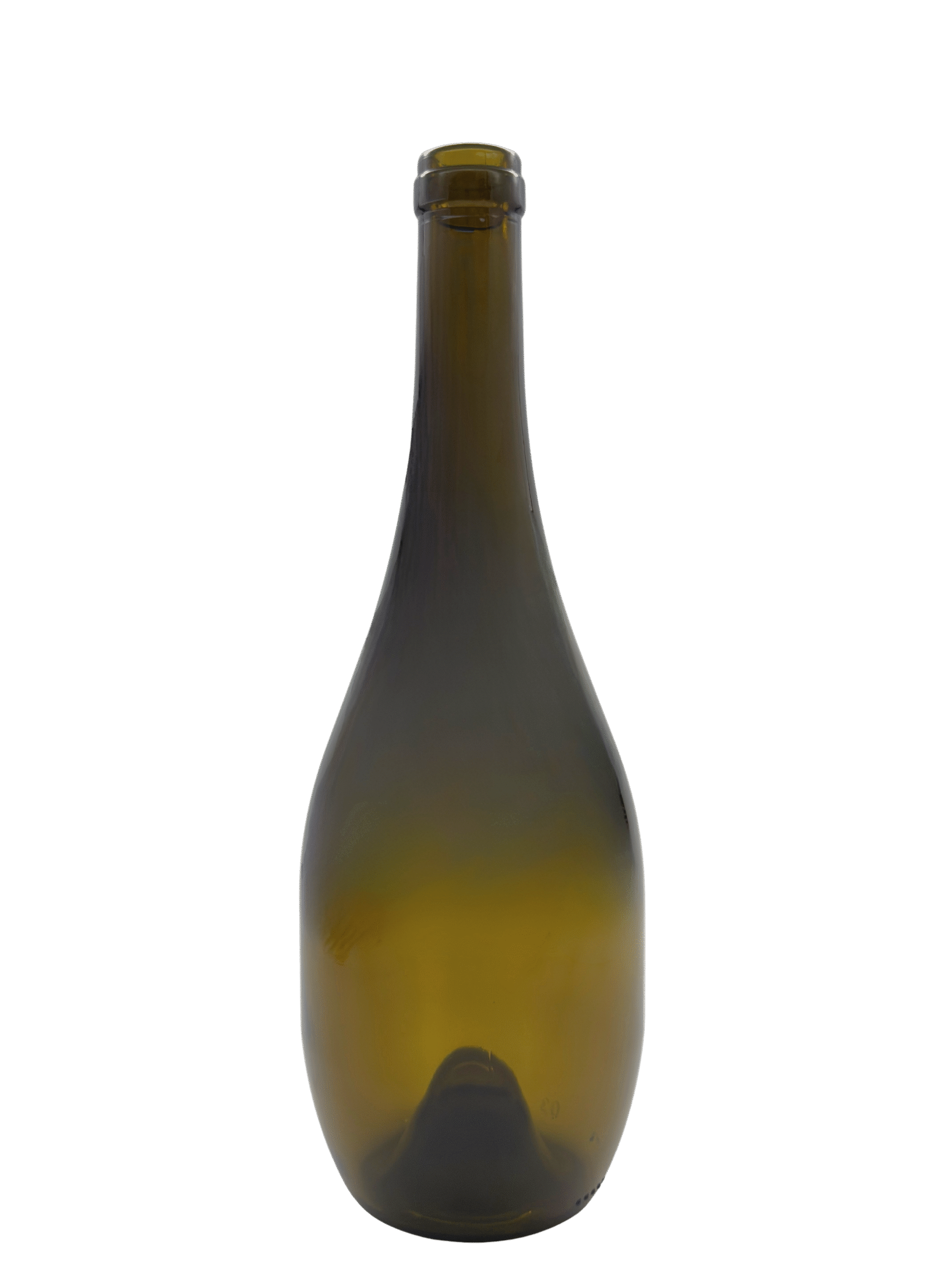
Featured Product: 750ml Antique Green Customized Bottle #480
A practical middle path is a semi-custom approach: start from a proven base shape and modify the neck finish, shoulder, or embossing. You get meaningful differentiation while keeping tooling and the associated minimum lower than a fully bespoke mold.
How Color Affects Your Minimum
Color is the hidden variable in any private mold MOQ conversation. Flint (clear) and standard amber run frequently, so their minimums are friendliest. Specialty hues such as antique green or cobalt require a furnace color change and therefore larger batches. If your design needs a rarer color, plan the volume accordingly—or consider a clear bottle with a colored sleeve or coating to hit the look at a lower threshold.
How to Lower Your First Order Without Overpaying
You do not have to choose between a tiny order and a fair unit price. A few tactics keep both in reach:
- Start on a stock mold, migrate to private later. Validate demand first, then invest in tooling once your volume justifies it.
- Consolidate colors. Order one color in larger volume rather than splitting a small run across several, which multiplies setup costs.
- Bundle decoration thoughtfully. Group screen-printed designs into a single setup instead of staggering small batches.
- Plan annual volume, order in releases. Commit to a yearly quantity to unlock better pricing, then schedule staggered shipments to ease cash flow and storage.
For brands that want a custom look on a friendlier minimum, a modified stock shape such as the 750ml Antique Green Customized Bottle #520 bridges the gap between off-the-shelf and fully bespoke.
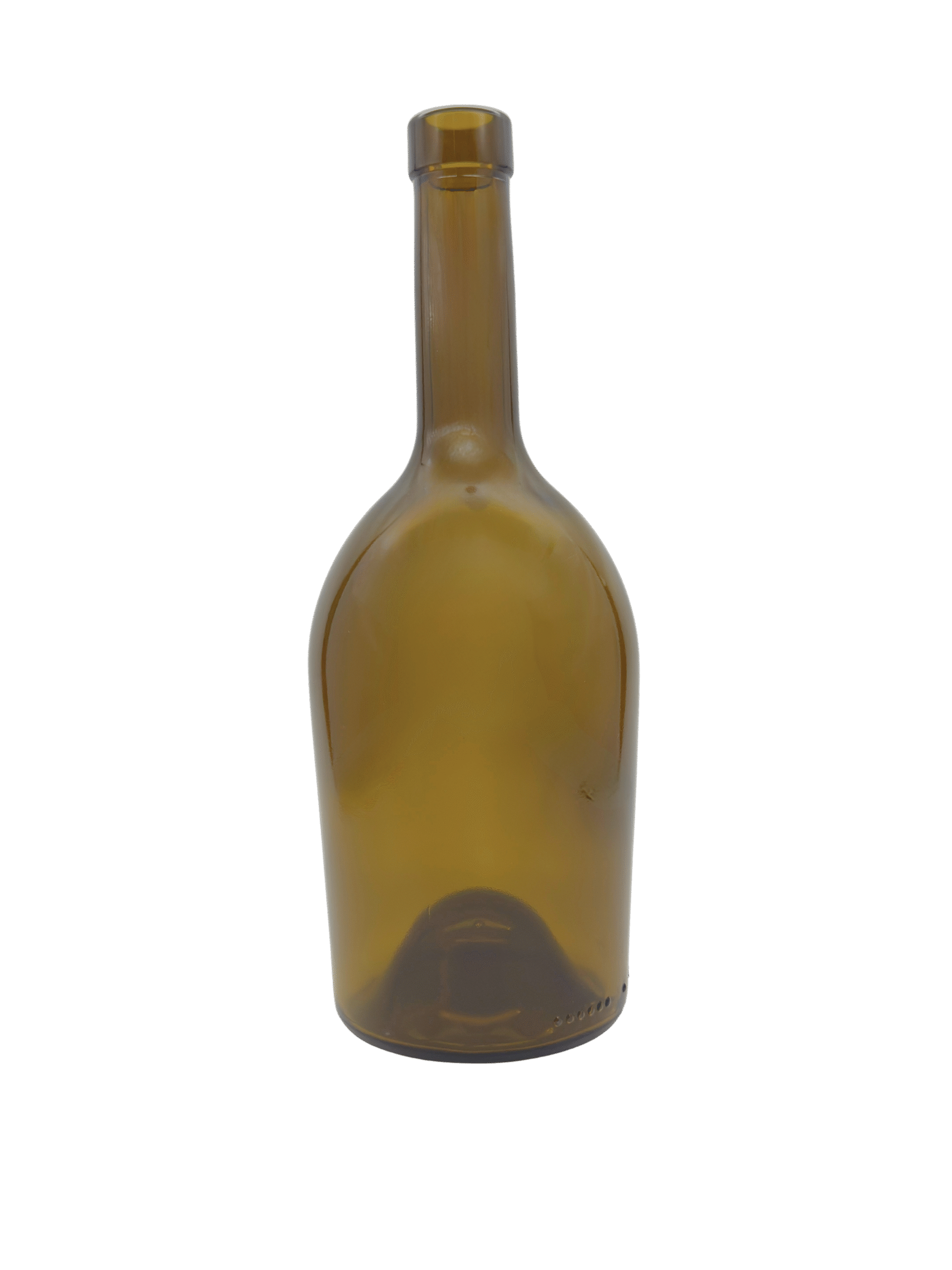
Featured Product: 750ml Antique Green Customized Bottle #520
Choosing the Right Minimum for Your Stage
The right glass bottle MOQ is the one that matches where your brand is today, not where you hope it will be. If you are testing a concept, lean on stock mold bottles and a single color to keep risk low. If your shape is your identity and your volume supports it, a private mold pays for itself in differentiation and protection. Map your annual forecast against tooling, color, and decoration thresholds, and the minimum stops being a barrier and becomes a planning tool. Talk to our team about which path fits your launch, and we will help you structure an order that protects both your budget and your shelf presence.
 English
 French
 Spanish
 Portuguese
 German
 Italian
 Japanese
 Korean
 Arabic
 Russian