
The global glass bottle production crisis has squeezed beverage makers, spirits brands, and food packers for several years running. Furnace shutdowns in Europe, soaring energy costs, and tight logistics have left procurement managers scrambling for dependable supply. Increasingly, the answer has come from one direction: Chinese glass manufacturing, which continues to scale capacity, stabilize lead times, and offer the SKU diversity buyers need to keep shelves stocked.
Why the Glass Bottle Shortage Happened
Several pressures converged to create the current shortage. European furnaces, heavily reliant on natural gas, faced historic energy price spikes that forced temporary idling and cost pass-throughs. At the same time, beverage consumption rebounded sharply after pandemic lows, with craft beer, wine, and premium spirits categories each demanding more bottles than domestic suppliers could produce.
Add to that shipping bottlenecks, cullet shortages, and long rebuild cycles for aging furnaces, and many buyers found themselves with allocation letters instead of pallets. Small and mid-sized brands felt the squeeze worst — when capacity is rationed, large accounts get priority.
How Chinese Manufacturing Absorbed the Gap
China’s glass sector has spent the last decade investing in modern float and container furnaces, automation, and quality control systems. That built-out capacity is now filling the void left by constrained European output. For procurement teams, the appeal is straightforward:
- Consistent availability across common beer, wine, spirits, and food jar formats.
- Competitive pricing even after freight, especially on full-container orders.
- Wide mold libraries that shorten the path from concept to filled bottle.
- Scalable runs for emerging brands that can’t justify European minimums.
For craft brewers in particular, the ability to secure colored glass — long-neck ambers, greens, and specialty blues — has been a lifeline. A reliable supply of bottles like the 330ml Long Neck Blue Beer Bottle has helped seasonal and premium lines stay on schedule through the tightest months.

Produit vedette : 330ml Long Neck Blue Beer Bottle
Categories Where China Is Delivering Most
Bouteilles de bière
Beer accounts for one of the largest shares of container glass demand globally, and standard 330ml and 640ml formats have been among the scarcest items in Western markets. Chinese producers have leaned into this category, offering full color ranges, flint, amber, green, and custom embossing for brands wanting differentiation on shelf. The resurgence of large-format shareable bottles has also pushed demand toward heavier 640ml options.

Produit vedette : 640ml Green Beer Bottle
Wine and Spirits
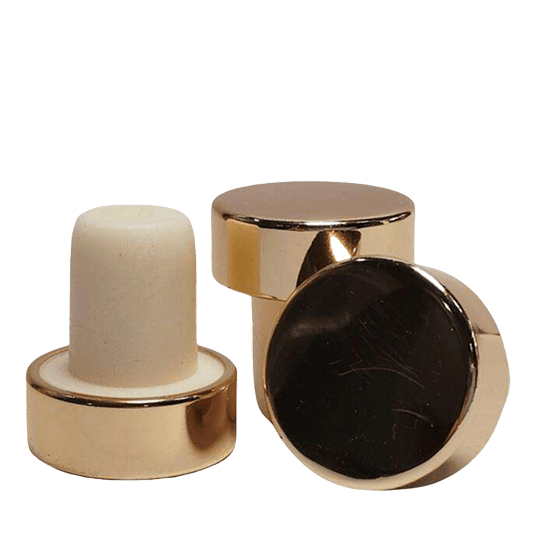
Wine bottlers have been another segment hit hard by allocation. Chinese suppliers now service a broad range of Bordeaux, Burgundy, and Hock shapes, plus matching closures. Having bottle and closure sourced through a single supply chain reduces mismatch risk — something buyers discovered the hard way when corks and bottles arrived from different regions with conflicting specs. A coordinated component like the Wine Bottle Cork can simplify bottling lines and lock in consistent neck finish tolerances.
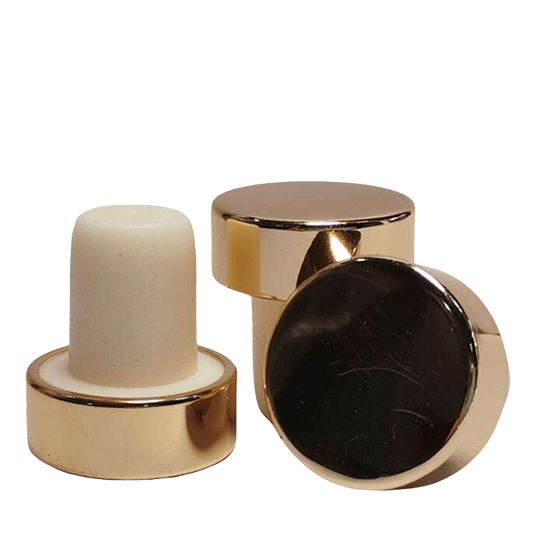
Produit vedette : Wine Bottle Cork
Food and Cosmetic Containers
Sauce jars, honey jars, dropper bottles, and cosmetic containers round out the categories where Chinese capacity is now the backbone of global supply. Smaller brands launching new SKUs especially benefit from the breadth of stock molds, trimming both tooling costs and time to market.
What Buyers Should Evaluate When Sourcing from China
Lower prices alone don’t justify a sourcing shift. Procurement managers should build a scorecard that weighs quality, compliance, and logistics together:
- Quality documentation. Ask for dimensional reports, weight tolerances, thermal shock data, and pressure testing where relevant.
- Food and beverage compliance. Verify that materials meet destination-market standards for direct food contact.
- Inspection protocols. Pre-shipment inspections and third-party AQL checks help catch issues before containers leave port.
- Packaging integrity. Shrink-wrapped layer pads, reinforced cartons, and proper bulk palletization reduce breakage in transit.
- Closure compatibility. Confirm neck finish standards align between the bottle and the closure, whether crown, cork, or screw cap.
A More Resilient Supply Model
The experience of the last few years has pushed buyers to think beyond single-region sourcing. Many now keep dual suppliers — one regional and one overseas — so that furnace shutdowns, energy shocks, or freight disruptions in any one market don’t halt production. Chinese manufacturing has become a central pillar in that resilience model, not just a low-cost alternative.
For emerging brands, the strategic benefit is even clearer: access to bottle shapes, colors, and closures that would otherwise be reserved for high-volume accounts. That levels the competitive field on the retail shelf.
Conclusion
The glass bottle production crisis is not fully behind us, but the pressure has eased meaningfully thanks to scaled, reliable Chinese output. Whether you need long-neck beer bottles, heavy wine bottles with matched corks, or standard food jars, sourcing from well-vetted Chinese producers is now a practical way to stabilize supply, control costs, and keep brands moving forward without missing a bottling run.
 English
  French
  Spanish
  Portuguese
  German
  Italian
  Dutch
Dutch  Vietnamese
  Japanese
  Korean
  Indonesian
  Arabic
  Thai
Thai  Russian
  Turkish
  Hindi
Hindi  Chinese (China)
  Chinese (Taiwan)
  Cantonese
  Czech
Czech