
The right glass bottle decoration techniques turn a plain container into a brand asset that shoppers notice on a crowded shelf. Whether you sell spirits, cosmetics, sauces, or craft beverages, how a bottle is finished often matters as much as its shape. This guide breaks down the main decoration methods used in glass packaging, what each one costs in practical terms, and how to choose the right combination for your product.
Why Bottle Decoration Matters
Decoration is the layer that carries your identity. A self-adhesive label is the easiest route, but permanent, on-glass finishes signal quality and resist scuffing, moisture, and ice-bucket conditions that destroy paper. Among the available glass bottle decoration techniques, the best choice depends on your run size, budget, and how premium you want the finished piece to feel. Most brands end up combining two or three methods rather than relying on a single effect.
Silk Screen Printing
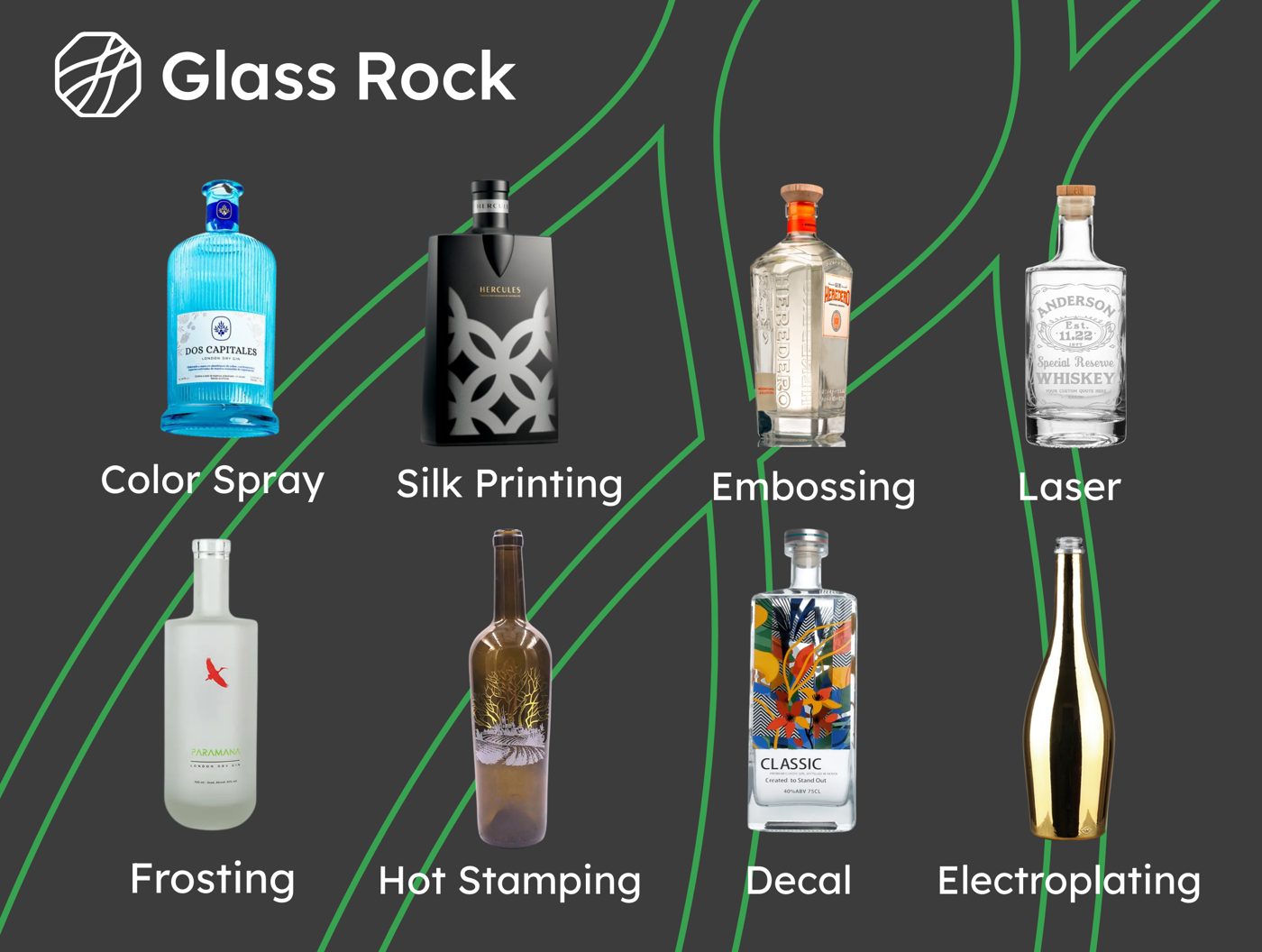
Silk screen printing pushes ceramic or organic ink directly through a fine mesh stencil onto the glass surface, then cures it in an oven for durability. It is the workhorse of permanent decoration: crisp logos, volume markings, and one- to four-color artwork all sit flat against the glass and survive washing and handling. Because each color needs its own screen and pass, silk screen printing is most economical for bold, limited-color designs rather than photographic detail.
It suits beverage and spirit bottles especially well, where a clean printed mark reads as craft and permanence. For a darker base that makes light-colored inks pop, an amber or brown bottle is an ideal canvas.

Featured Product: 275ml Conic Dark Brown Beer Bottle
Frosting and Etching
Frosting gives glass a soft, matte, semi-opaque surface that diffuses light and feels expensive in the hand. It can be applied two ways: acid etching, where the glass is chemically treated, or a sprayed frost coating that is cured onto the surface. Full-body frosting is a signature look for premium fragrance, skincare, and high-end spirits, while spot frosting — frosting only a window or pattern — creates contrast against clear glass.
Because frosting changes how the entire bottle catches light, it is one of the most effective glass bottle decoration techniques for communicating luxury without printing anything at all. Pair it with a single metallic screen print and the result looks far more costly than its actual run price.
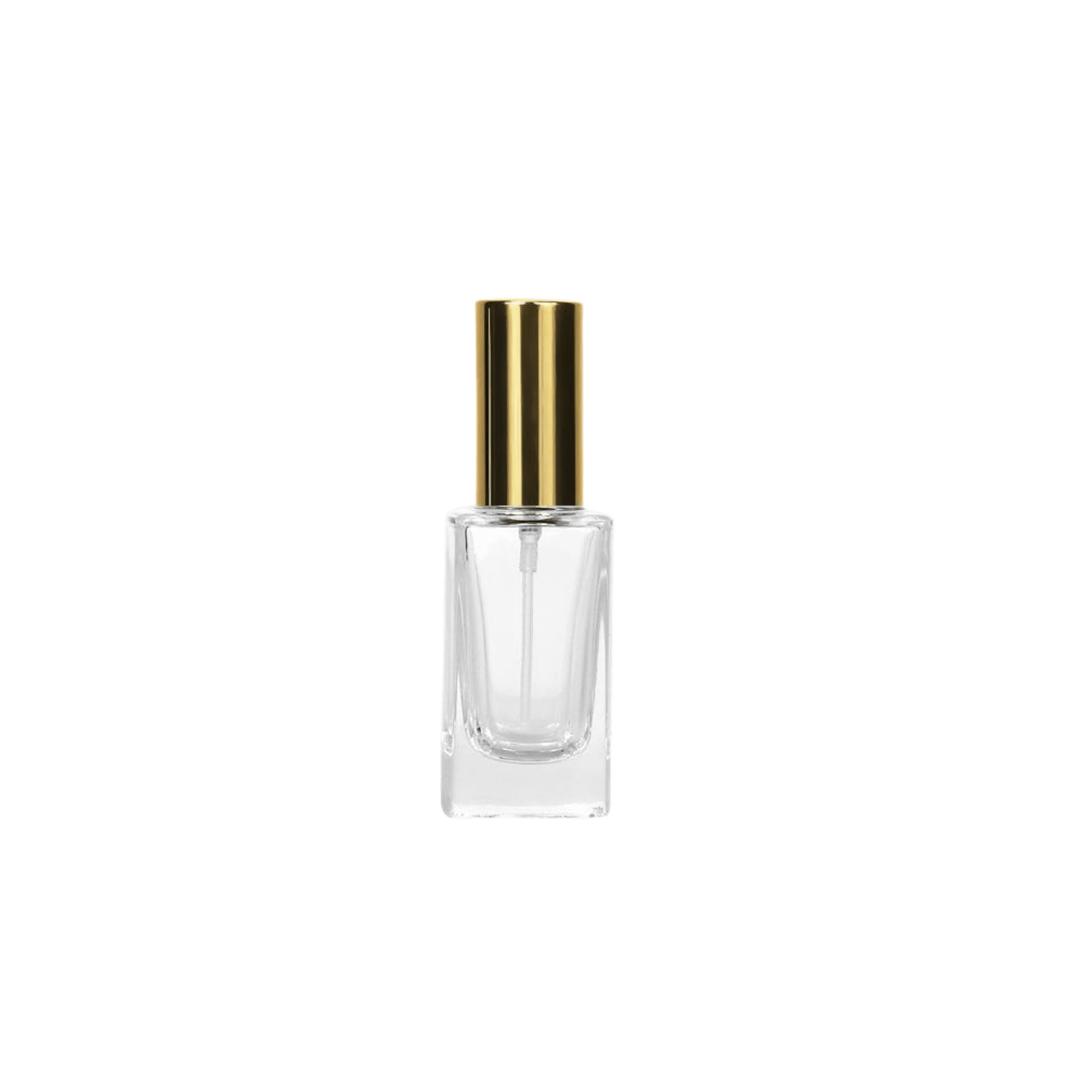
Featured Product: Perfume Bottle GR_263
Embossing and Debossing
Embossing raises a design out of the glass surface; debossing presses it in. Both are formed in the mold itself rather than added afterward, so the detail becomes part of the bottle permanently — no ink, no coating, nothing to wear off. Embossed logos, crests, and texture panels give a tactile, heritage feel that buyers associate with established brands.
The trade-off is tooling: because the relief is cut into the mold, embossed bottles require that investment up front, which makes the technique best for designs you plan to run repeatedly. Once the mold exists, the per-bottle cost of the embossing is effectively zero.
Applied Color Labeling and Decals
Applied color labeling (ACL) fuses pigment onto the glass under heat for a durable, vintage-soda look, while ceramic decals let you transfer more complex, multi-color artwork than screen printing alone. Both deliver permanent decoration that resists abrasion. Decals in particular open the door to detailed illustrations and gradients that would need too many screens to print directly.
Metallic Effects, Coatings, and Foiling
Hot-stamped foil, sprayed color coatings, and metallic inks add shine, color, and shelf presence. A colored spray coat can transform a clear bottle into a solid matte or gloss finish, and foiling adds gold or silver accents to logos and borders. These finishes layer beautifully over frosting or screen printing, and they are central to luxury bottle decoration programs where the package needs to feel like part of the product. For cosmetics especially, a coated or foiled bottle communicates premium positioning before the customer has read a single word — as the Perfume Bottle GR_263 range shows.
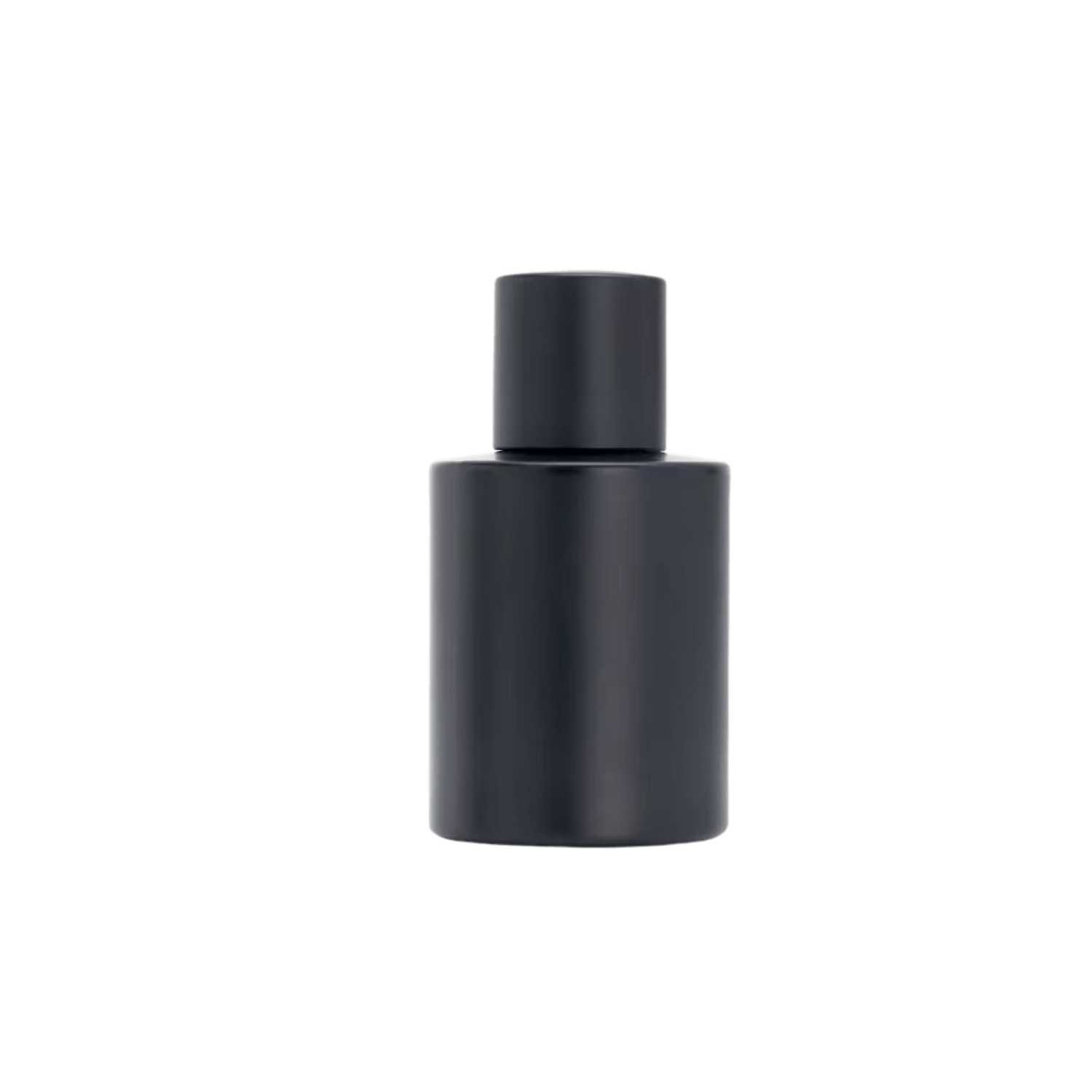
Featured Product: Perfume Bottle GR_262
How to Choose the Right Combination
Start from three questions: how many units you are running, how premium the product needs to look, and which finishes survive your real-world conditions. Short runs favor labels and screen printing; long, repeating runs justify the tooling for embossing. Premium cosmetics and spirits usually combine frosting with a metallic accent, while craft beverages lean on bold screen prints, sometimes over an embossed base like the 275ml Conic Dark Brown Beer Bottle. The strongest packaging rarely relies on one effect — it stacks two or three so the bottle reads well from across the aisle and rewards a closer look in the hand.
Conclusion
Mastering the core glass bottle decoration techniques — screen printing, frosting, embossing, ACL and decals, and metallic coatings — lets you match finish to budget and brand without guesswork. If you are planning a custom decorated bottle program, GlassRock can advise on which methods fit your design, volume, and timeline, and produce the result on the glass shapes you already use.
 English
 French
 Spanish
 Portuguese
 German
 Italian
 Japanese
 Korean
 Arabic
 Russian