
Perfume and Cologne Bottle Sizes: mL, Ounces and How Long They Last
The standard perfume and cologne bottle sizes are 30 ml (1 oz), 50 ml (1.7 oz) and 100 ml (3.4 oz), with travel sizes of 10–30 ml and samples of 1.5–5 ml. As a rule of thumb a bottle gives about 10 sprays per millilitre, so a 50 ml bottle holds roughly 500 sprays and lasts about four months at a few sprays a day, while a 100 ml bottle holds around 1,000 sprays and gives the lowest cost per ml. This guide covers every size in ml and ounces, how many sprays each holds, which size to choose, and — for brands — how to build a bottle lineup.
The standard sizes at a glance
Fragrance sizes cluster into four groups, and almost every bottle on a counter belongs to one of them:
- Samples (1.5–5 ml) — vials and mini atomisers for trying a scent.
- Travel (10–30 ml) — purse and carry-on sizes.
- Standard full sizes (30, 50 and 100 ml) — the core of the market.
- Large and home sizes (125–200 ml) — often colognes and unisex scents applied more liberally.
If there is one size to remember, it is 50 ml (1.7 oz): enough fragrance to enjoy for months, small enough to finish before it ages, and the size most buyers reach for first.
Every size in mL and ounces
Fragrance is sold in millilitres almost everywhere, but US and some marketing still use fluid ounces. Here is the full conversion chart. The ounce figures are the rounded values printed on bottles; for exact conversions use our mL to oz converter.
| Millilitres | Ounces (printed) | Category | Typical use |
|---|---|---|---|
| 1.5–2 ml | 0.05–0.07 oz | Sample vial | Try before you buy |
| 5 ml | 0.17 oz | Mini / sample | Discovery set, purse spray |
| 10 ml | 0.33 oz | Travel | Refillable travel atomiser |
| 15 ml | 0.5 oz | Travel | Rollerball, purse size |
| 30 ml | 1.0 oz | Standard | First full bottle of a new scent |
| 50 ml | 1.7 oz | Standard | The most popular size |
| 75 ml | 2.5 oz | Standard–large | Common for men’s fragrance |
| 100 ml | 3.4 oz | Value | Signature scent, best cost per ml |
| 200 ml | 6.7 oz | Home / cologne | Everyday cologne, unisex |
How many sprays, and how long it lasts
A full bottle looks like a lot of fragrance, but the numbers are easy to estimate. A typical atomiser dispenses 0.08–0.12 ml per spray, so as a working rule one millilitre gives about ten sprays.
Two honest caveats. First, spray count varies with the pump and with how heavily you apply — two generous sprays or five light ones change the maths. Second, concentration does not change how many sprays are in the bottle; a parfum and an eau de toilette of the same size hold the same volume. What concentration changes is how long each application lasts on your skin, which is a different question from how long the bottle lasts.
Which size should you choose?
The right size depends less on the fragrance than on how you will use it.
Buy small to explore, large to commit. If you are unsure about a scent, a sample or a 30 ml bottle lets you live with it without a big outlay — fragrance can smell different after a week than it does in the shop. Once a scent has become yours, a 100 ml bottle rewards you with the lowest price per millilitre. The 50 ml sits in between and is the safe default for most people: large enough to enjoy daily, small enough to finish before the juice starts to turn (most fragrances are best within three to five years of opening).
Samples, decants and travel sizes
Below the full-size range sits a whole ecosystem built around trying and travelling:
- Samples and vials (1.5–2 ml) are dab or spray miniatures, often free with a purchase or sold in discovery sets.
- Decants are fragrance transferred from a large bottle into a small atomiser (typically 5–10 ml) — a popular way to try expensive scents affordably.
- Travel atomisers (10–30 ml) matter for one practical reason: airline cabin rules limit each liquid container to 100 ml, and travellers usually prefer something smaller still. A refillable 10 ml atomiser is the classic carry-on solution.
Why 1.7 oz equals 50 ml
The ounce figures on perfume bottles look odd — 1.7, 3.4, 6.7 — because they are rounded conversions of round metric sizes, not the other way around. One US fluid ounce is 29.57 ml, so:
- 50 ml ÷ 29.57 = 1.69 oz, printed as 1.7 oz
- 100 ml ÷ 29.57 = 3.38 oz, printed as 3.4 oz
- 30 ml ÷ 29.57 = 1.01 oz, printed as 1.0 oz
So a “1.7 oz” bottle is simply a 50 ml bottle described in ounces. The metric figure is the real one. The same rounding logic applies across spirits and other packaging — we unpack it in the oz to mL conversion guide.
Perfume, cologne and eau de toilette: does size differ?
These words describe concentration, not size — how much fragrance oil is dissolved in the alcohol base. From strongest to lightest: parfum (or extrait), eau de parfum (EDP), eau de toilette (EDT), and eau de cologne. But concentration does correlate with the sizes brands offer, because it changes how the fragrance is used:
| Type | Fragrance oil | Common sizes | Why |
|---|---|---|---|
| Parfum / Extrait | 20–30% | 7.5–30 ml | Concentrated and costly; a little goes far |
| Eau de Parfum (EDP) | 15–20% | 30, 50, 100 ml | The mainstream, sold in the full range |
| Eau de Toilette (EDT) | 5–15% | 50, 100 ml | Lighter, applied more freely |
| Eau de Cologne | 2–5% | 100–200 ml | Splashed on generously, so larger bottles |
So “cologne” bottles skew larger not because a cologne bottle is different, but because a light concentration is worn liberally — you get through it faster.
For brands: building a bottle size lineup
If you are a fragrance or cosmetic brand, the size lineup is a commercial decision, not just a packaging one. A well-built range walks a customer from first curiosity to loyal repurchase.
The classic structure is a discovery size, a hero size and a value size: a sample or 10 ml to win a trial, a 50 ml as the hero that most people buy, and a 100 ml that rewards commitment and lifts average order value. Many brands add a 30 ml for gifting and a travel atomiser for the airport channel. Offering multiple sizes of the same scent measurably increases conversion, because it lets a shopper buy at their own level of confidence.
Three technical points decide whether that lineup works on the line:
- Bottle capacity is not fill volume. A “50 ml” fragrance is the fill; the bottle’s brimful capacity is a little larger to leave headspace for the atomiser dip tube and thermal expansion. Specify the fill and let the manufacturer size the bottle — the same principle we set out in the bottle sizes guide.
- The neck finish must match the pump. Perfume atomisers are crimped onto a standard collar (commonly the FEA 15 finish); the bottle and the spray pump have to be specified as a system, exactly as covered in the closure and neck finish guide.
- Glass and decoration carry the brand. Perfume is sold on how the bottle looks and feels in the hand — weight, clarity and finish. High-clarity extra-flint glass and the right decoration technique do more for a fragrance than almost any other packaging decision. For a fully bespoke bottle, see the custom glass bottle guide.
Frequently asked questions
What are the standard perfume bottle sizes?
The standard full sizes are 30 ml (1 oz), 50 ml (1.7 oz) and 100 ml (3.4 oz). Below these are travel sizes of 10–30 ml and samples of 1.5–5 ml; above them, home and cologne sizes of 125–200 ml. The 50 ml is the single most popular size.
How many sprays are in a 100 ml perfume bottle?
Roughly 1,000 sprays, based on about 10 sprays per millilitre. The exact number depends on the atomiser (which dispenses 0.08–0.12 ml per spray) and how heavily you apply, so real-world counts range from about 800 to 1,400.
How long does a 50 ml bottle of perfume last?
About four months at a few sprays a day — roughly 500 sprays in the bottle. Wear it more heavily and it lasts less; use it only occasionally and it can last a year or more. A 100 ml bottle lasts roughly twice as long.
Which is better, 50 ml or 100 ml?
The 100 ml gives the lowest cost per millilitre and suits a scent you wear daily. The 50 ml is the safer choice for most people: you enjoy it for months and finish it before the fragrance ages, which most do within three to five years of opening.
What size perfume can I take on a plane?
Cabin liquid rules cap each container at 100 ml, so a full 100 ml bottle is the maximum — but a 10–30 ml travel atomiser is far more practical and leaves room in your liquids bag. Larger bottles must go in checked luggage.
Why does a perfume bottle say 1.7 oz?
Because it is a 50 ml bottle described in ounces. One US fluid ounce is 29.57 ml, so 50 ml works out to 1.69 oz, which brands round to 1.7 oz. Likewise 100 ml becomes 3.4 oz. The metric size is the real figure.
Is cologne sold in bigger bottles than perfume?
Often, yes — but not because the bottle is different. “Cologne” is a light concentration applied generously, so it is used up faster and tends to be sold in 100–200 ml sizes. Concentrated parfum, worn a drop at a time, is usually sold in small 7.5–30 ml bottles.
How much perfume is in a sample?
Sample vials typically hold 1.5–2 ml, enough for a week or two of testing. Larger “decants” of 5–10 ml are transferred from a full bottle into a small atomiser so you can wear a scent properly before buying the full size.
Does a bigger bottle mean a longer-lasting scent?
No. Bottle size affects how many sprays you get, not how long each spray lasts on your skin. Longevity on skin is driven by concentration — parfum and eau de parfum last longer than eau de toilette or cologne, regardless of bottle size.
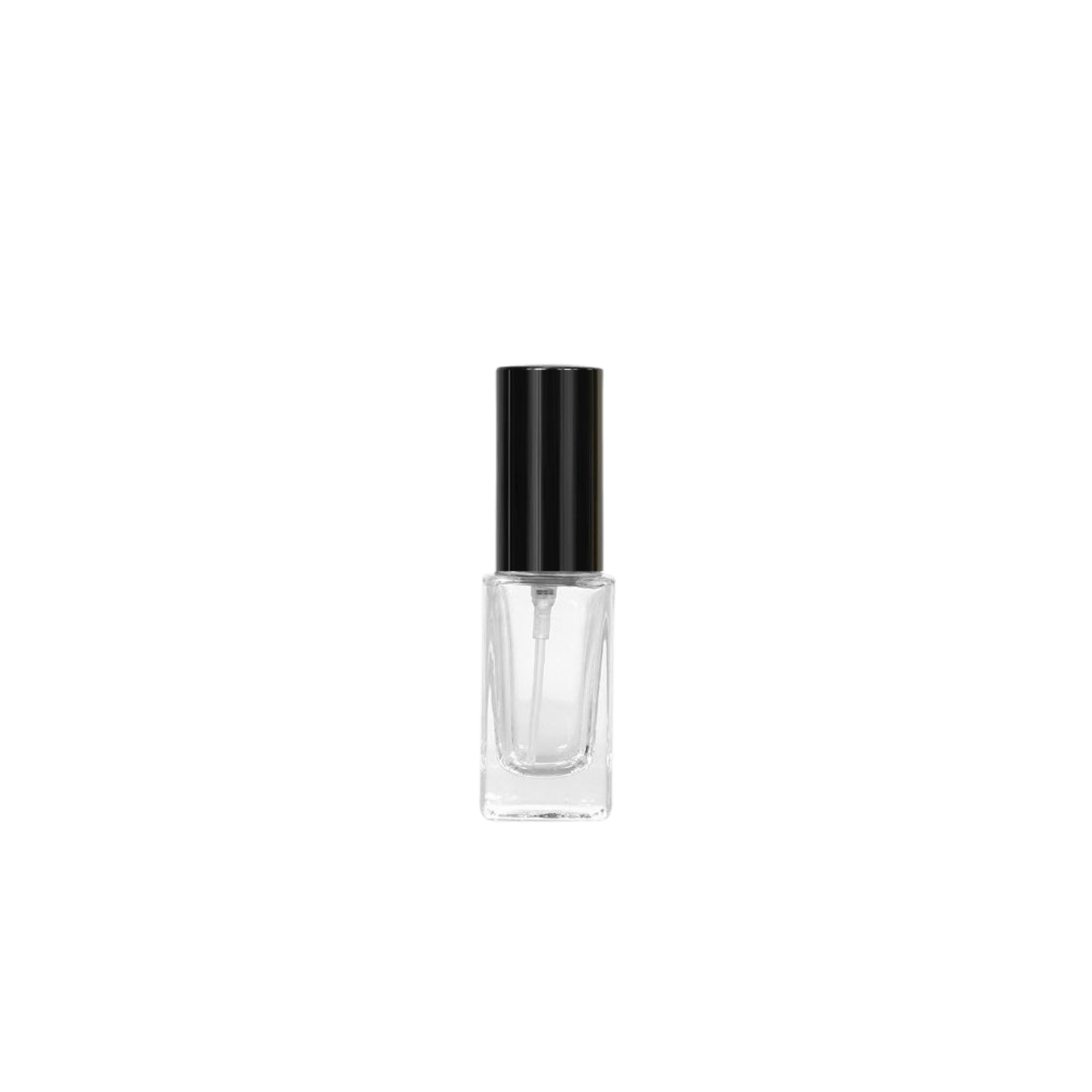
Perfume bottles by GlassRock


Related guides
- How much is 30 mL?
- Dropper bottle sizes and drops per ml
- mL to oz conversion: the complete converter and guide
- Custom glass bottles: the complete manufacturing guide
- Bottle closure types and neck finish compatibility
- Glass bottle decoration techniques explained
- The different grades of flint glass in bottle production
- Liquor bottle sizes: the complete reference
 English
 French
 Spanish
 Portuguese
 German
 Italian
 Japanese
 Korean
 Arabic
 Russian