
Beer Bottle Sizes: Every Format in mL and Ounces
The two dominant beer bottle sizes are the 355 mL (12 oz) North American longneck and the 330 mL (11.2 oz) European bottle. Around them sit the 500 mL German and Belgian standard, the 650 mL bomber, the 750 mL cork-and-cage format for strong and sour ales, and growlers up to 1.9 L. This guide lists every size in mL and ounces, explains the closures, and covers what each format means for a brewery choosing packaging.
Beer bottle size chart
| Taille | US fl oz | Common name | Where it dominates |
|---|---|---|---|
| 207 mL | 7.0 | Pony / small format | Australia, mini bottles |
| 250 mL | 8.45 | Small can / stubby | Session and low-alcohol lines |
| 330 mL | 11.16 | European standard | EU, Asia, Latin America |
| 355 mL | 12.00 | Longneck / 12 oz | North America |
| 440 mL | 14.88 | Tallboy can | UK, craft cans |
| 473 mL | 16.00 | US pint can | US craft beer |
| 500 mL | 16.91 | Half-litre | Germany, Belgium, UK |
| 568 mL | 19.22 | Imperial pint | UK |
| 650 mL | 21.98 | Bomber | US craft (declining) |
| 750 mL | 25.36 | Cork & cage | Belgian, sours, barrel-aged |
| 946 mL | 32.00 | Small growler | US taprooms |
| 1 893 mL | 64.00 | Growler (half gallon) | US taprooms |
Conversions use the exact factor of 29.5735295625 mL per US fluid ounce. Note that 330 mL is 11.16 oz — the « 11.2 oz » on US import labels is a rounding of the metric figure, not a separate size.
Why 12 oz in the US and 330 mL in Europe
The split is historical, not technical. North American brewing standardized on the 12 US fl oz (355 mL) bottle in the mid-20th century, and the industry’s entire fleet — crates, fillers, six-pack carriers, vending equipment — was built around it. Europe metricated and settled on 330 mL, with Germany and Belgium adding the 500 mL half-litre for domestic consumption. Neither is inherently better; both are simply the size their infrastructure was amortized on. For a brewery exporting between the two, this is the single most expensive packaging decision, because it can mean a second bottle, a second label format and a second carton.
Bombers, 750 mL and growlers
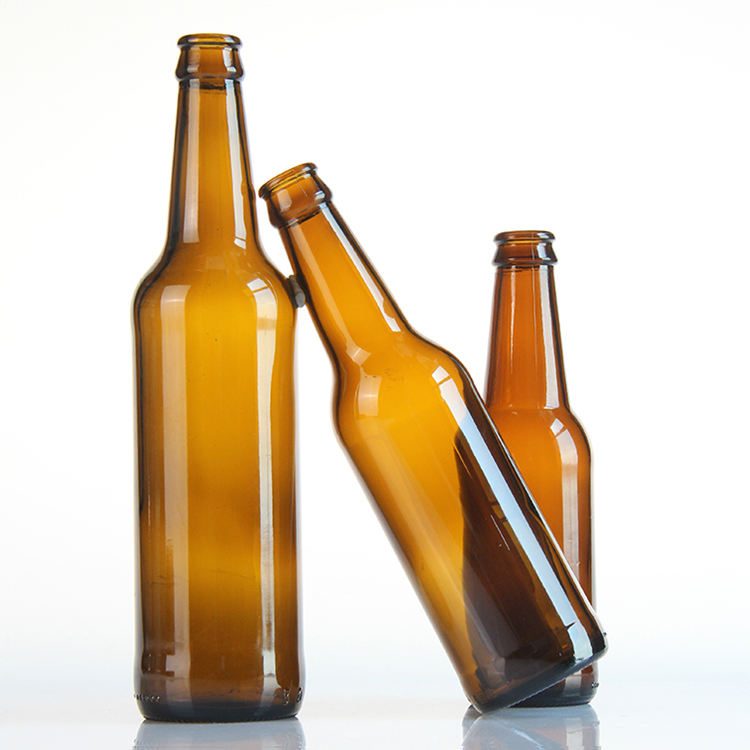
Large formats serve a different purpose: sharing and cellaring. The 650 mL bomber was the American craft standard for special releases through the 2010s, though many breweries have moved to 4-packs of 473 mL cans for better price-per-volume economics. The 750 mL cork-and-cage bottle — borrowed from Champagne — remains the format for Belgian styles, sours and barrel-aged beers, where the heavier glass handles refermentation pressure and the format signals a bottle meant to be shared or aged. Growlers (946 mL and 1 893 mL) are taproom vessels for draught beer, not production packaging: they are refillable and not designed for pressurized shelf life.
Crown caps, twist-offs and cork & cage
The 26 mm crown cap is the industry default, sealing against 2–3 bar of carbonation. Twist-off crowns use a threaded finish for consumer convenience but are marginally less secure for long storage and less common in craft. Cork and cage handles the higher pressure of bottle-conditioned and refermented beers, and requires a Champagne-style finish with thicker glass — the same engineering logic described in our wine bottle sizes guide. The finish must be specified with the bottle: a crown-finish bottle cannot take a cork, and vice versa.
Choosing a format for a brewery
Four questions settle most cases. Market: 355 mL for North America, 330 mL for Europe and Asia — follow the local six-pack convention. Style and shelf life: hop-forward beers benefit from cans or brown glass (UV protection is not optional for hops); barrel-aged and sour styles justify 750 mL. Channel: on-trade favors 330/500 mL, retail favors multipacks, taprooms favor growlers and cans. Line constraints: bottle height and finish must match your filler before anything else — capacity is the last variable, not the first. Amber glass remains the standard for light protection; flint is a marketing choice that costs shelf stability.
FAQ
How many oz in a beer bottle?
12 US fl oz (355 mL) for the North American standard longneck, and 11.16 oz (330 mL) for the European bottle — usually printed as 11.2 oz on US labels.
What is the standard beer bottle size?
355 mL / 12 oz in North America; 330 mL in Europe, Asia and Latin America; 500 mL is the domestic standard in Germany and Belgium.
How many mL is a 12 oz beer?
354.88 mL, rounded to 355 mL on packaging — the same arithmetic that makes the standard North American can 355 mL.
What is a bomber bottle?
A 650 mL (22 oz) bottle used for US craft special releases. Many breweries have shifted to 473 mL four-packs, but the format persists for limited runs.
Why are beer bottles brown?
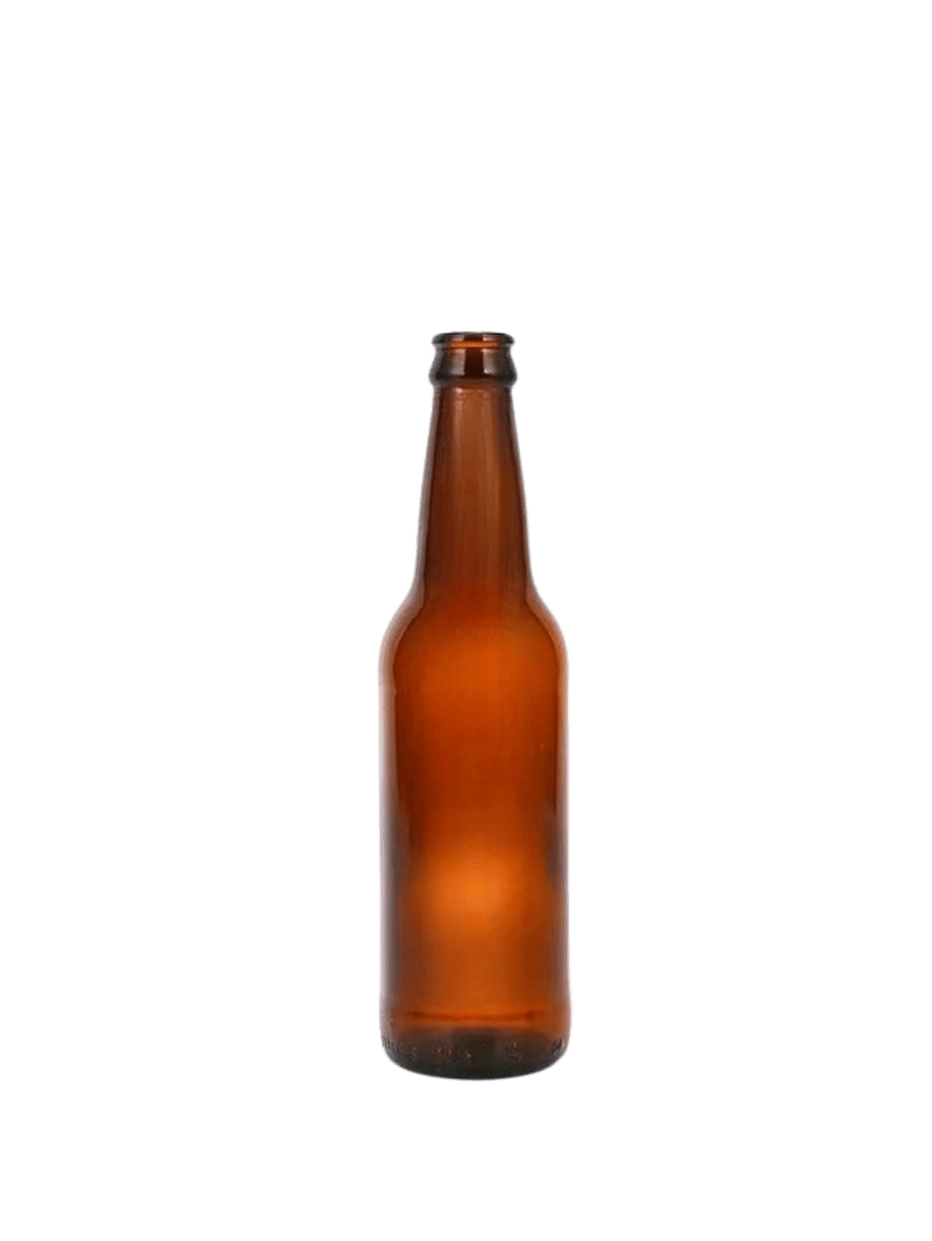
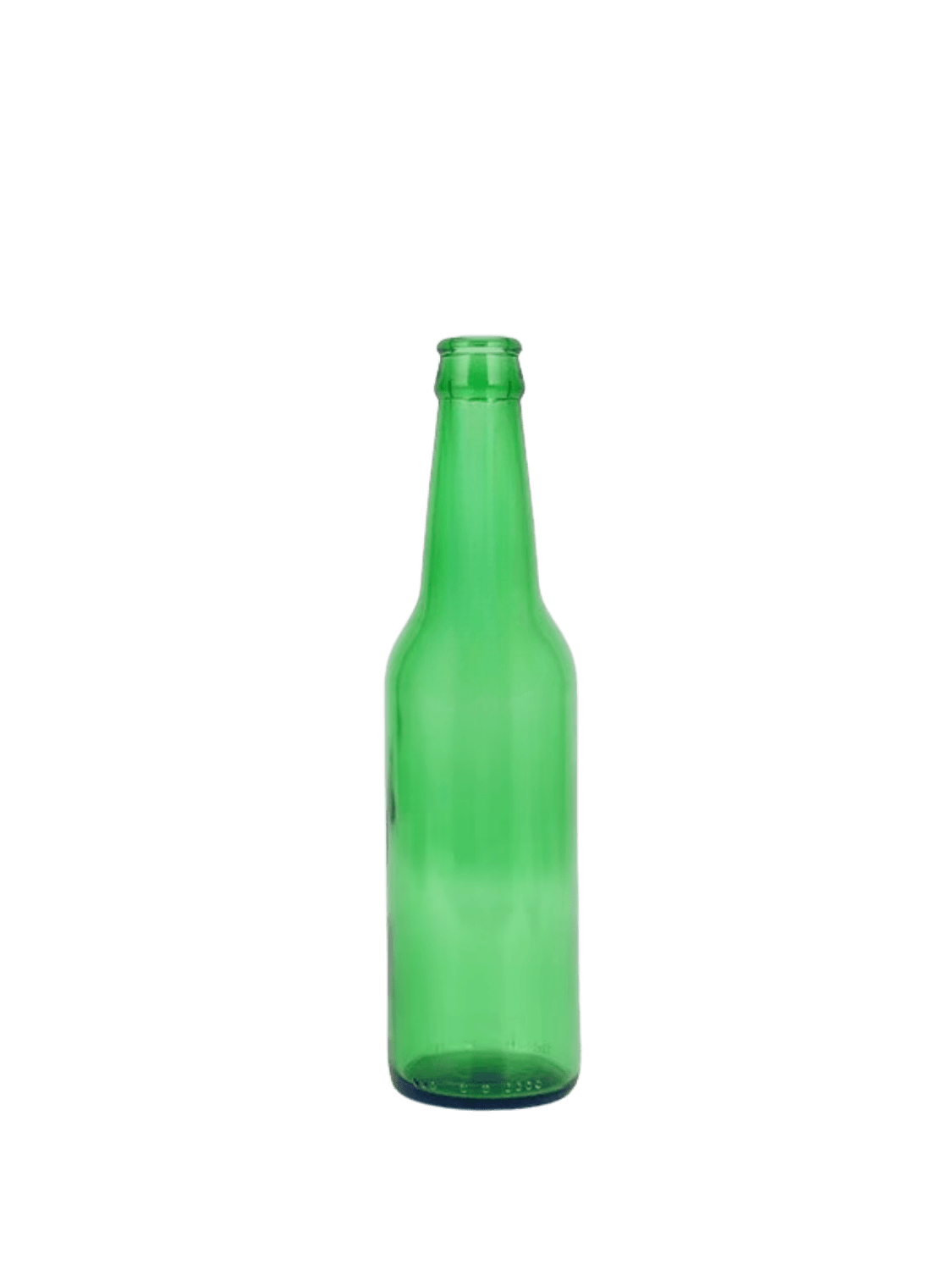
Amber glass blocks the blue and UV light that reacts with hop compounds to create the « skunked » off-flavor. Green and clear glass offer far less protection, which is why light-struck beer is more common in those bottles.
How big is a growler?
Typically 1 893 mL (64 oz, a half gallon), with 946 mL (32 oz) as the smaller option. Growlers are refillable draught vessels, not production packaging.
Can I use wine bottles for beer?
Only Champagne-style bottles with a cork-and-cage or crown finish, because standard still-wine bottles are not built for carbonation pressure. Bottle-conditioned beers reach pressures similar to sparkling wine.

 English
 French
 Spanish
 Portuguese
 German
 Italian
 Japanese
 Korean
 Arabic
 Russian