
Is Glass Microwave, Oven, Dishwasher and Freezer Safe? A Complete Guide
Ordinary glass is not automatically microwave-, oven-, dishwasher- or freezer-safe — and the reason has nothing to do with the temperature itself. Glass fails from thermal shock: a fast temperature change across the glass wall. A plain soda-lime bottle or jar tolerates a sudden swing of only about 40 °C before it risks cracking, while borosilicate lab glass handles about 170 °C. So the honest answer to “can you put glass in the microwave, oven or freezer?” is: only glass rated for it, and only if you avoid sudden jumps. This guide explains why, appliance by appliance, and what it means if you package a product in glass.
The one rule: thermal shock
Almost every “my glass shattered” story comes down to one mechanism. When one face of a glass wall changes temperature faster than the other, the hot face expands and the cool face doesn’t. That mismatch puts the cooler surface under tension, and glass — enormously strong under compression — is weak under tension. A microscopic surface flaw opens, and the crack runs.
Two things follow, and they explain everything below. First, the size of the jump matters more than the final temperature: moving a jar from the freezer straight into hot water is more dangerous than putting a room-temperature jar into a moderate oven. Second, the speed matters: the same temperature change made gradually may be perfectly safe. This is why canning jars survive a water bath that starts cool and heats slowly, yet crack if you pour boiling liquid into them cold.
How much each type of glass can take
Not all glass is equal. The property that matters is the coefficient of thermal expansion — how much the glass grows when heated. The less it expands, the less internal stress a temperature change creates, and the more thermal shock it survives.
Three families cover almost everything in a kitchen or a warehouse:
- Annealed soda-lime glass (coefficient ~9 × 10⁻⁶/°C) is what nearly all bottles, jars and mason jars are made of. It tolerates a sudden change of only about 40 °C. It is not designed for the oven or for boiling fills.
- Tempered soda-lime glass is the same glass, heat-treated to lock its surface in compression. That roughly triples its thermal shock tolerance to about 120–125 °C, and makes it far tougher against impact. Most modern US “Pyrex” bakeware and drinking tumblers are tempered soda-lime.
- Borosilicate glass (coefficient ~3.3 × 10⁻⁶/°C) contains boron oxide, which drastically lowers expansion. It withstands about 170 °C of sudden change and is used for laboratory glassware, European “PYREX” and premium cookware.
A note that trips up a lot of people: Pyrex is not one material. Since 1998, US-made Pyrex has been tempered soda-lime glass; European Pyrex is still borosilicate. Both are oven-safe, but they get there by different routes — tempering versus low expansion. If a recipe or a technique assumes “Pyrex is borosilicate,” it may be wrong depending on where the dish was made. The difference between these glass families starts at the furnace — see how glass is made and the grades of glass used in bottles.
Can you put glass in the microwave?
Usually yes, with two conditions. Plain glass is largely transparent to microwaves — the microwaves pass through it and heat the contents, not the glass itself. So a microwave-safe glass container heats gently and is fine. The two conditions are what cause the accidents:
- No metal. This is the big one for jars. Mason jars and many food jars have metal lids, rings or gold/silver decoration. Metal in a microwave arcs, sparks and can damage the oven. Always remove metal lids and never microwave a jar with a metallic band or trim.
- No thermal shock. Don’t put a cold jar straight from the fridge or freezer into the microwave and blast it on high. The contents heat unevenly — the centre boils while the glass near it is still cold — and that internal jump can crack an ordinary jar. Let it come to room temperature first, use shorter bursts, and stir.
Are glass jars microwave safe specifically? Standard mason and food jars are annealed soda-lime glass, so they are only safe for gentle reheating — not for taking a frozen jar to piping hot in one go. Newer jars sometimes carry a microwave-safe symbol (a dish with wavy lines); that indicates the maker has validated it. When in doubt, decant into a plate or bowl you know is microwave-safe.
Is glass oven safe?
Only if the glass is specifically rated oven-safe — which means tempered or borosilicate, and marked as such. Ordinary bottles and jars are not oven-safe. The figures make the reason obvious: a domestic oven runs at 180–220 °C, and putting a room-temperature (20 °C) jar into it is a 160–200 °C jump — four to five times what annealed glass can absorb.
Even with oven-safe glass, three rules prevent almost all breakages: never move it from cold straight into a hot oven (put it in while the oven preheats, or let it warm up); never set hot glass on a cold or wet surface, or add cold liquid to a hot dish; and never use it under the broiler or over a direct flame, where one spot heats far faster than the rest.
Is glass dishwasher safe?
Most glass is dishwasher safe — a dishwasher runs around 50–70 °C and heats gradually, so thermal shock is rarely the issue. Two things do cause problems over time. Decoration: painted, gilded, hot-stamped or some printed finishes can fade, cloud or lift under repeated hot detergent cycles, so premium decorated bottles are often marked hand-wash. And etching: very hot water plus aggressive detergent can slowly cloud glass (a permanent, cosmetic haze). For plain, undecorated glass, the dishwasher is fine. For anything with a finish, check the mark or hand-wash. How decoration behaves is covered in our guide to glass bottle decoration techniques.
Can you put glass in the freezer?
Yes, but the risk here is different — it is expansion, not just thermal shock. Water expands about 9% when it freezes, and that force will crack a jar filled to the brim. Freezing glass safely is mostly about three habits:
- Leave headspace. For liquids (soups, stocks, sauces), leave at least 2.5 cm (1 inch) below the rim; for thick or starchy foods that expand more, leave up to 5 cm (2 inches).
- Choose the right shape. Straight-sided, wide-mouth jars let the contents expand upward and out; jars with “shoulders” that narrow toward the neck trap the expanding block and crack. This is exactly why wide-mouth jars are recommended for freezing.
- Cool in stages, and never freezer-to-heat. Chill in the fridge before freezing, and thaw in the fridge — do not take a frozen jar straight into hot water, an oven or a microwave. That single jump (up to 118 °C) is the classic way to shatter a jar.
Stovetop and broiler: don’t
Neither ordinary nor most oven-safe glass belongs on a stovetop burner or under a broiler. Both apply intense heat to one spot, creating exactly the steep local temperature gradient that thermal shock feeds on. Only specific flame-rated borosilicate cookware is made for direct heat, and standard containers never are.
The quick-reference safety table
| Glass type | Microwave | Oven | Dishwasher | Freezer | Stovetop / broiler |
|---|---|---|---|---|---|
| Annealed soda-lime (standard bottles & jars) | Gentle only, no metal | No | Yes* | Yes, with headspace | No |
| Tempered soda-lime | Yes, no metal | Yes, if marked | Yes* | Yes, with headspace | No |
| Borosilicate | Yes, no metal | Yes | Yes | Yes, with headspace | Only if flame-rated |
*Undecorated glass. Painted, gilded or hot-stamped finishes may be hand-wash only.
What this means if you package a product in glass
For a brand choosing glass packaging, thermal behaviour is not a footnote — it decides which glass you specify and what you print on the label. Four situations come up constantly:
- Hot-fill and pasteurised products (sauces, juices, some spirits and preserves) go into the jar hot or are heat-treated after filling. The container has to survive that thermal step. Standard annealed glass can handle a controlled, gradual hot-fill, but the fill temperature and the glass must be matched — this is a specification to confirm with your manufacturer, not to assume.
- Candle jars face heat from the inside as the candle burns. Wax pool temperature, wick size and glass thickness all interact; a jar that is too thin or the wrong geometry can crack. Candle glass is a genuine engineering choice, not just an aesthetic one.
- Products the consumer will heat or freeze — meal-prep foods, ready sauces, frozen portions. If your customers will microwave or freeze the jar, you either specify a glass rated for it or you tell them clearly on the label. Managing that expectation prevents both breakages and complaints.
- Decorated bottles that will be washed repeatedly need a decoration method that survives dishwashing, or a clear hand-wash instruction.
The practical takeaway: tell your glass supplier how the product will be filled, processed and used, not just the capacity and shape. The right glass type, wall thickness and annealing quality follow from that — the same logic we set out in the custom glass bottle guide. Good annealing, in particular, is what lets a bottle tolerate its rated thermal range; it is covered in how glass bottles are made. And if you are sizing jars for food or freezing, our guides to mason jar sizes and jar sizes and shapes help you pick a wide-mouth format that freezes safely.
Frequently asked questions
Can you put glass in the microwave?
Yes, if it is microwave-safe glass with no metal parts, lids or metallic decoration, and you avoid sudden temperature jumps. Plain glass lets microwaves pass through and heats the food, not the glass. The accidents come from metal (which sparks) or from blasting a cold jar on high, which can crack ordinary glass through thermal shock.
Are glass jars microwave safe?
Standard mason and food jars are annealed soda-lime glass, safe only for gentle reheating — not for going from cold or frozen to piping hot in one step. Always remove the metal lid and ring first. Some newer jars carry a microwave-safe symbol; if yours doesn’t, reheat in shorter bursts or decant into a microwave-safe dish.
Is glass oven safe?
Only glass specifically marked oven-safe, which means tempered or borosilicate. Ordinary bottles and jars are not oven-safe: an oven at 200 °C is a 180 °C jump from room temperature, four to five times what standard annealed glass can absorb. Even oven-safe glass should never go from cold straight into a hot oven, or under a broiler.
Can you put a glass jar in the freezer?
Yes, with headspace and the right shape. Leave 2.5 cm (1 inch) below the rim for liquids — more for thick foods — because water expands about 9% when frozen. Use straight-sided, wide-mouth jars so the contents can expand upward, and never take a frozen jar straight into heat.
Why did my glass jar shatter?
Almost always thermal shock: a temperature change too big or too fast for the glass. Common triggers are pouring boiling liquid into a cold jar, taking a jar from fridge or freezer straight to heat, or setting a hot jar on a cold, wet surface. Overfilling before freezing (no headspace) is the other frequent cause.
Is glass dishwasher safe?
Most plain glass is — a dishwasher heats gradually to 50–70 °C, so thermal shock is rarely the problem. The risks are cosmetic: painted, gilded or hot-stamped decoration can fade or lift, and very hot water over time can cloud glass. Undecorated glass is dishwasher-safe; decorated bottles are often hand-wash.
What is the difference between tempered and borosilicate glass?
Tempered glass is ordinary soda-lime glass heat-treated to lock its surface in compression, which triples its thermal shock resistance (to about 125 °C) and makes it tougher against impact. Borosilicate glass instead contains boron oxide, giving it very low thermal expansion and about 170 °C of thermal shock tolerance. Both are used for oven-safe glass; borosilicate handles bigger, faster temperature swings.
Is all glass the same when it comes to heat?
No. Standard bottles and jars are annealed soda-lime glass, the least heat-shock-tolerant (~40 °C). Tempered soda-lime handles ~125 °C, borosilicate ~170 °C. The type is set when the glass is made, and you cannot tell them apart by eye — you have to go by the manufacturer’s marking or specification.
Can hot liquid be poured into a glass bottle?
Only if the bottle is rated for that fill temperature. Hot-filling and pasteurisation are standard in food and beverage packaging, but the glass, the wall thickness and the fill temperature have to be matched, and the change should be gradual rather than a sudden pour of boiling liquid into a cold bottle. Confirm the hot-fill rating with your glass manufacturer before production.
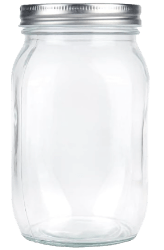
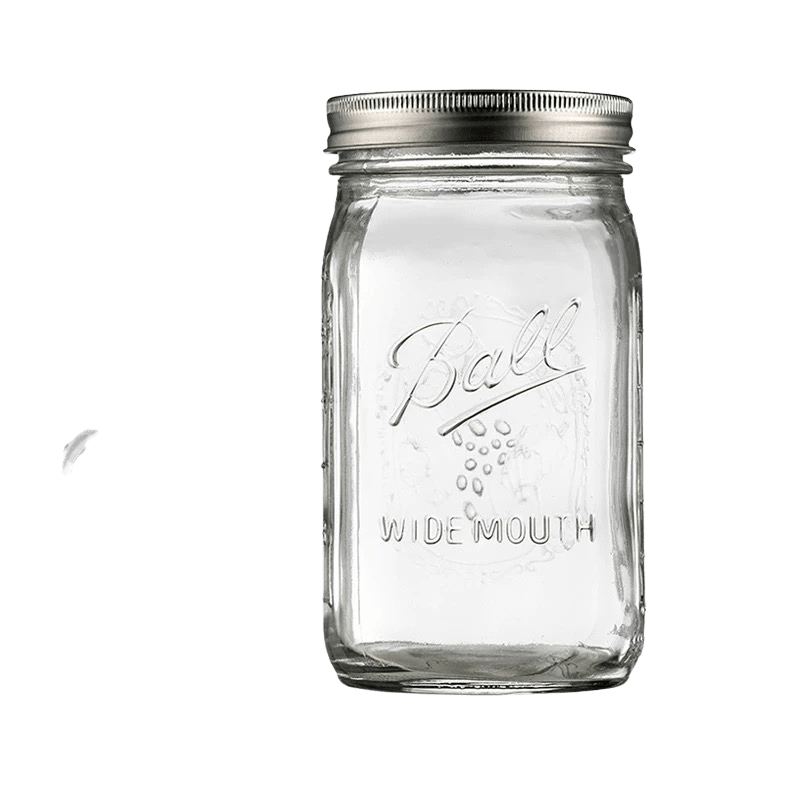
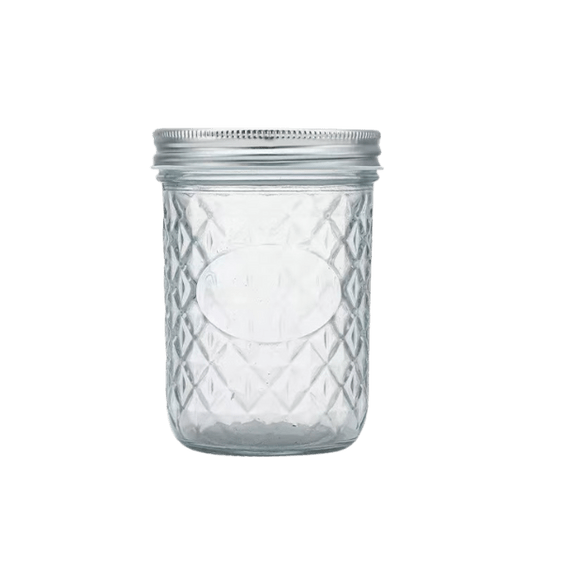
Wide-mouth GlassRock jars that freeze safely
Related guides
- What is borosilicate glass? Properties, uses and when you need it
- How glass bottles are made: the complete production process
- Mason jar sizes: the complete chart
- Glass jar sizes and shapes explained
- The different grades of flint glass in bottle production
- Glass bottle coatings: hot end, cold end and anti-scratch
- Custom glass bottles: the complete manufacturing guide
 English
 French
 Spanish
 Portuguese
 German
 Italian
 Japanese
 Korean
 Arabic
 Russian